Case study · 5 min read
Stormwater drain jetting, Double Bay
A blocked stormwater drain under a Double Bay courtyard, an old terracotta line with no inspection point. Opened up and cleared end to end with a jetter.
Adam Norton · 21 October 2026
The stormwater line at this Double Bay property had stopped draining properly. Rain was not getting away the way it should, and the pipe carrying it ran under a concrete courtyard. A blocked stormwater drain like this one is easy to ignore between falls, because the line sits empty and quiet until the next downpour shows up at the surface.
What made this job worth writing up is what was under the courtyard: the original terracotta clay line, with no inspection point to get into it from above. That is a very common setup in older Double Bay homes, and it changes how a stormwater blockage has to be cleared.
A terracotta stormwater line with no way in
Most modern drainage has inspection openings built in, capped fittings that let a plumber get a camera or jetter straight into the line. Many older homes were built before that was standard. The stormwater here ran in short lengths of terracotta clay pipe, joined end to end, buried under concrete with nothing on the surface to open.
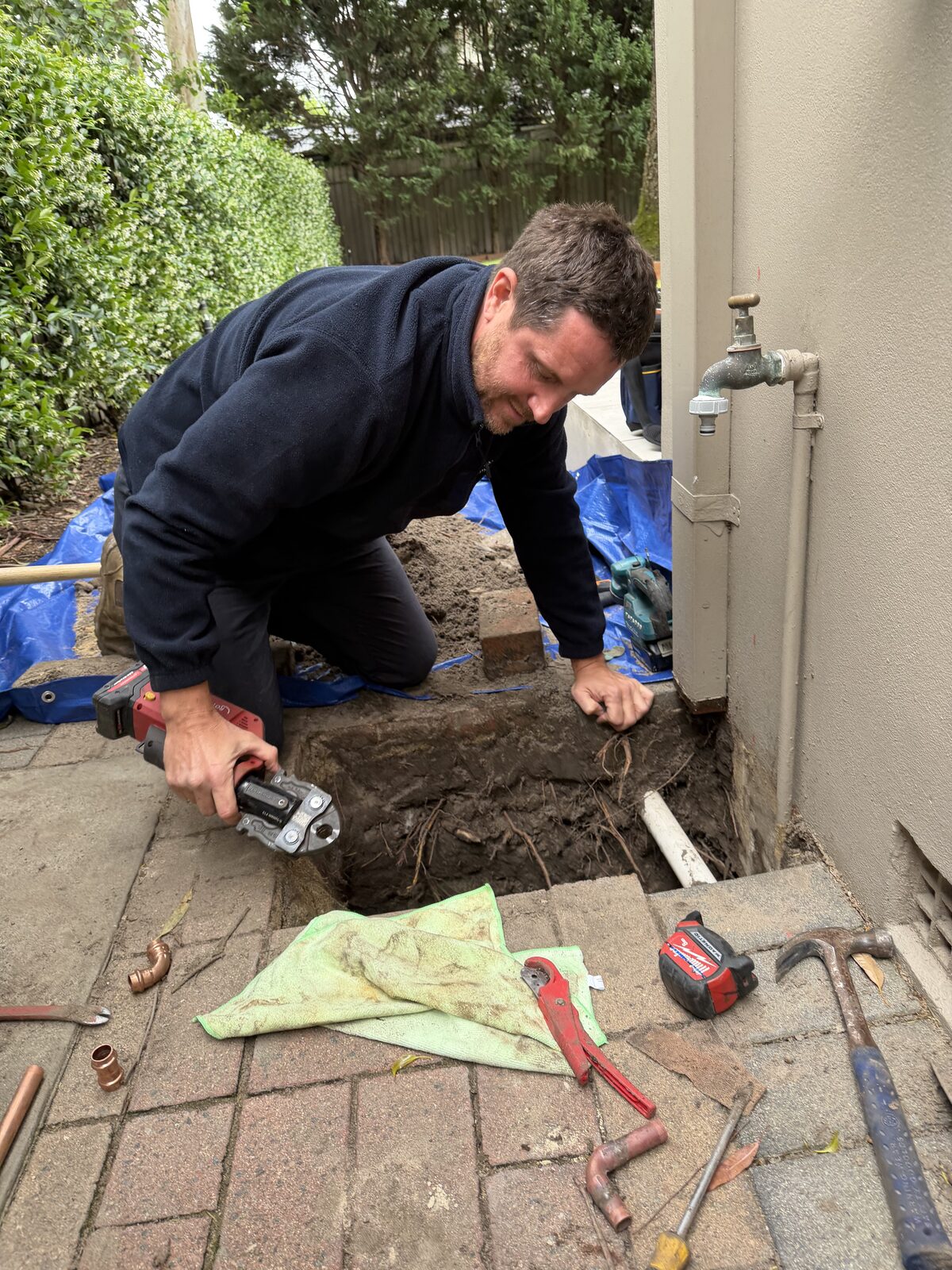
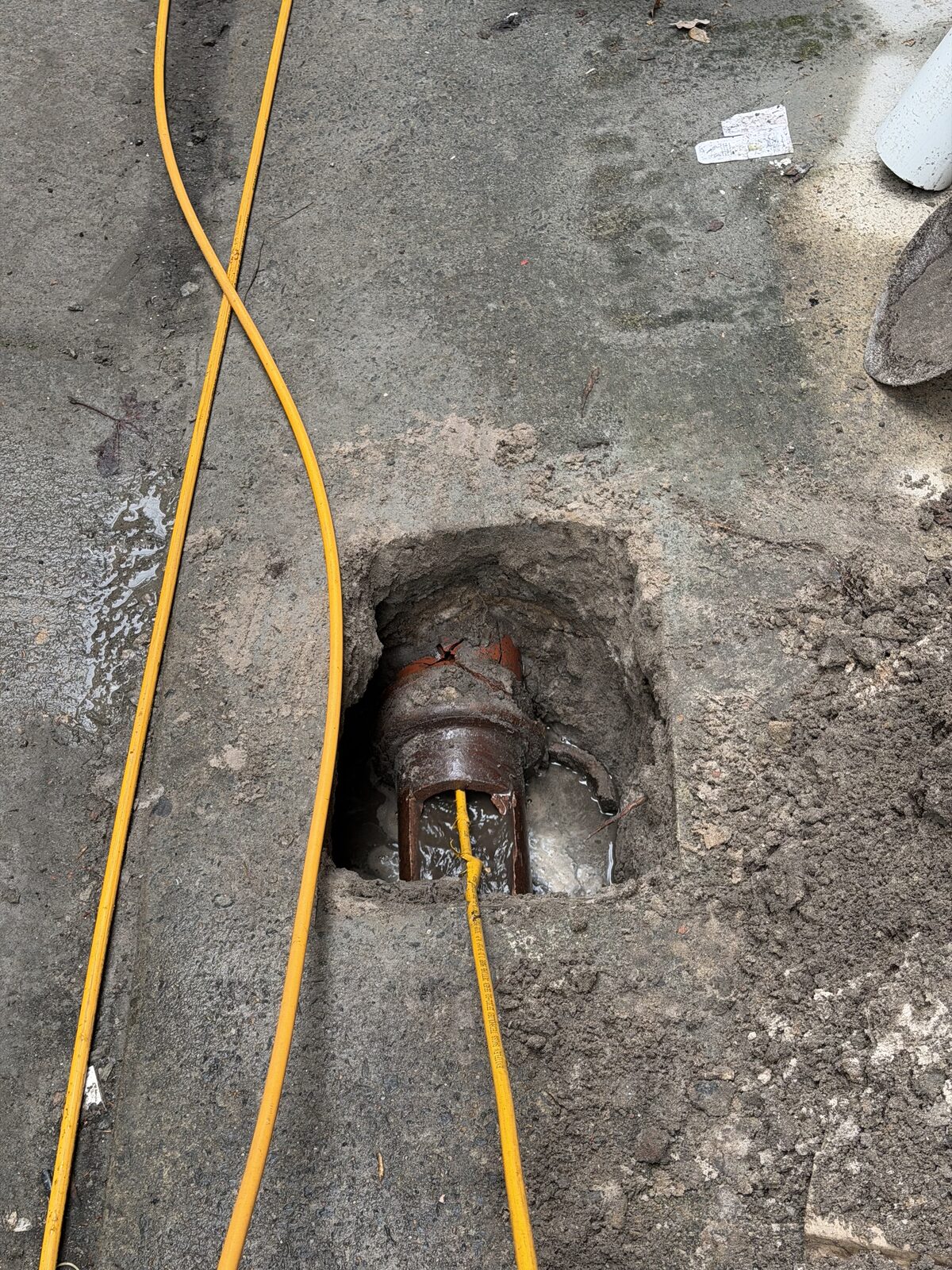
Without a way in, the only option is to make one. Greg cut out a small section of the concrete over the line, dug down to expose the pipe, and opened it up. Keeping the cut small matters on a job like this. It gives full access to the pipe while leaving the rest of the courtyard untouched.
How stormwater drain jetting clears the line
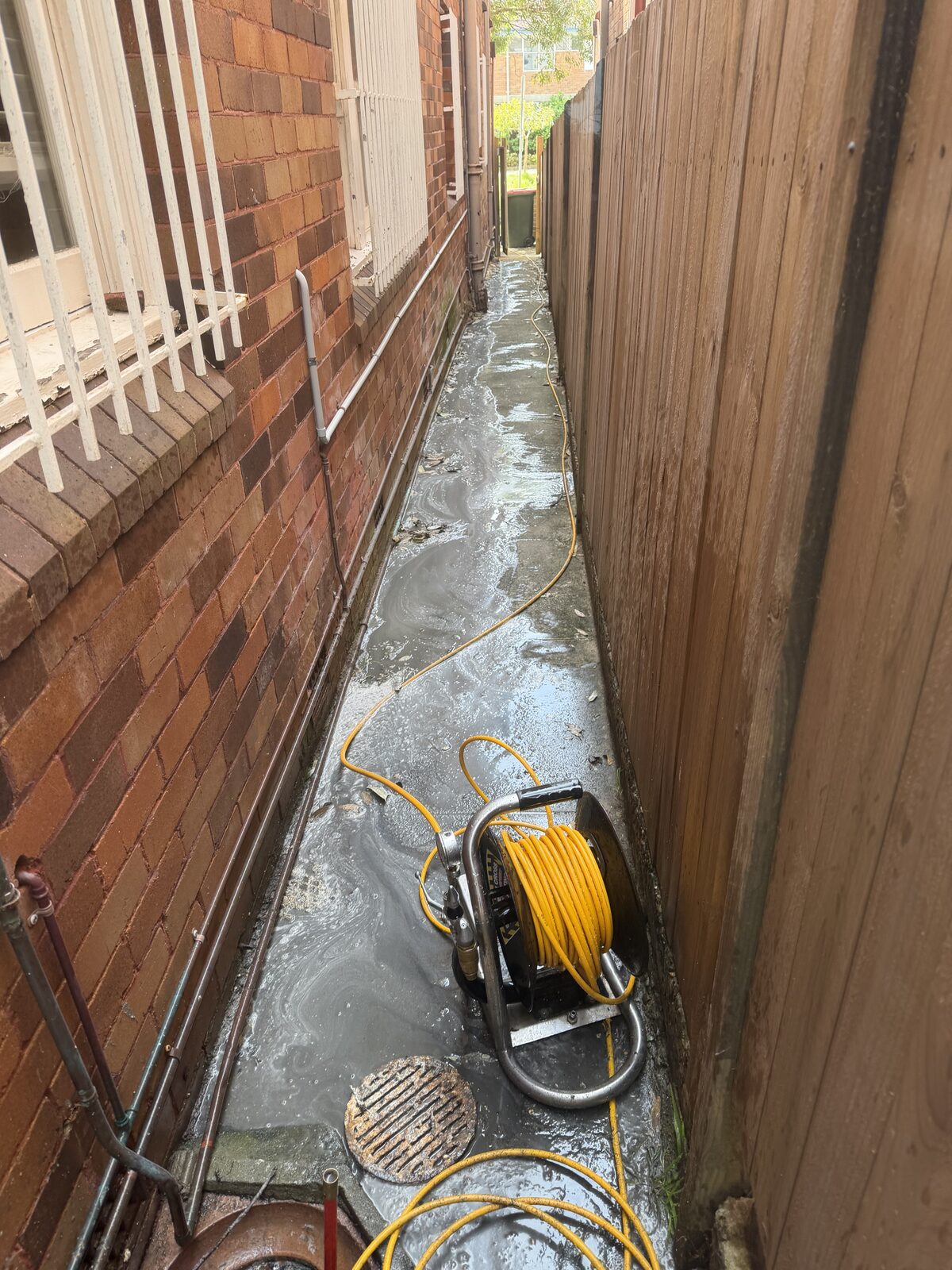
With the pipe open, Greg fed the high-pressure jetter through the line. A jetter sends water through the pipe at high pressure. The nozzle drives itself forward along the pipe, breaking up the silt, leaves and debris packed inside and flushing it out the other end.
That is the real difference between jetting and a hand snake. A snake punches a hole through a blockage near where it goes in, and the first few metres are about all it reaches. The rest of the line stays lined with silt, and the hole closes up again after a few storms. A jetter scours the full length of the pipe, so the blockage does not come straight back.
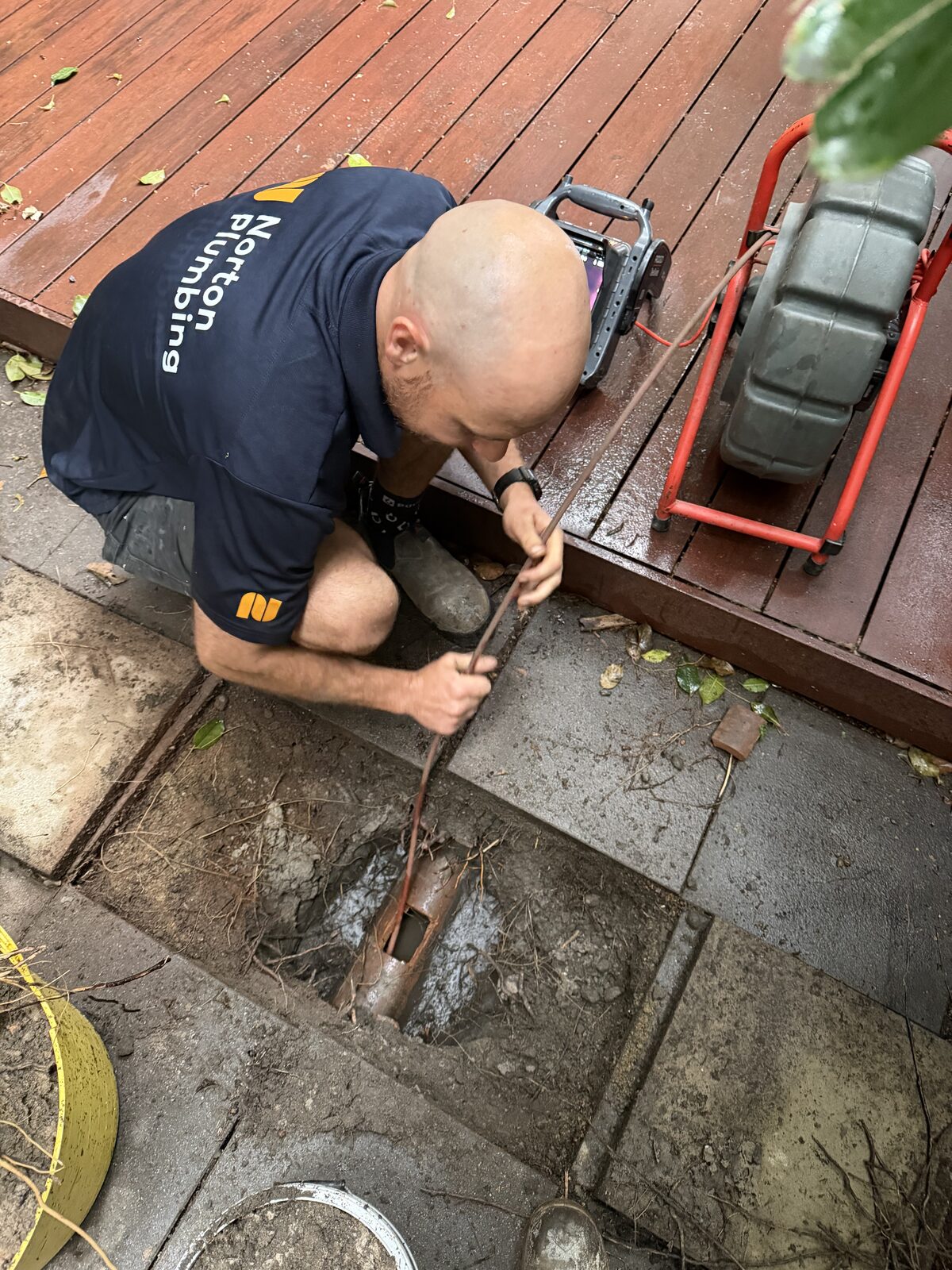
The line was also opened at a second point, under the pavers beside the deck, and Greg ran the CCTV drain camera down it to see inside the pipe rather than guessing at it. Once the line was clear, Greg ran water through it to confirm it was flowing freely all the way to the outlet. That last check is the one that counts. A line that takes water at the top is not necessarily clear at the bottom, and testing to the outlet is how you know the whole run is open.
Why older Double Bay stormwater lines block
Double Bay has a lot of older homes with garden courtyards, established trees and paved or concreted areas around the house. All of that hard surface sends rain to a handful of grates and downpipes, and the water carries whatever is on the ground with it: silt, leaf litter, grit off the paving.
Terracotta lines add to it. The pipe comes in short lengths, so there are a lot of joints along a single run, and each joint is a small step where silt can settle and roots can find their way in. Over years the bore slowly narrows until a heavy fall is more than it can carry. Without an inspection point, nobody sees it happening.
One thing not to do when stormwater backs up is redirect it into the sewer. Sydney Water is clear that rainwater and stormwater must not enter your wastewater system. The stormwater pipes on your own land are yours to maintain, so the fix is clearing the stormwater line itself.
Signs of a blocked stormwater drain
- Water sitting around your stormwater grates after rain. A grate should empty quickly. Pooling means the line beyond it is not taking the flow.
- Downpipes overflowing at the bottom. If water spills out of the pit at the base of a downpipe instead of running away, the underground line is choked.
- Silt or a tide mark around a courtyard grate. Dirt left behind after the water drains is a sign it sat there for a while.
- Damp at the base of a wall near a downpipe. Water that cannot get away underground finds its way to the nearest wall instead.
- A line that was cleared before and blocked again. That usually means it was snaked rather than jetted, and the rest of the pipe was never cleaned.
Those signs almost always point to the line underground being choked with silt, leaves or roots, not to the grate itself. Clearing the pit at the top can buy a little time, but if the water still pools after the next fall, the pipe needs jetting.
How to reach Norton Plumbing
Norton Plumbing has worked in Double Bay and across the Eastern Suburbs since 2019, clearing stormwater and sewer drains, drain jetting, CCTV inspections and pipe relining. I hold NSW plumbing licence 397768C. The team works out of 10/11a-15 Berwick St, Coogee. If water is sitting around your grates after rain, see our blocked drains page, our Double Bay plumber page, or call 0477 858 951. Quotes are free across the Eastern Suburbs.
Frequently asked
Common questions
- Why does water sit around my stormwater grate after rain?
- The grate is the opening into an underground line, so if water pools there the pipe beyond it is not taking the flow. In older Eastern Suburbs homes the usual cause is silt and leaves packed into the line, or roots through a joint. The grate itself is rarely the problem, so clearing just the top of it does not fix it.
- What is the difference between jetting a drain and using a snake?
- A drain snake pushes a spinning cable through the blockage and opens a channel close to where it goes in. A jetter sends water through the pipe at high pressure, scouring the full bore and flushing silt and debris out the far end. On a long stormwater line, jetting cleans the whole run, so the blockage is less likely to return quickly.
- What if my stormwater line has no inspection point?
- Then there is no clean way into the pipe from above, and a plumber has to make one. Usually that means cutting out a small section of concrete or lifting pavers over the line to expose the pipe and open it. In our experience it is worth adding a proper access point at the same time, so the next clean is simpler.
- Who is responsible for a blocked stormwater pipe on my property?
- The stormwater pipes on your own land are the owner's to maintain, up to where they discharge to the street or the council system. The local council looks after the public stormwater network beyond that. Stormwater must also be kept out of the sewer, so overflowing downpipes should never be diverted into a sewer gully.
- Can I clear a blocked stormwater drain myself?
- You can lift the grate and scoop out leaves and silt sitting in the pit, which sometimes helps. A hand-hired snake only reaches the first few metres of the line, though, and a blockage further along will stay put. If water still pools after rain once the pit is clean, the line needs jetting.
Related service
Blocked Drains
Fast, professional blocked drain clearing in Eastern Suburbs Sydney
See our blocked drains pageNeed a plumber in the Eastern Suburbs?
Call 0477 858 951