Case study · 6 min read
Backflow prevention device install, Bondi
A Bondi building needed backflow containment on its water service. We installed a reduced pressure zone device, and it now has to be tested every year.
Adam Norton · 2 September 2026
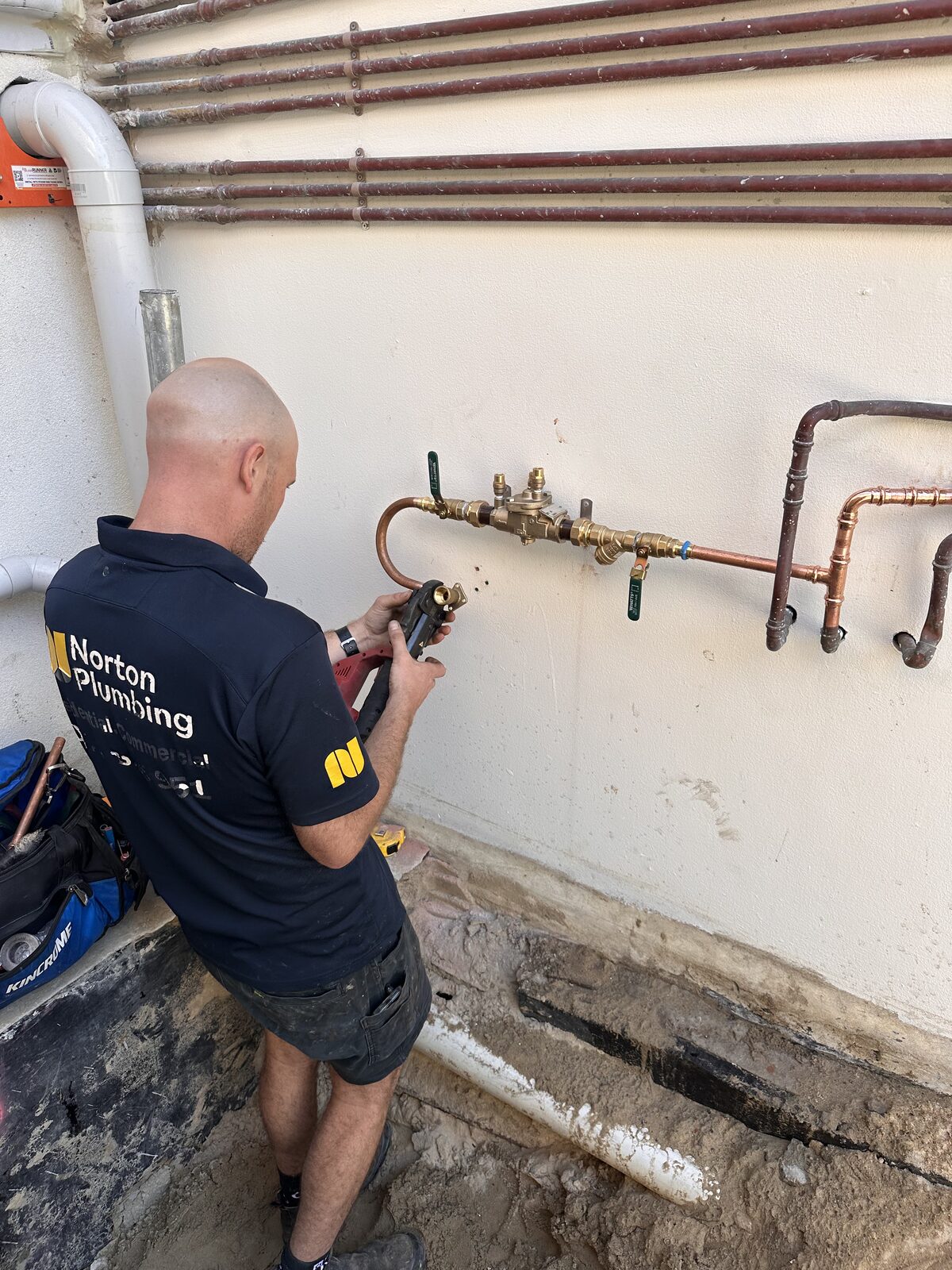
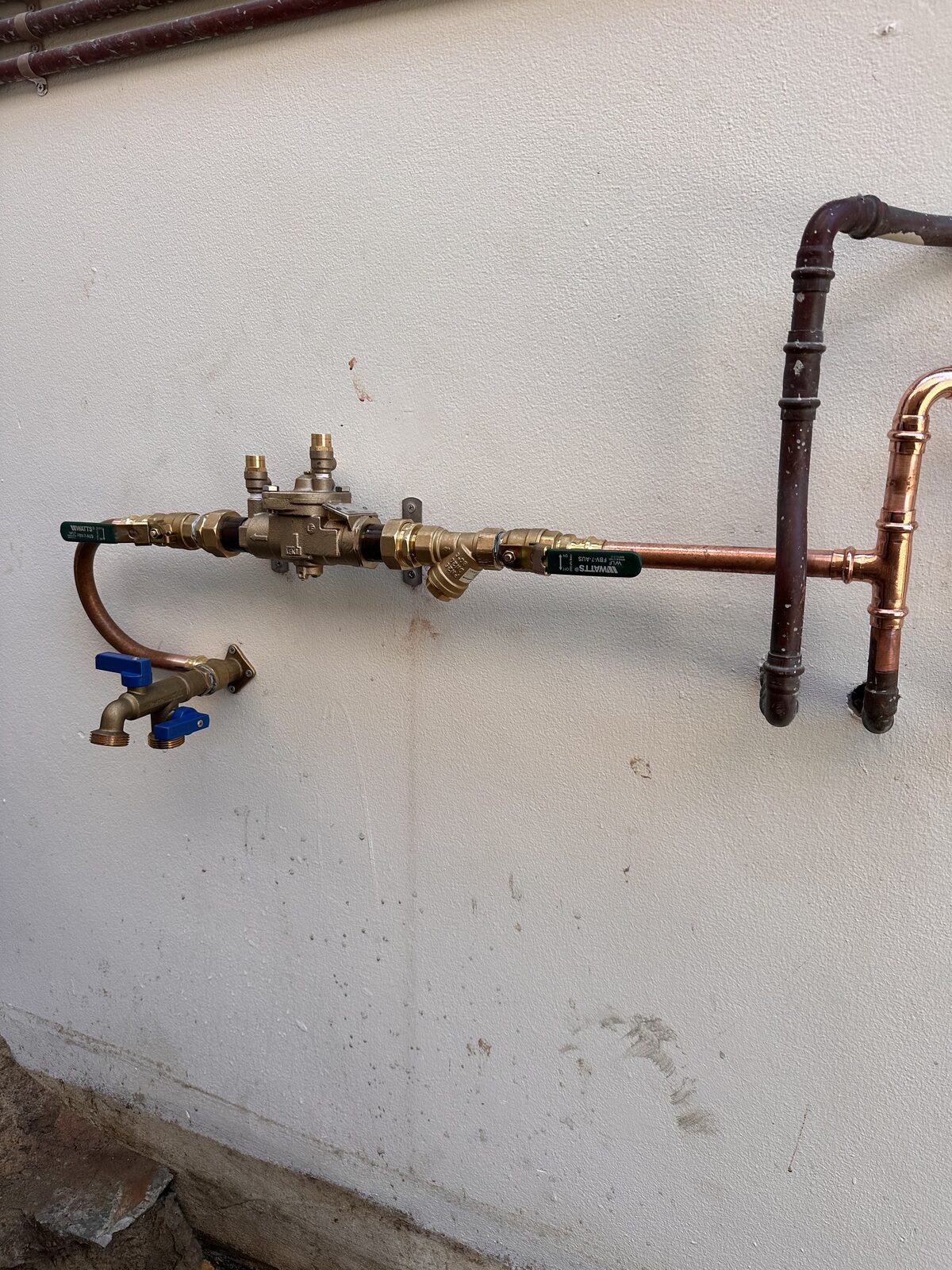
This strata apartment building in Bondi needed backflow containment on its water service, so we installed a backflow prevention device on the external wall where the main comes in. The type fitted here is a reduced pressure zone device, an RPZ, which is what goes on where the hazard rating is high. It is not a repair job. Nothing was leaking and nothing had failed. It is a compliance fitting that protects the drinking water in the street from whatever is happening inside the property.
Most owners only hear the word backflow when a letter arrives asking for a test report on a device they did not know they had. So it is worth explaining what the thing on the wall actually does, and what owning one commits you to from the day it goes in.
What a backflow prevention device actually stops
Water in the mains is under pressure, and that pressure is what keeps it moving in one direction. Drop the pressure in the street, through a burst main, a hydrant being run hard, or a repair upstream, and the flow can briefly reverse. Anything sitting in the pipework on the property side can then be drawn back out into the main and into the water your neighbours drink.
That is the whole risk. It is not theoretical either, which is why Sydney Water takes the position that every connection to its water mains needs suitable containment. On a small house with a standard 20mm or 25mm meter, the protection is built into the meter itself and the owner never has to think about it. Once a property is bigger than that, the device becomes a separate fitting, bolted to a wall, with the owner's name against it on a register.
Why this one is an RPZ and not a double check valve
There are two devices you will commonly see on a building of this kind, and which one you get depends on the hazard rating of the property, not on preference. A testable double check valve covers medium hazard. A reduced pressure zone device covers high hazard, and it is the more serious of the two.
The difference is the vent. A double check valve has two independent check valves in series and relies on both of them holding. An RPZ has the two checks plus a relief valve in the middle chamber, so if pressure ever reverses and the checks are not sealing properly, the middle chamber dumps to atmosphere. The water goes on the ground where you can see it. It does not go back into the main. That is the point, and it is why an RPZ has to be mounted clear with somewhere for that discharge to go, not buried in a pit.
One detail worth knowing if nobody has ever assessed your property: where the hazard rating is unknown, Sydney Water assumes high hazard. So the answer to whether a building needs the more expensive device is usually decided by what has been documented, and a lot of older Eastern Suburbs buildings have nothing documented at all.
What the install actually involved
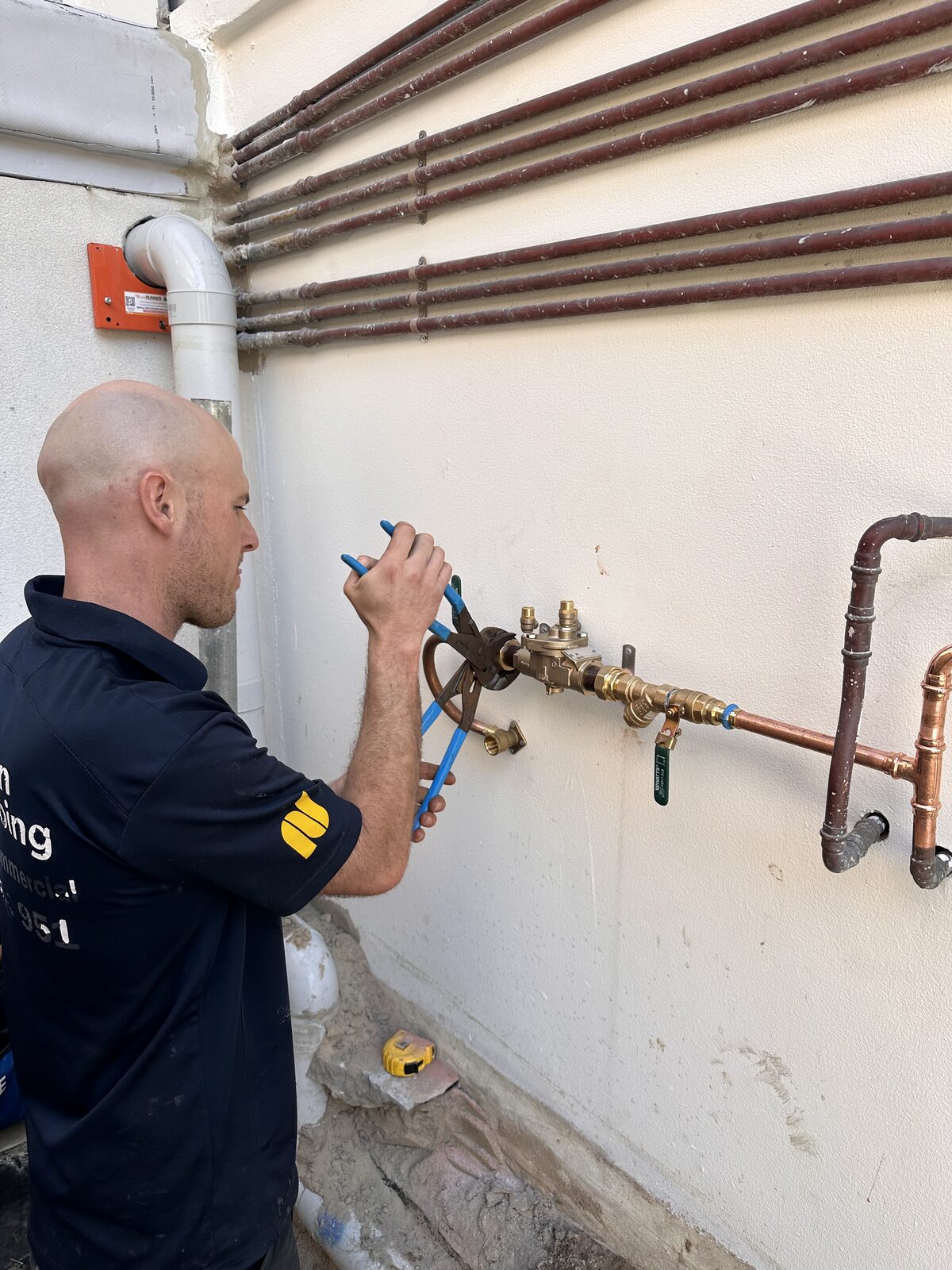
The backflow prevention device sits on the external wall on the incoming service, up off the ground, with an isolation valve either side and a line strainer ahead of it to keep grit out of the check valve seats. The test cocks face out and stay reachable, which matters more than it sounds, because somebody has to get gauges onto them once a year for the rest of the building's life.
That is the part that gets done badly. It is easy to fit one of these tight into a corner, behind a downpipe, or low enough that the relief vent has nowhere to discharge, and it will pass on the day. The tester who turns up next year is the one who pays for it, and so is the owner, because awkward access shows up in the price of every test after that.
One thing worth lining up before a device like this goes in is who is testing it. A new backflow prevention device has to be tested as soon as it is installed, by a plumber holding backflow accreditation, and the report lodged with Sydney Water within two days. That accreditation is a separate ticket from a plumbing licence, so it is worth asking the question early rather than discovering after the fact that the install and the test are two different bookings.
The annual test is the part owners get caught by
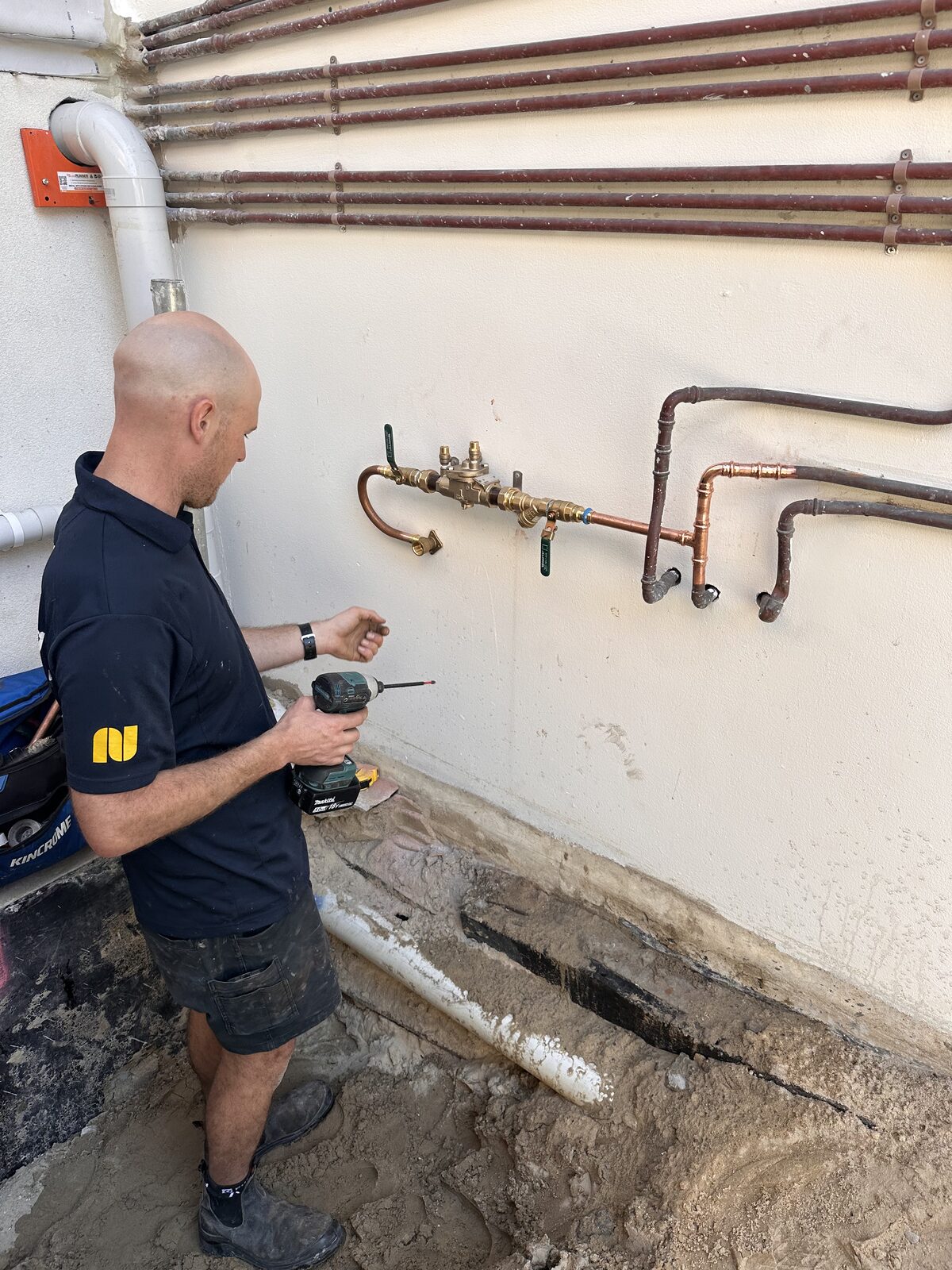
This is the bit worth writing down. Sydney Water's backflow prevention requirements say that high and medium hazard devices must be tested when they are installed and every year after that, by a plumber holding backflow accreditation, and the test report has to be lodged within two days of the test. Sydney Water keeps a register of testable devices and sends reminders against it.
An ordinary plumbing licence is not enough for this. The accreditation is a separate qualification, and only a plumber who holds it can commission or test a medium or high hazard device. So the person who installed it is not automatically the person who can test it, which is worth checking before you agree to anything.
Letting the test lapse is not a paperwork problem. Sydney Water can restrict or disconnect the supply, charge for testing the device itself, or charge the cost of putting the connection right. For a building with residents in it, a restricted water supply is a very quick way to turn a forgotten reminder into an emergency.
Which Eastern Suburbs buildings this lands on
Containment applies to commercial properties, multi-residential and strata buildings, fire services, sprinkler and hydrant systems, and construction sites. In practice that covers most of the apartment stock in Bondi, Coogee, Randwick, Maroubra and Kingsford, because the Eastern Suburbs is built out of walk-ups and small blocks rather than houses.
The pattern we see is a block that has been standing for decades, has had its plumbing changed piecemeal over that time, and has no record of anyone ever assessing the hazard rating. Nothing happens for years. Then the building does something that puts it back in front of Sydney Water, a new connection, a meter upgrade, a fire service, a renovation, and the containment question comes up with a deadline attached.
If you sit on a strata committee, the useful thing to do is not to wait for that. Find out whether your block has a backflow prevention device, where it is, and when it was last tested. Those three answers decide whether you are looking at a routine annual cost or an unplanned install, and they belong in the same conversation as the rest of your strata plumbing maintenance planning. We have written up a waste stack replacement in a Coogee strata block where the same principle applied: the building that knew what it had could plan the spend, rather than react to a failure.
What to check on your own building
- A brass device on a wall near the water meter with small test points sticking out of it. If it has them, it is testable, and testable means it is on a register and due every year.
- A letter or email from Sydney Water about a backflow test that nobody has actioned. These go to the registered owner, which for a block means the owners corporation, so they can sit in a managing agent's inbox unread.
- Water staining or a wet patch under the device. An RPZ that is weeping from its relief vent is telling you a check valve is not sealing. It is doing its job, but it needs attention.
- A device wedged behind a downpipe, in a pit, or under a meter box lid. Poor access does not fail a test on its own, it just makes every future test slower and dearer.
- No documentation at all on hazard rating. With nothing on file the property is assumed high hazard, so knowing what has been assessed is worth more than guessing.
How to reach Norton Plumbing
Norton Plumbing has worked in Bondi and across the Eastern Suburbs since 2019, and we work with owners corporations and strata managers on backflow device installation, stack and riser replacement, CCTV drain inspections and planned maintenance. I hold NSW plumbing licence 397768C and fitted this device myself. The team works out of 10/11a-15 Berwick St, Coogee. If you want to know what your building has on its water service and when it was last tested, see our strata plumbing page, our Bondi plumber page, or call 0477 858 951.
Frequently asked
Common questions
- What is a backflow prevention device?
- A valve assembly on the water service that stops water inside a property being drawn back into the street main if mains pressure drops. Small houses have the protection built into the water meter. Larger properties need a separate device fitted on the incoming line.
- What is the difference between an RPZ and a double check valve?
- A double check valve has two check valves in series and suits medium hazard properties. A reduced pressure zone device adds a relief valve between the checks, so if pressure reverses and the checks are not sealing, the middle chamber discharges to atmosphere rather than back into the main. RPZ devices cover high hazard.
- How often does a backflow device need to be tested?
- High and medium hazard devices must be tested when installed and every twelve months after that. The test has to be done by a plumber holding backflow accreditation, and the report lodged with Sydney Water within two days. Sydney Water keeps a register and sends annual reminders.
- Who is responsible for backflow testing in a strata block?
- The owners corporation, because the containment device sits on the building's common water service rather than inside any one lot. Reminders go to the registered owner, so they often land with the managing agent. Missed tests are a scheme problem, not a lot owner problem.
- What happens if a backflow device is not tested?
- Sydney Water can restrict or disconnect the water supply, charge for testing the device itself, or charge the cost of correcting the connection. For an occupied building a restriction turns a missed reminder into an urgent problem very quickly, which is why the annual test is worth diarising against the install date rather than waiting on a reminder to arrive.
- Does my building need a backflow prevention device?
- Commercial properties, multi-residential and strata buildings, fire services, sprinkler and hydrant systems and construction sites all need containment. Where a property's hazard rating has never been assessed, Sydney Water assumes high hazard, so an assessment is the practical first step.
Related service
Strata Plumbing
Strata plumbing in Eastern Suburbs Sydney - annual maintenance, riser inspections, emergency callouts. Experienced with 1960s-80s buildings.
See our strata plumbing pageNeed a plumber in the Eastern Suburbs?
Call 0477 858 951