Case study · 6 min read
Strata waste stack replacement, Coogee
Apartments in a Coogee Bay Road block kept getting leaks. The cast iron waste stack had corroded through, so we replaced the full run in PVC.
Adam Norton · 24 August 2026
The apartments in this block on Coogee Bay Road kept getting leaks. Not one dramatic failure, but a run of them, turning up in different places and getting patched each time. When leaks keep coming back in a building like this, the pipe is usually telling you something that no single repair is going to answer.
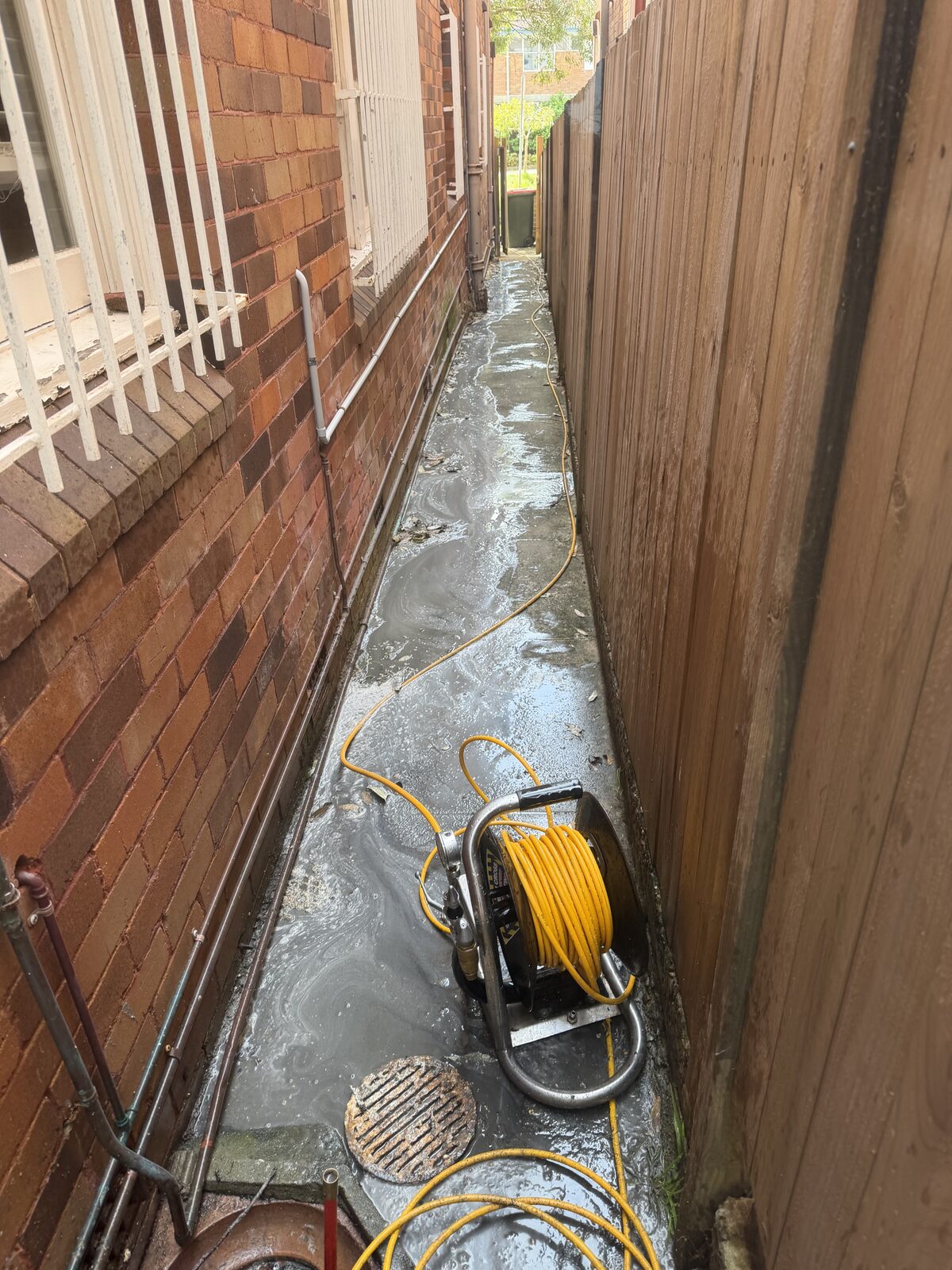
The waste stack runs three storeys up the side wall, in a passage narrow enough that two people and a ladder is a crowd. It was cast iron, original to the building. By the time it came off the wall, the joints had corroded and the inside of the pipe had narrowed with scale.
A waste stack is the vertical pipe that collects everything from the kitchens and bathrooms stacked above each other on each floor and carries it down to the sewer. In a block like this one it is common property, and that single fact decides how the job gets organised, quoted and paid for. It is also the part owners are most often unclear about.
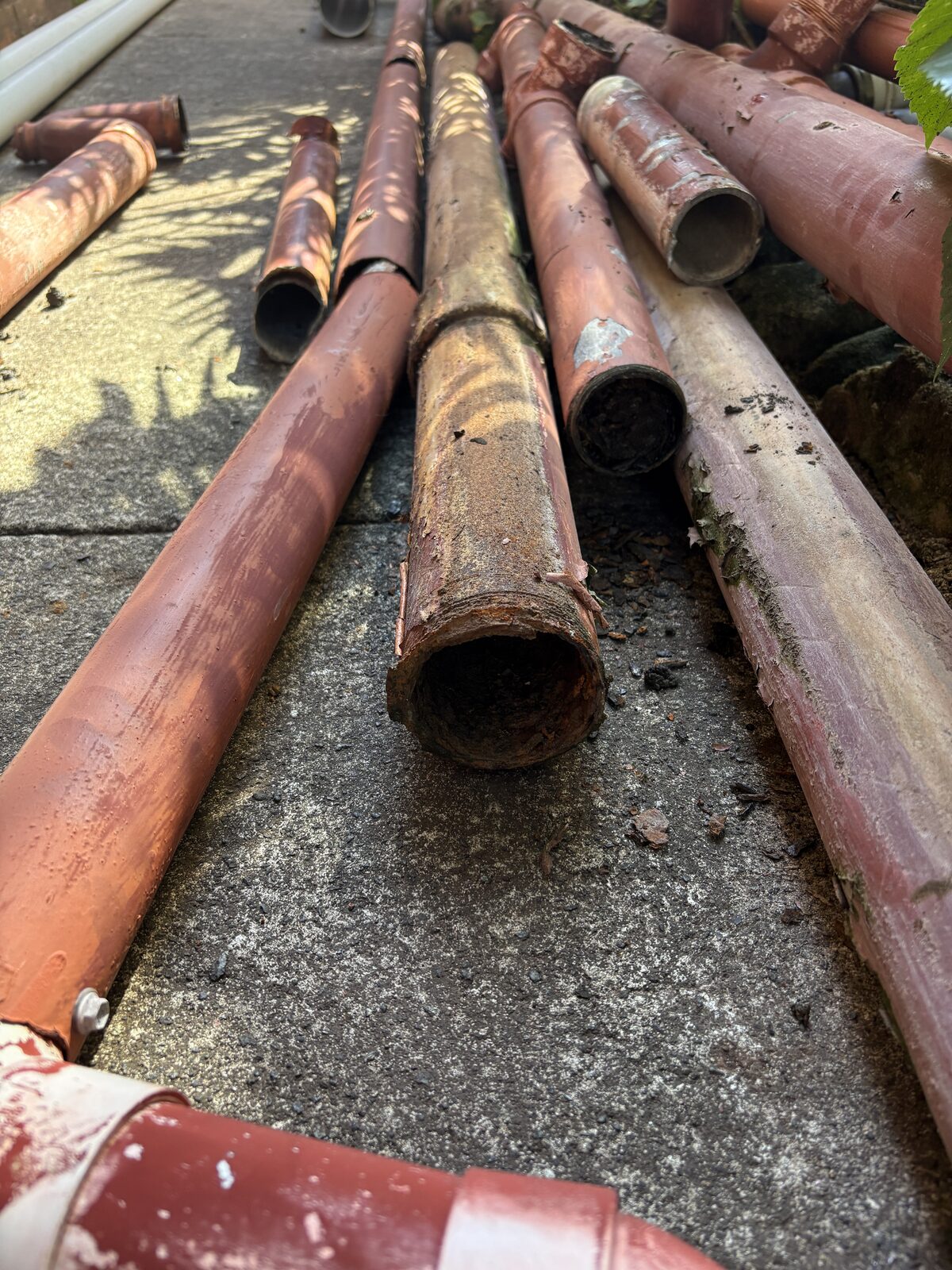
What the old cast iron waste stack looked like when it came out
Cast iron was the standard for waste stacks in Sydney apartment blocks for decades, and a great deal of it is still in service. What comes out of the wall at the end of that service life tends to look like these sections did: sound enough through the middle of a length, corroded at the joints, and narrowed on the inside where scale has built up.
That is the reason the repairs kept failing. Where the metal has thinned at several joints along the same run, fixing whichever one is wet today only moves the next failure a little further along, and the building ends up paying for the same access over and over.
None of that is a defect in the original work. A stack that has run this long has done its job. The only real question for a building is whether it gets replaced on a plan or replaced in a hurry.
Where the stack sits matters too. This one runs on the outside of the building, up the side wall, which is common in Eastern Suburbs walk-ups of this era. That makes a replacement far less disruptive than a stack buried in a duct behind the bathrooms, because no apartment has to be opened up to reach it.
Who is responsible for a waste stack in a strata block
The stack is common property, not any one owner's pipe. NSW Government guidance on strata repairs and maintenance puts it plainly: the owners corporation is responsible for the maintenance and repair of common property, while owners repair anything inside their own lot. So a corroded stack is not something a single owner arranges or pays for, even when the symptoms show up in their bathroom first.
The quoting rules are worth knowing before the conversation starts. Under the current NSW rules, all schemes, regardless of size, must obtain at least two independent quotes for any work valued at $30,000 or more. A full stack replacement in a larger block can reach that figure, so a committee is better off building the extra step into the timeline than discovering it late.
None of this has to become an emergency. A stack showing its age can be assessed, scoped and quoted while it is still working, which gives a committee room to plan the spend, put it to a meeting and give owners proper notice. The same job after a failure gets decided in a week, usually at a worse price, with residents already inconvenienced.
How the waste stack replacement was done
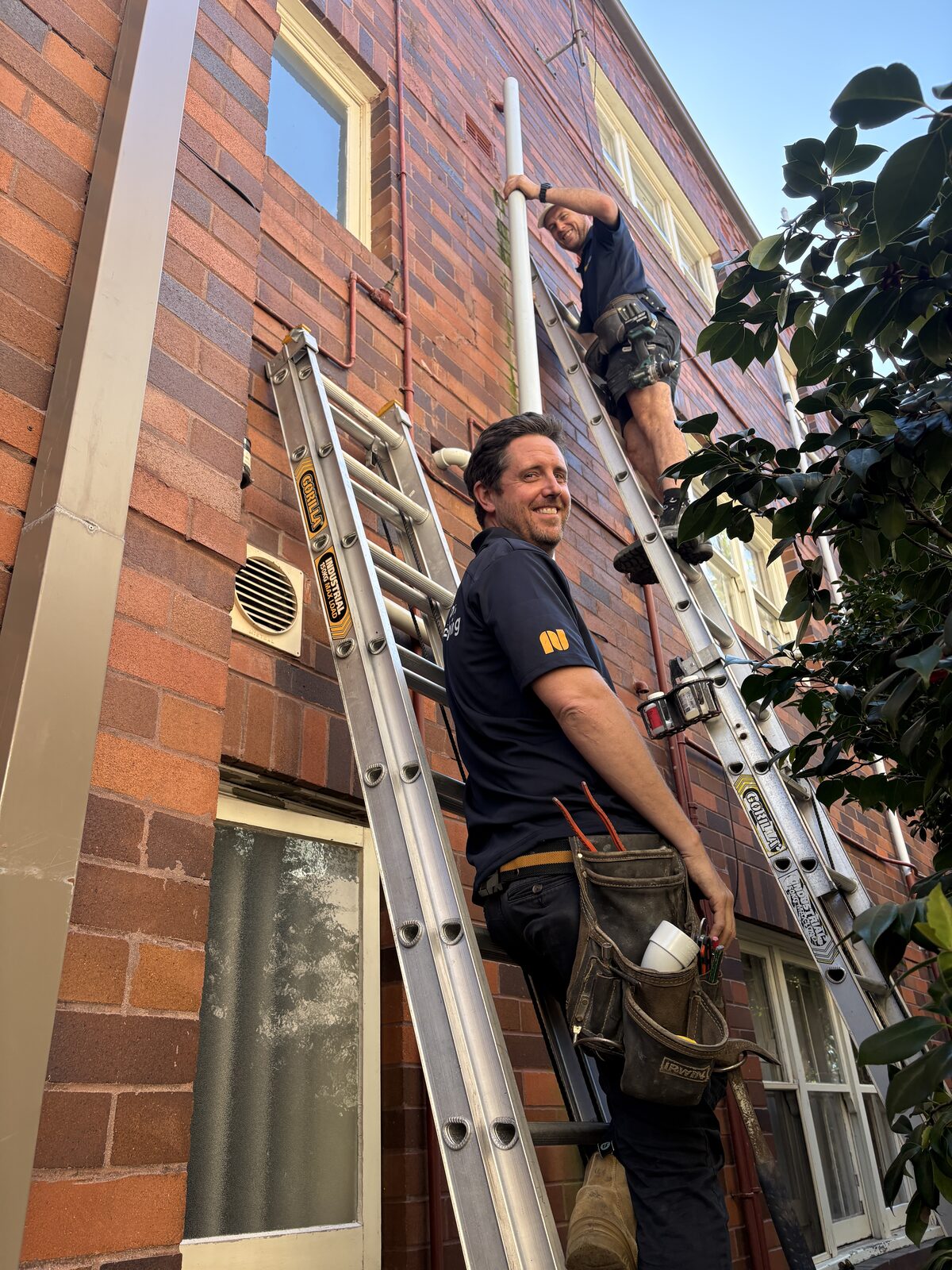
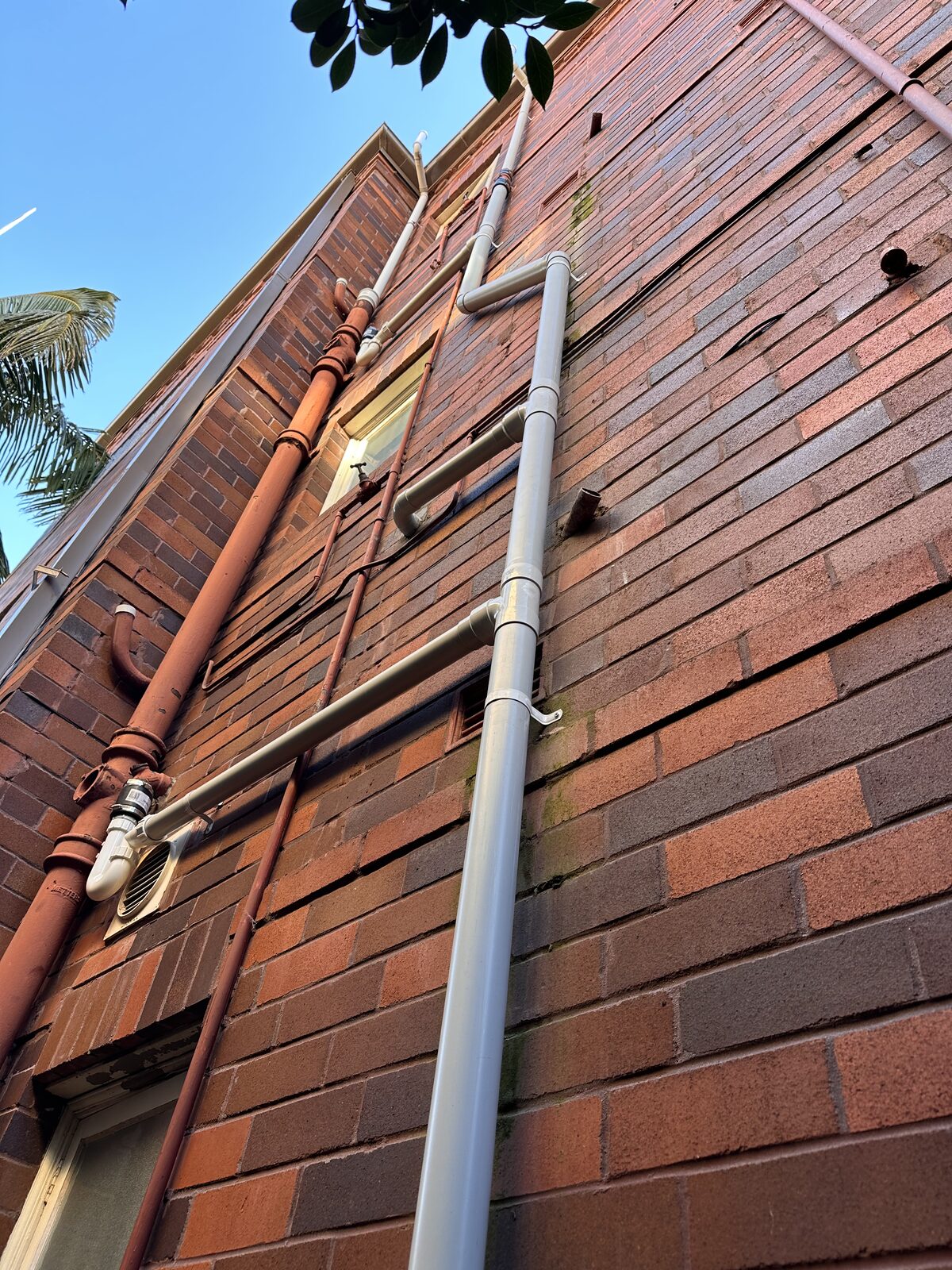
The old stack came out in sections, cut and brought down the passage rather than dropped. The new stack is PVC, run in the same line up the wall and tied back into the existing waste connections on each level as it went.
Each level has waste connections coming out of the building, and every one of them has to be picked up again as the new line goes up. That is the fiddly part of a job like this, more than the vertical run itself. The connections sit at different heights, they are not always square to the wall, and the older the building the more likely it is that something has been altered along the way.
PVC is the standard replacement now. It is lighter, faster to work with and it does not corrode. The one honest trade-off is noise, because cast iron is heavy and deadens the sound of water moving through it better than plastic does. That is why acoustic lagging gets specified on some apartment work, and it is worth raising with a committee beforehand rather than afterwards, particularly where the line passes close to a bedroom wall.
Access is the part that shapes a job like this one. There is no room for scaffold in a side passage this width, so it was done off extension ladders. That in turn shapes the sequence, because the work has to be staged around keeping the building's waste line usable rather than around whatever would be quickest to install.
Why Coogee's interwar blocks are reaching this point
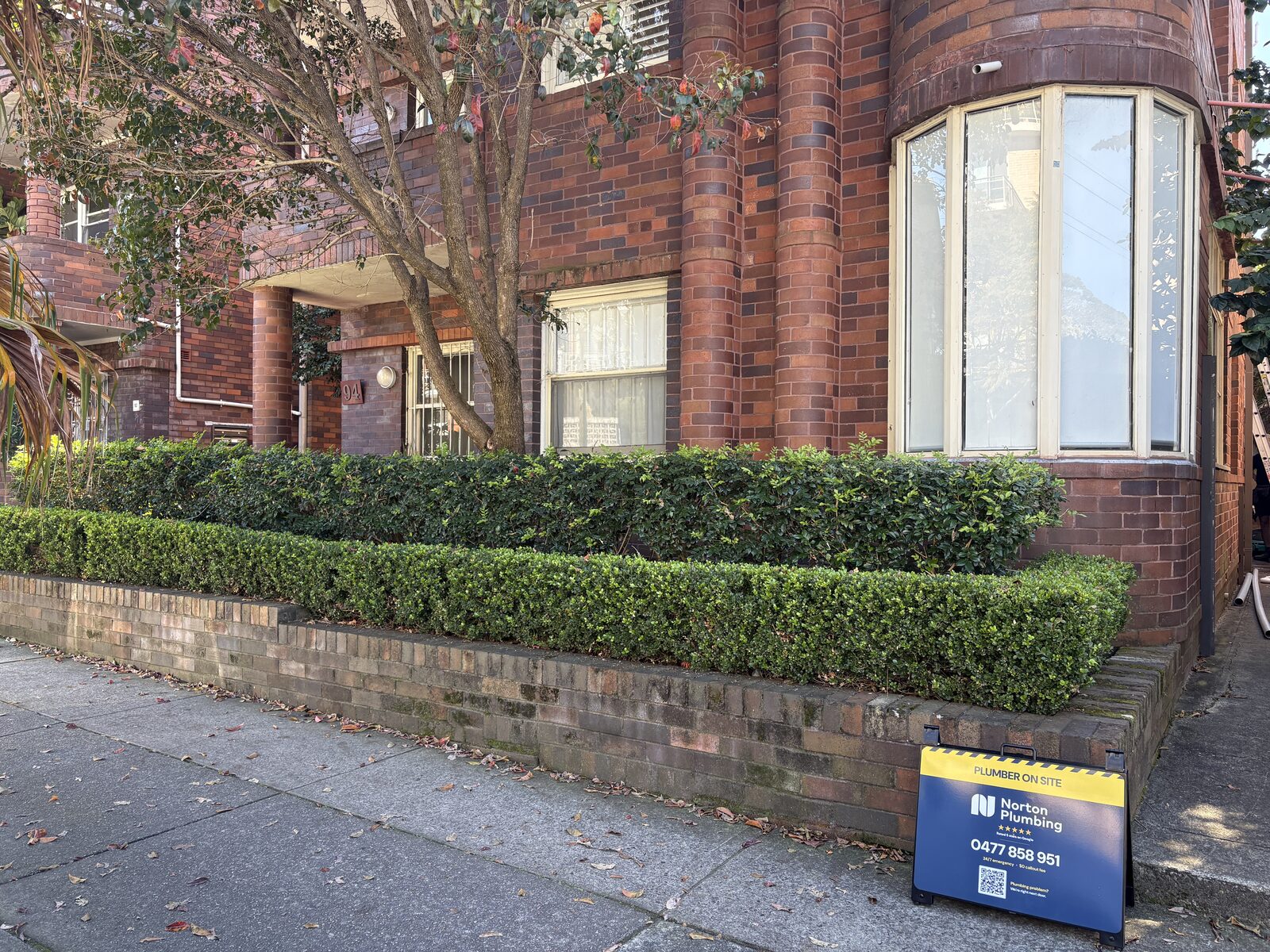
Coogee is full of three-storey red brick walk-ups built between the wars, and they share a set of features: solid brick, curved bay windows on the street front, narrow side passages, and services run on the outside of the building. The plumbing in them has now had the better part of a century of use.
There is a practical wrinkle in these buildings too. The side passage that carries the pipework is often the only route to the back of the property, and it is usually shared with bins, meters and a clothesline or two. Agreeing how that space gets used during the work is part of the job, and it is far easier to sort out at quoting stage than on the morning the ladders turn up.
That is not a reason to panic. It is a reason to know what your block actually has. A committee that knows whether its stacks are cast iron, when they were last touched and what condition the joints are in can plan a replacement into a levy cycle. A committee that does not know tends to find out during a failure, which is the worst time to be collecting quotes.
We have written about what a proper program covers in strata plumbing maintenance, and about a blocked drain in a Rose Bay strata apartment where the same question of who owns the pipe had to be worked out before anyone could touch it.
What to look for on your own block
- Staining or damp on the brickwork below a stack joint, particularly down a shaded side passage where nothing dries out quickly.
- Gurgling from a ground floor bathroom when an apartment upstairs empties a bath or a sink. That can point to a restriction in the shared stack rather than a problem in any one lot.
- Leaks that keep coming back in different apartments, rather than the same one every time. That points at the shared line rather than at any single lot.
- Flaking paint and scale around the base of the stack where it turns into the ground.
- No record of the stacks ever being replaced in a block of interwar or early post war vintage. Absence of history is itself information.
How to reach Norton Plumbing
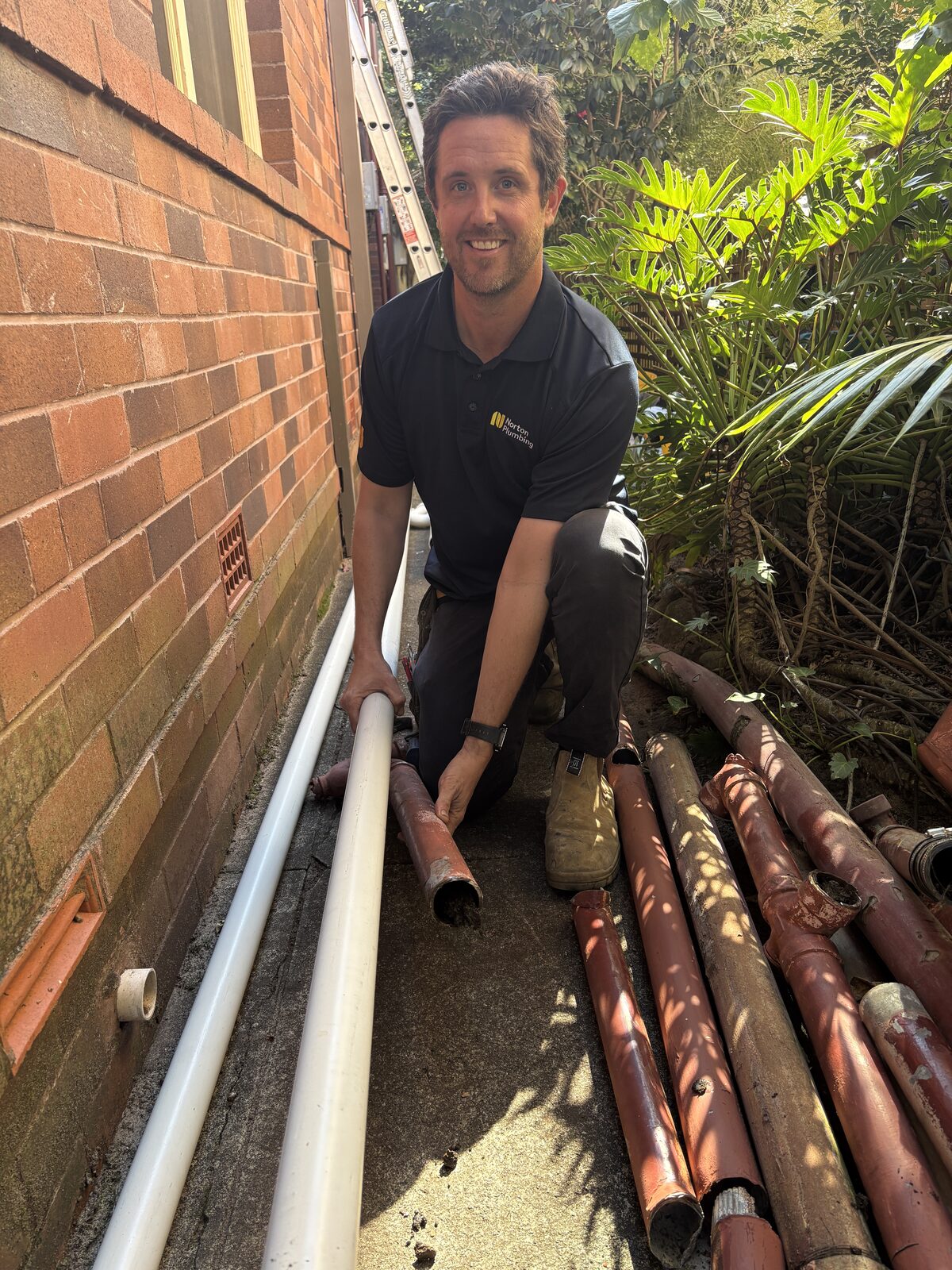
Norton Plumbing has worked in Coogee and across the Eastern Suburbs since 2019, and we work with owners corporations and strata managers on stack and riser replacements, CCTV drain inspections and planned maintenance. I hold NSW plumbing licence 397768C and was on the tools for this one myself. The team works out of 10/11a-15 Berwick St, Coogee. If your block still has its original cast iron stack and you want to know what condition it is in, see our strata plumbing page, our Coogee plumber page, or call 0477 858 951.
Frequently asked
Common questions
- What is a waste stack?
- The vertical pipe that collects waste from the kitchens and bathrooms on each floor of an apartment block and carries it down to the sewer. In older Eastern Suburbs walk-ups it often runs on the outside of the building, up a side wall, rather than inside a duct behind the bathrooms.
- Who pays to replace a waste stack in a strata block?
- The owners corporation. A waste stack is common property, so repairing or replacing it is funded by the scheme rather than by the lot owner whose bathroom happens to sit closest to it. Owners remain responsible for the pipework inside their own lot. NSW Government guidance sets out the split.
- Do residents have to move out while a stack is replaced?
- Usually not, where the stack runs up an external wall as it does in many Eastern Suburbs walk-ups, because the work happens on the outside of the building. Residents are asked to hold off using waste fixtures while the line is open, and that window is agreed with the building before work starts.
- How do you know if a cast iron stack needs replacing rather than repairing?
- Condition along the whole run decides it, not the state of the joint that is leaking. A single failed joint on an otherwise sound stack is a repair. Once several joints have thinned and the bore has scaled up, the run has reached the end of its life and replacement is the cheaper answer.
- Can a waste stack be replaced without scaffolding?
- Often yes. Where the stack runs up an external wall with side passage access, the work can be done off extension ladders, which is how the Coogee Bay Road job was handled. Scaffold becomes necessary where there is no safe footing for ladders or the wall cannot be reached from the ground.
- Does a stack replacement need two quotes under the strata rules?
- It can. Under current NSW rules every strata scheme, whatever its size, must obtain at least two independent quotes for work valued at $30,000 or more. A full stack replacement in a larger block can reach that threshold, so committees should allow for the extra quoting step in the timeline.
Related service
Strata Plumbing
Strata plumbing in Eastern Suburbs Sydney - annual maintenance, riser inspections, emergency callouts. Experienced with 1960s-80s buildings.
See our strata plumbing pageNeed a plumber in the Eastern Suburbs?
Call 0477 858 951