Case study · 5 min read
Blocked drain Rose Bay: strata apartment call
A strata manager called us in for a blocked communal drain at a multi-storey Rose Bay apartment block. Three separate access points, three different techniques. Here is how the job unfolded.
Adam Norton · 11 June 2026
A strata manager called Norton Plumbing about a drain problem at a multi-storey apartment block in Rose Bay, Eastern Suburbs. Several units had reported slow drainage and the building manager needed it investigated properly.
What the job turned out to involve was a drain system running across three completely separate levels of the building, each requiring its own access point. That is fairly typical for a post-war apartment block of this size, but it means a quick ground-level cleanout will miss most of what is going on.
What the camera found
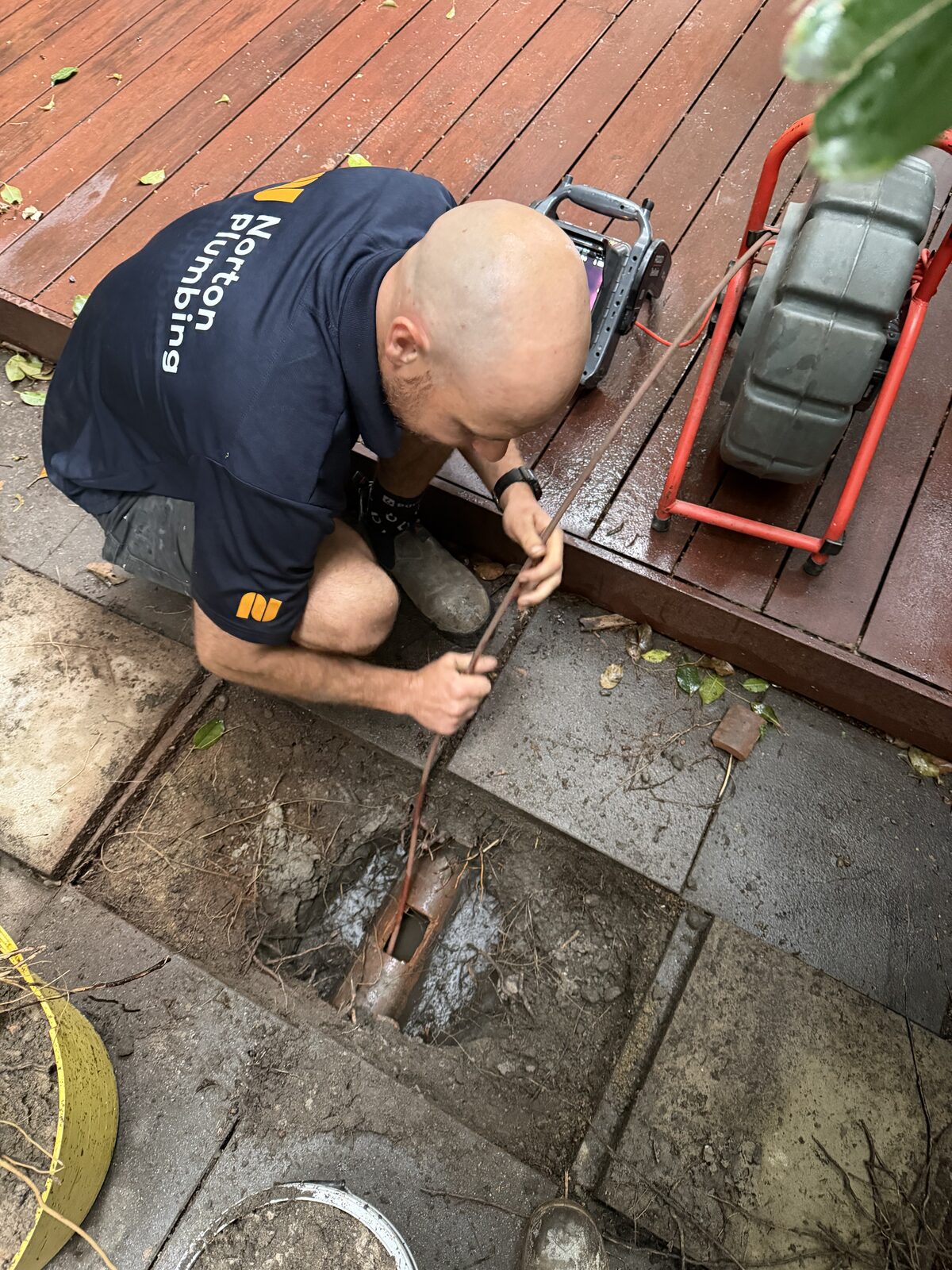
Before any clearing, Adam ran the CCTV camera through the line. The camera found a significant grease buildup at a junction in the system. Grease accumulates gradually at junctions because flow slows where pipes meet, giving fats and oils time to cool and stick to the pipe wall. Over years, in a building with multiple kitchens feeding the same line, the buildup can eventually reach the point where it nearly closes off the pipe.
This is a different problem from tree roots or a collapsed pipe. The pipe itself was structurally fine. The blockage was entirely the buildup, which meant high-pressure jetting was the right tool once the location was confirmed.
Three access points, one blocked system
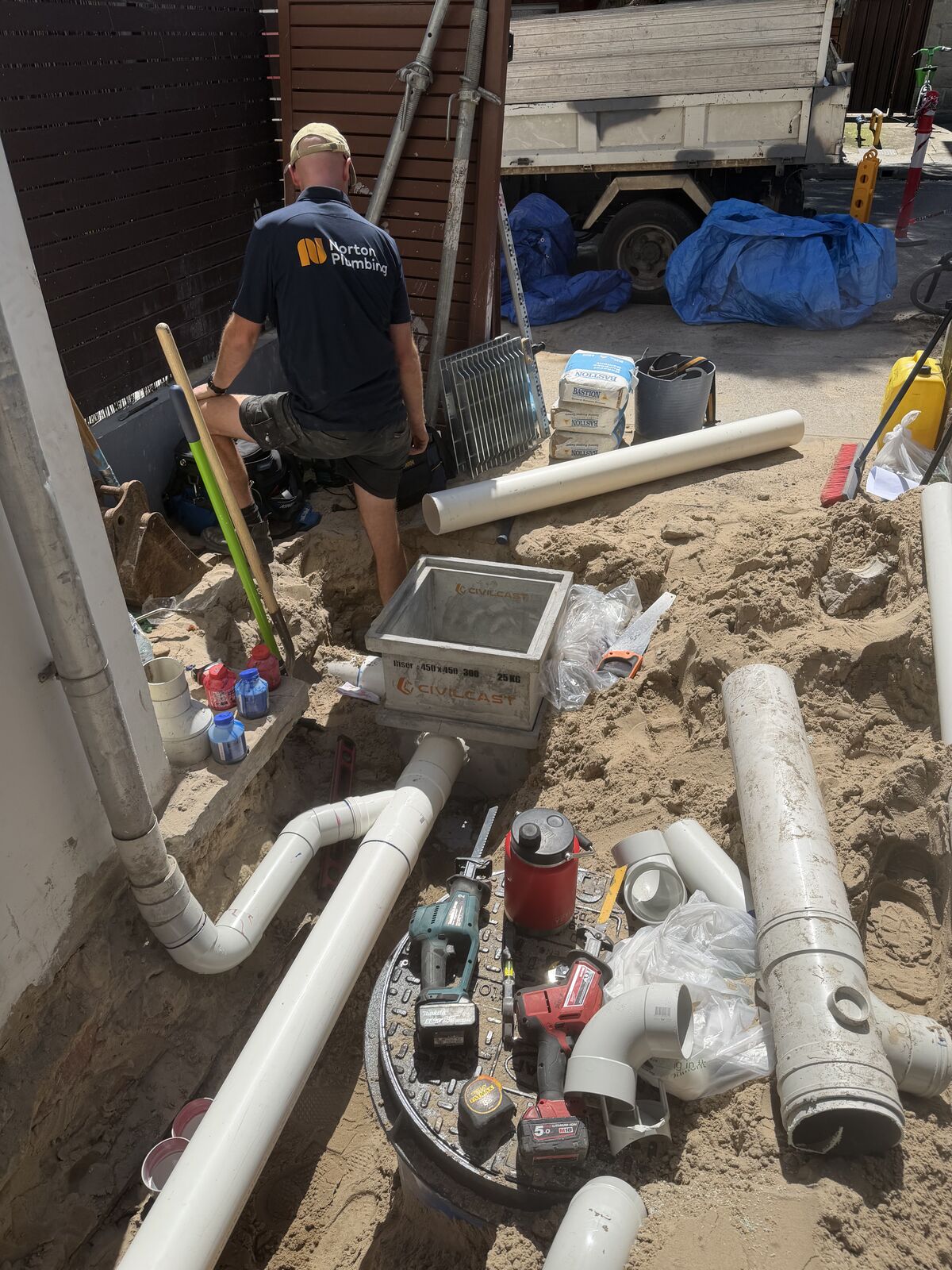
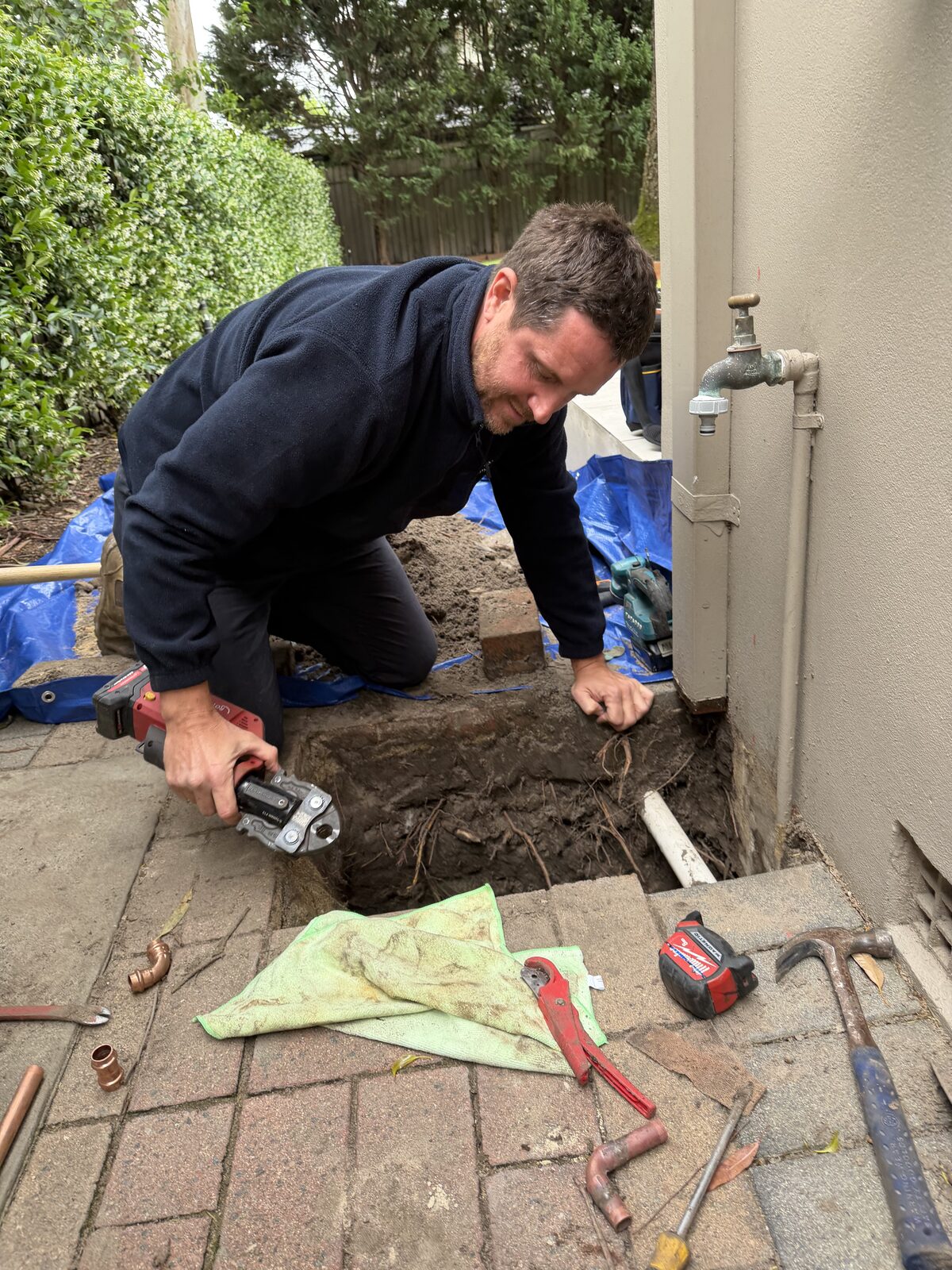
The building drain runs from a high-level junction on the exterior wall, down through the underground car park level, and out through inspection chambers in the garden before connecting to the street. To properly clear and verify the line, Adam needed to access it at all three points.
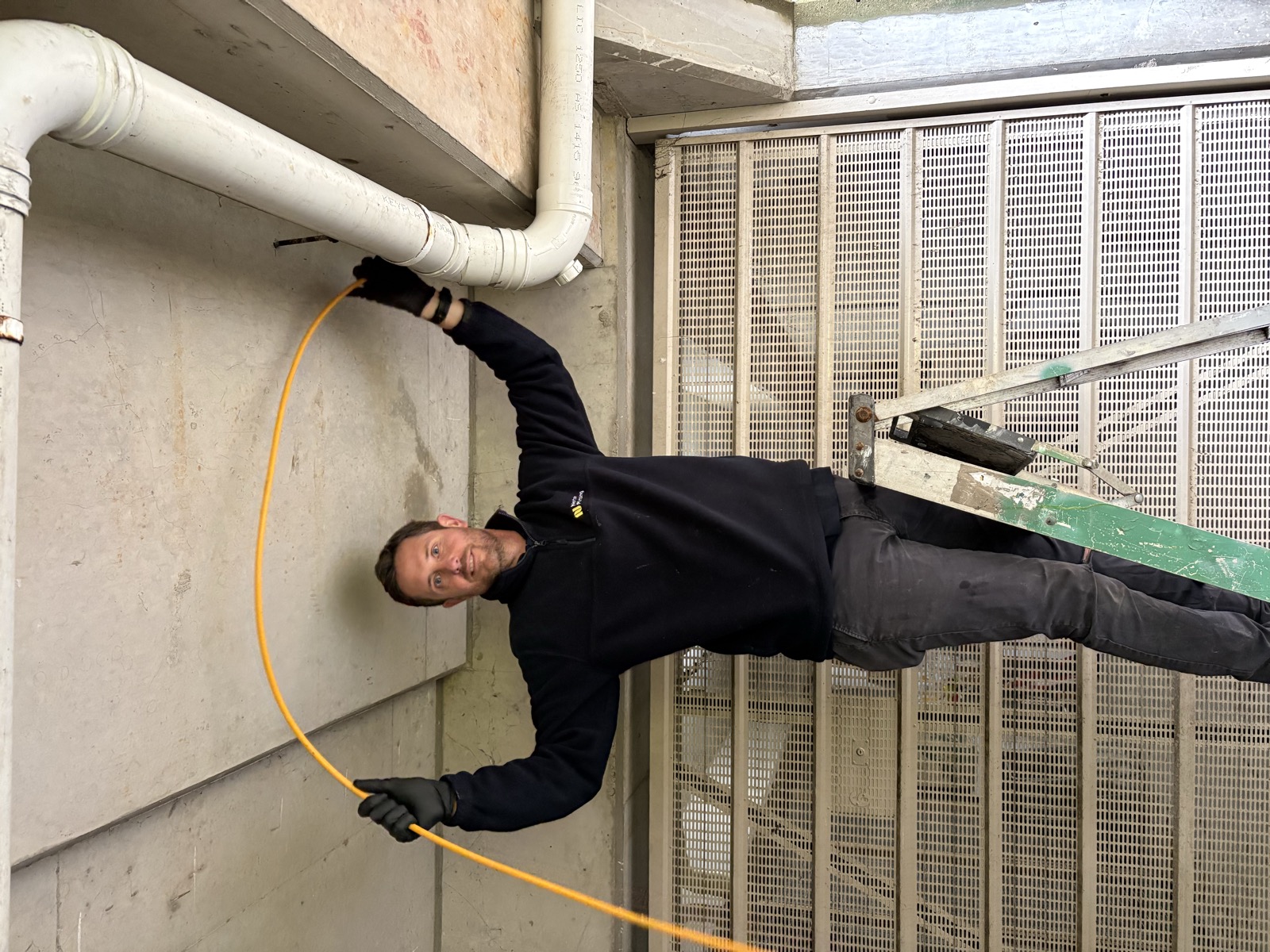
Starting at the top, Adam climbed to the high-level access point on the exterior wall and ran the electric eel down from above. A ground-level approach alone would not have reached the junction where the grease had built up.
Underground car park: staging the jetter
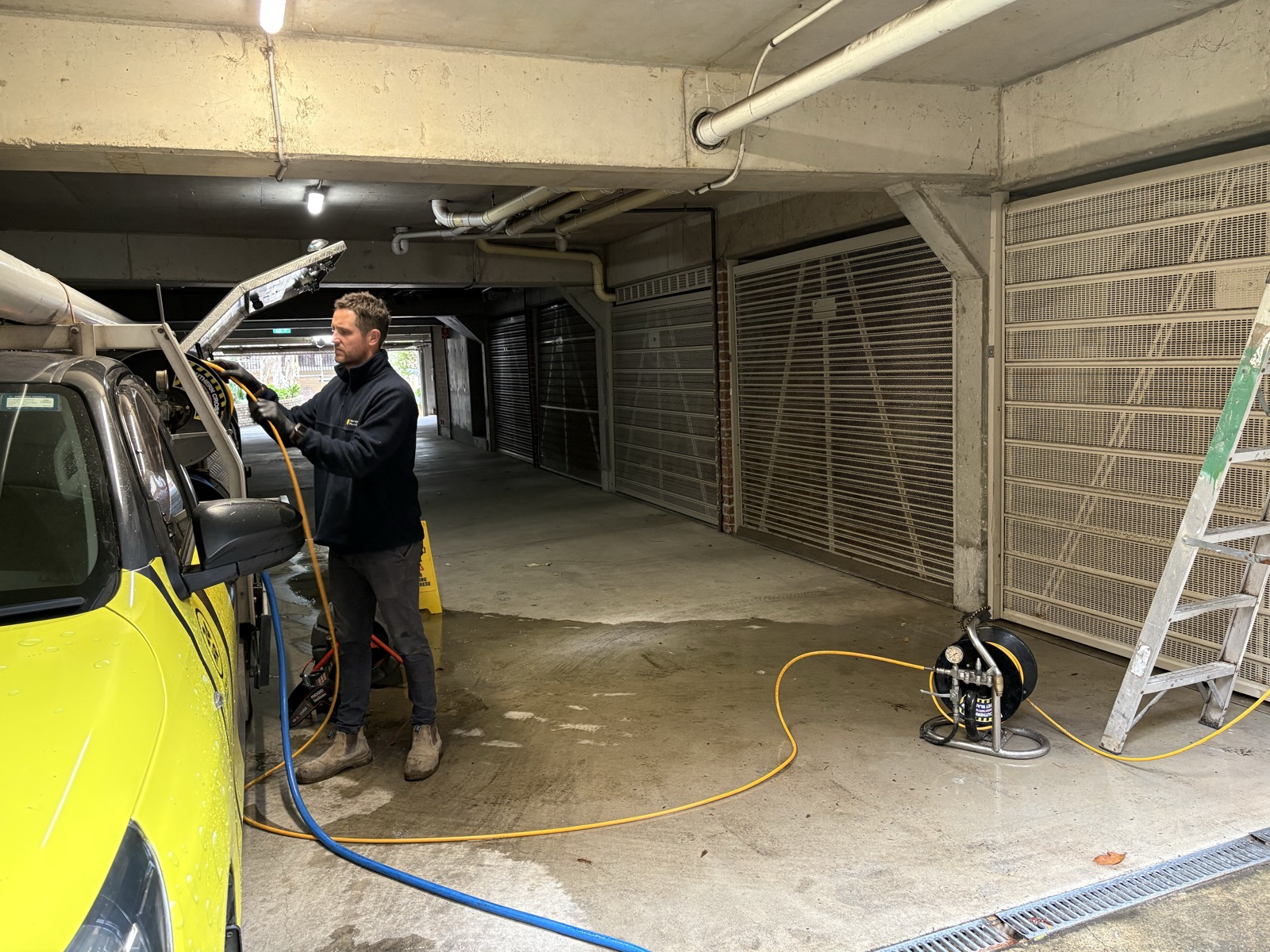
The second access point was in the basement car park. This is where a blocked communal drain tends to back up first in a building like this. Adam drove the jetter truck into the garage, set up the high-pressure equipment, and ran the camera again after clearing to confirm the junction was clean.
Garden inspection chambers: confirming the outfall
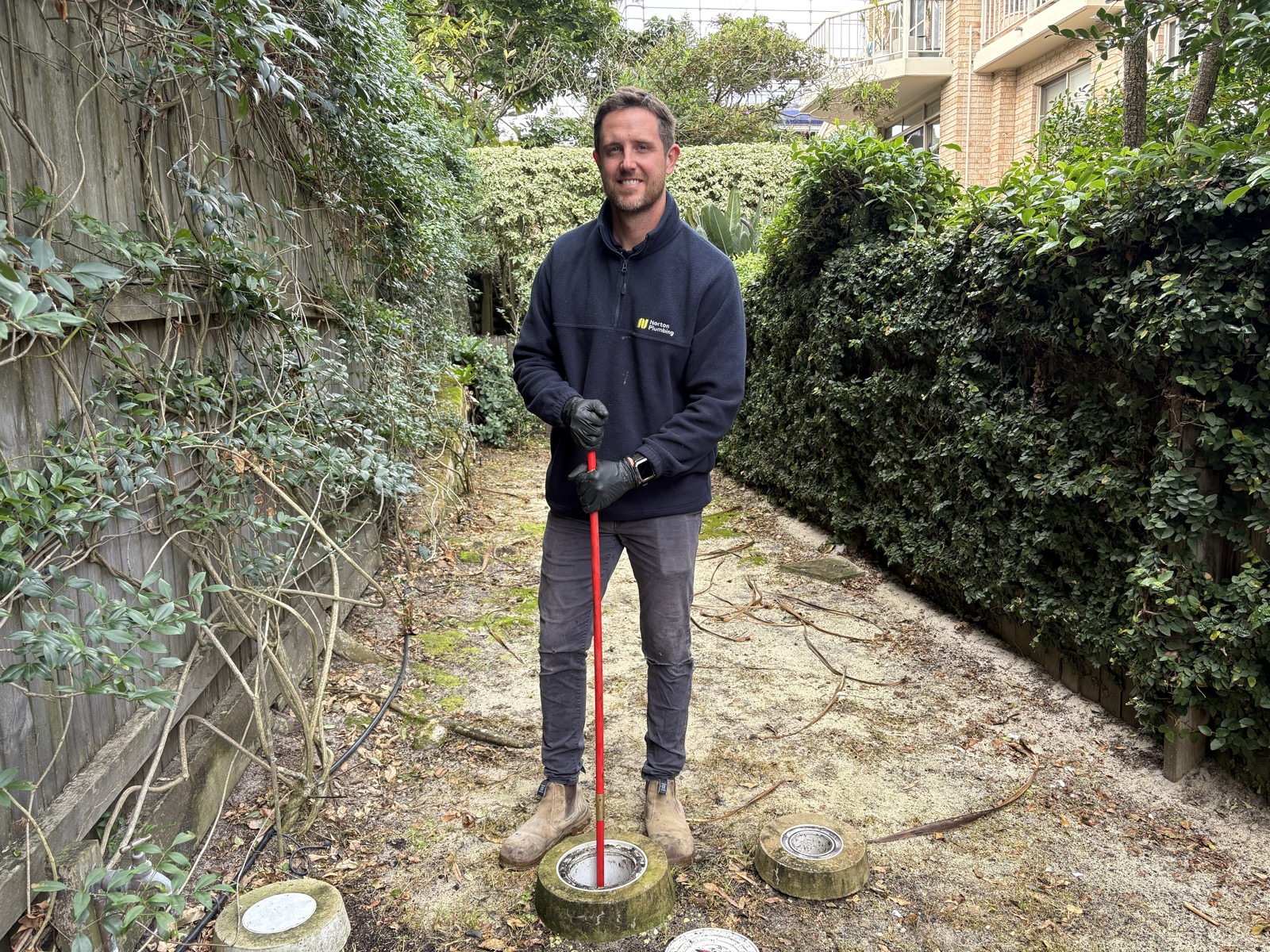
The third access was at ground level in the rear garden, where concrete inspection chambers mark the drain's path before it exits to the street. Adam opened these up and used drain rods to confirm flow had been restored through the full length of the system.
Rose Bay apartment buildings and grease in drains
Rose Bay has a large stock of post-war apartment blocks built mostly between the 1950s and 1970s. These buildings typically have multiple kitchens all draining into the same shared line, and in many cases that line has never had a proper maintenance clean. Grease does not announce itself until the buildup is severe enough to nearly close the pipe.
It is also worth noting that grease is entirely preventable with regular jetting. A maintenance clean every two to three years on a building of this size costs a fraction of an emergency callout, and it means the strata manager is never dealing with multiple units backing up at once.
We offer a regular maintenance program for strata buildings across the Eastern Suburbs. Read more: Strata plumbing maintenance: a real annual program.
How to reduce grease buildup in your apartment drain
Individual habits do make a difference at the branch level, even if the shared line ultimately needs scheduled jetting to stay clear.
- Never pour cooking oil or fat down the sink. Let it cool and put it in the bin.
- Run hot tap water for 30 seconds after washing greasy pans. Hot tap water from your hot water system keeps grease moving. Avoid pouring boiling water from a kettle down PVC pipes as it can soften joints over time.
- A dose of dish soap followed by hot tap water once a week helps flush the branch line before grease has a chance to set.
- Avoid enzyme drain cleaners that claim to dissolve grease. They may help with surface buildup but do nothing for grease already coating the inside of a shared line.
The honest strata reality: one kitchen's good habits do not protect the shared line if the other kitchens in the building are not doing the same. Individual behaviour helps at the branch level but not at the junction. The only reliable way to keep a shared line clear is scheduled jetting. Strata committees can include a short kitchen drain care note in their AGM paperwork, it costs nothing and helps reduce callouts.
Warning signs in a strata building
Multi-unit buildings tend to mask drainage problems until they are serious. Things to flag to your strata manager:
- Slow drainage across multiple units at the same time, not just one apartment
- Gurgling sounds from drains when other units are running water
- Drain odour in the basement car park or garden, often the first sign of a communal blockage
- A drain that gets progressively slower over months rather than blocking suddenly
- No record of a maintenance clean in the past three to five years
Frequently asked
Common questions
- Who is responsible for a blocked drain in a strata building?
- Communal drains that serve more than one lot are strata common property, so the owners corporation is responsible for repairs. If the blockage is inside a single apartment and does not affect other units, it is usually the individual lot owner's responsibility. Your strata manager can confirm based on the building's by-laws and drainage diagrams.
- Is grease buildup a common cause of blocked drains in apartment buildings?
- Yes, and it is one of the most preventable. In a building with multiple kitchens on the same drain line, grease accumulates at junctions over time. The buildup is slow enough that nobody notices until the pipe is nearly closed. Regular high-pressure jetting every two to three years keeps the line clear before it reaches that point.
- How long does a strata drain job take?
- A straightforward jetting job on a single line takes two to three hours. When the system spans multiple levels and requires access from several points, as this Rose Bay job did, a full day on site is more realistic. We advise the strata manager on timing once we have assessed the access.
- Do you work directly with strata managers?
- Yes. Norton Plumbing works with strata managers and building managers across the Eastern Suburbs. We can provide written quotes for body corporate approval, attend urgent callouts, and supply compliance documentation for building records.
Related service
Blocked Drains
Fast, professional blocked drain clearing in Eastern Suburbs Sydney
See our blocked drains pageNeed a plumber in the Eastern Suburbs?
Call 0477 858 951