Case study · 5 min read
Gas regulator Rose Bay: pressure test
Norton Plumbing replaced a failing gas regulator at a Rose Bay home, then ran a full pressure drop test to confirm the new setup was safe.
Adam Norton · 15 July 2026
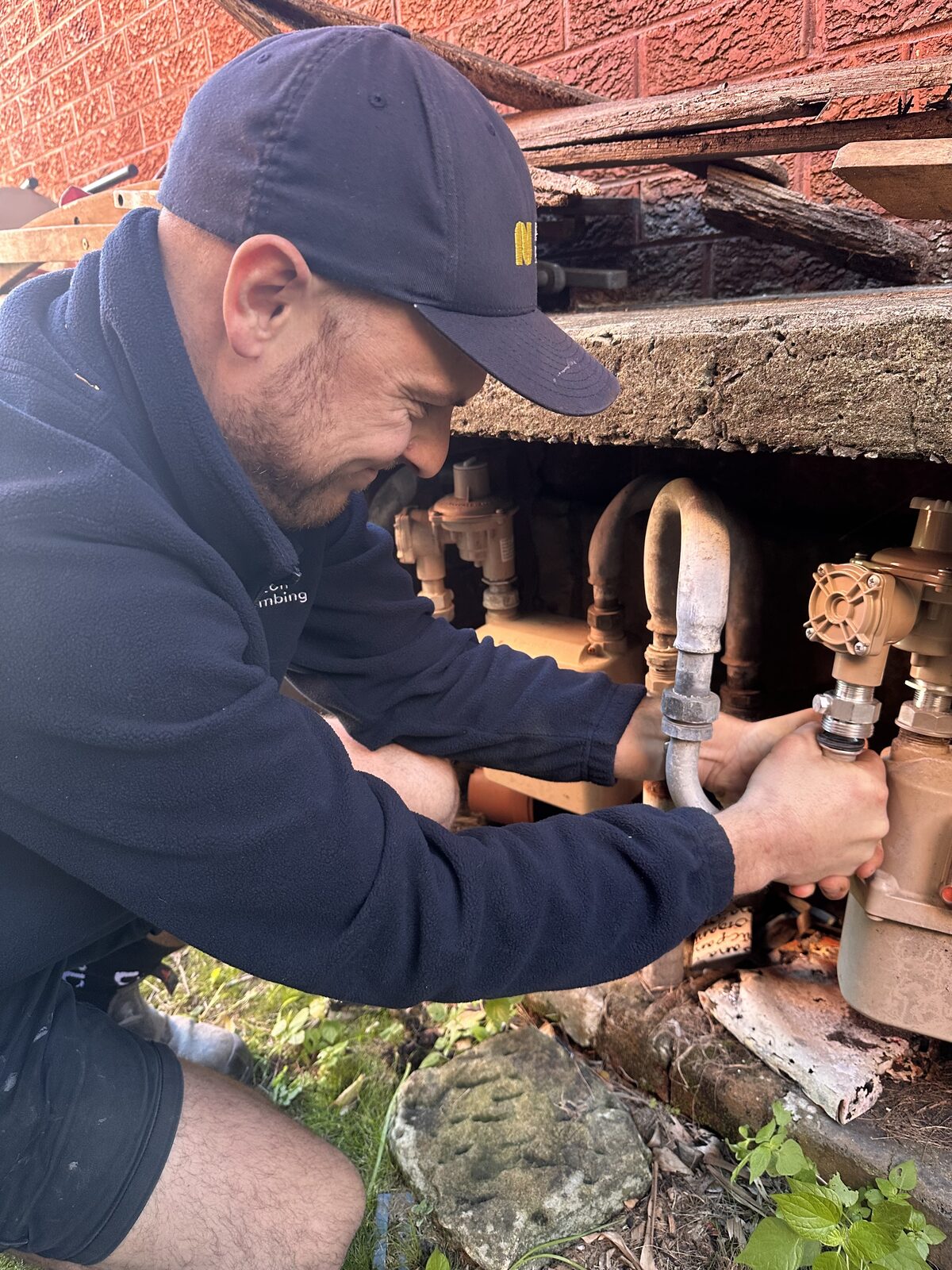
Norton Plumbing was called to a home in Rose Bay to deal with a failing gas regulator, the small unit that controls the pressure of the gas feeding the property. Greg replaced it and finished the job with a full pressure drop test, the check that proves a gas installation is holding pressure correctly with no leaks anywhere downstream.
A gas regulator is not a part most homeowners think about until something goes wrong with it. It sits quietly in the pipework, and when it starts to fail, the symptoms usually show up somewhere else entirely: a cooktop flame that changes size or colour, a hot water system that will not stay lit, or a gas appliance that has quietly stopped performing the way it used to.
What a gas regulator does
A regulator's job is to bring gas down to a safe, steady pressure before it reaches the pipework feeding a property's appliances. Diaphragms in older regulators perish over time, springs weaken, and years of weather exposure can affect how consistently a unit holds pressure. None of that shows up as an obvious leak. It shows up as pressure that drifts, and that drift is what appliances tolerate for a while before they stop tolerating it.
Replacing the regulator
Greg removed the old regulator and fitted a new one into the property's gas system, matching it to the household's gas load so every appliance downstream gets a consistent supply. This is licensed gasfitting work. Jemena, the gas distributor across Sydney, maintains the gas network and the meter itself. Keeping the property's own gas equipment safe and in good repair, including a regulator like this one, is the homeowner's responsibility, which is why the job is licensed gasfitting work rather than something the network operator carries out.
The pressure drop test: proving the fix
Fitting a new regulator is not the end of the job. Every gas installation has to be tested before it is signed off, and the test that matters here is a pressure drop test, sometimes called a lock-up test. Greg pressurised the system and monitored it on a manometer to confirm the pressure held steady, with no drop that would indicate a leak in the fittings, joints or the regulator itself. Pressure testing procedures for gas installations are set out in the Australian gas fitting code, AS/NZS 5601, and it is the only way to actually prove a system is safe rather than assume it.
Gas regulators in Rose Bay's older homes
A lot of the housing stock around Rose Bay, from Federation and interwar homes through to the harbourside apartment blocks, runs on gas installations that have had components added to and replaced piecemeal over decades. A regulator fitted when a house was built has usually never been looked at again unless something has gone wrong. Age alone is a reason to have one checked, particularly on a property that has had renovations, extra gas appliances added, or a hot water system upgrade since the original installation went in.
Signs your gas regulator might be failing
- A flame that changes colour or size on its own, especially on a cooktop, which points to inconsistent gas pressure rather than a dirty burner.
- A gas hot water system that struggles to stay lit or cycles on and off more than it used to.
- Any gas appliance that used to run fine and has started underperforming without an obvious cause.
- A gas smell, however faint. This is always urgent. Turn off the gas at the meter and call a licensed gasfitter immediately, do not wait for an inspection.
- A regulator that has never been checked since the property was built, particularly one that has been exposed to the weather the whole time.
How to reach Norton Plumbing
Norton Plumbing has carried out licensed gas fitting work across the Eastern Suburbs since 2019, from Rose Bay through to Coogee, Bondi, Randwick and Maroubra. Adam Norton is the primary plumber on the tools and holds NSW plumbing licence 397768C. Phone 0477 858 951. Based at 10/11a-15 Berwick Street, Coogee NSW 2034. See our gas fitting service page for what a regulator replacement and pressure test involve.
Frequently asked
Common questions
- What does a gas regulator do?
- A gas regulator brings the gas feeding a property down to a safe, consistent pressure before it reaches the pipework running to appliances. Without a properly working regulator, gas pressure can drift too high or too low, which affects how safely and efficiently appliances run.
- How do I know if my gas regulator needs replacing?
- The clearest signs are inconsistent appliance performance: a cooktop flame that changes colour or size, a hot water system that will not stay lit, or a gas appliance underperforming for no obvious reason. A licensed gasfitter can test the regulator directly rather than guessing from symptoms alone.
- What is a gas pressure drop test?
- A pressure drop test, also called a lock-up test, checks that a gas installation holds pressure steadily over time with no drop, which would indicate a leak. It is required under the Australian gas fitting code after any new or altered gas work, including a regulator replacement, and is the standard way to confirm an installation is safe.
- Can I replace a gas regulator myself?
- No. Gas fitting work in NSW must be carried out by a licensed gasfitter. A regulator controls the pressure feeding gas appliances, so a fitting error has real safety consequences. Any gas work, including a regulator swap, needs to be done and signed off by a licensed professional.
- How often should a gas regulator be checked?
- There is no fixed replacement schedule, but a regulator that has never been checked since the property was built, or one on a property that has had gas appliances added or upgraded since, is worth having assessed. Weathered or corroded regulators can hold pressure inconsistently without any obvious warning sign.
Related service
Gas Fitting
Licensed gas fitting and repairs in Eastern Suburbs Sydney - safety is non-negotiable
See our gas fitting pageNeed a plumber in the Eastern Suburbs?
Call 0477 858 951