Case study · 6 min read
Blocked drain Point Piper: tree roots
A Point Piper renovation uncovered a drain packed with tree roots. Here is what the CCTV camera found and how high-pressure jetting cleared the line.
Adam Norton · 7 July 2026
A builder renovating a heritage home in Point Piper called Norton Plumbing about a drain that kept backing up. The house was mid-renovation, the floors were up, and the drainage under the property had been running slow for a while. Before the new finishes went down, everyone wanted to know what was actually going on underground.
That timing turned out to matter. A renovation is the one window where the drains are accessible before they get buried again for another few decades. It is the right moment to put a camera down the line and deal with whatever it finds.
What the CCTV camera found
Before touching anything, Adam ran a CCTV drain inspection down the line. The camera showed the problem straight away. Tree roots had worked their way into the underground drain and were choking the flow. This was not a soft blockage of wipes or grease. It was a solid mass of live root feeding on the water inside the pipe.
Tree roots find drains because a drain holds exactly what a root wants: water, nutrients and air. A hairline gap at an old pipe joint is all a root needs to get in. Once inside, it fans out into a net that catches everything passing through, so the blockage rebuilds itself even after the drain is cleared.
Why a plunger or a snake would not have fixed it
A hand snake or a plunger can punch a hole through a root ball and get water moving again for a short while. It does not remove the roots. The live root keeps growing, and the drain blocks again, usually worse than before, within months.
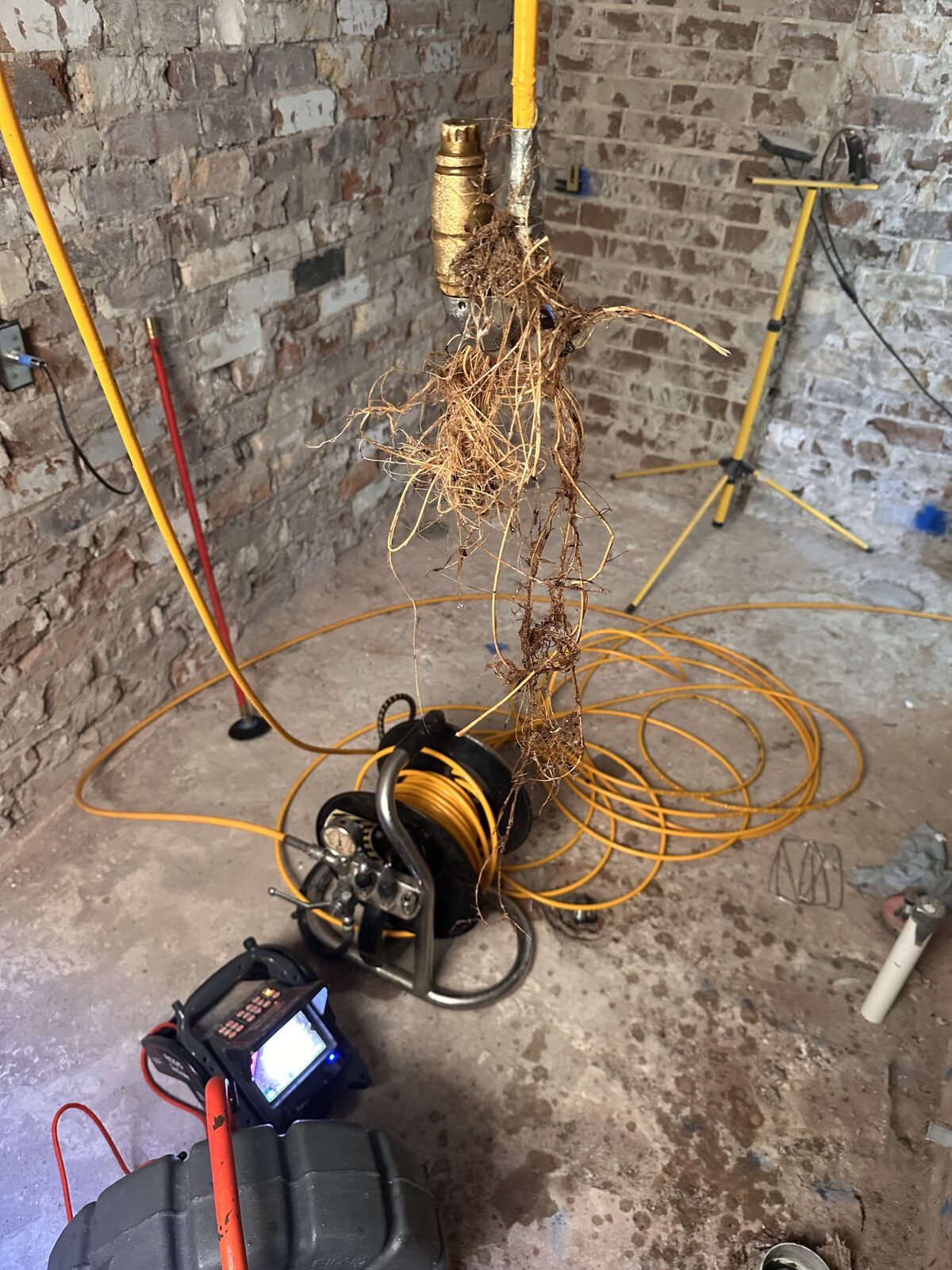
For roots, the tool that works is a high-pressure water jetter. It runs a hose down the drain and cuts the roots out with water at high pressure, scouring the pipe wall back to a clean surface rather than just poking a channel through the middle. For more on why this keeps happening in older homes around here, read: Tree roots in old clay drains: the Eastern Suburbs problem that never goes away.
Clearing the line
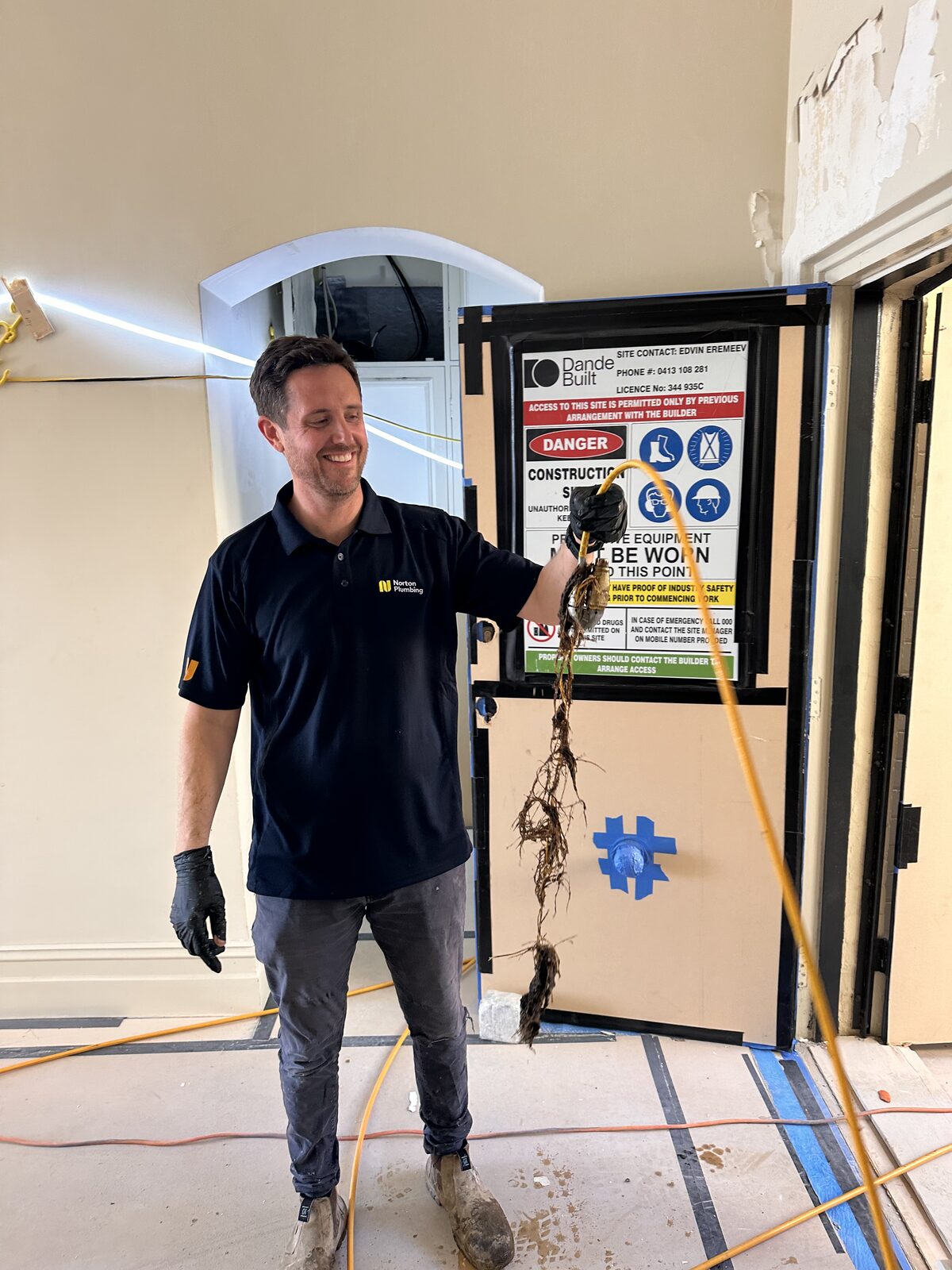
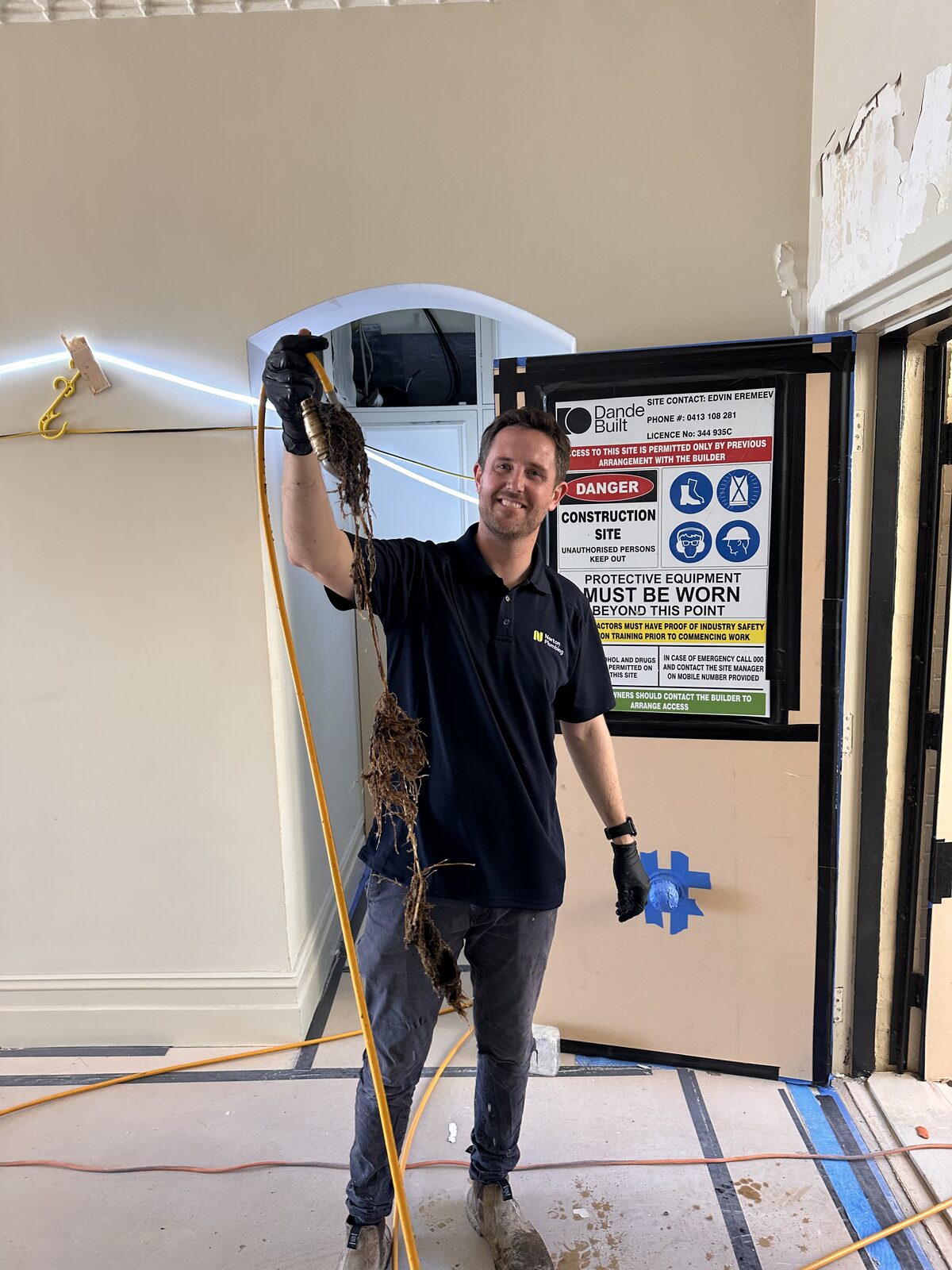
Adam jetted the affected section and drew the root growth back out through the drain access. What came out was a long, dense mass of root, the kind that only builds up over years. With the roots cleared, the camera went back down to confirm the line was running clean and to check the condition of the pipe itself.
The renovation was the chance to check the pipe
Clearing the roots gets the drain flowing again. The next question on any older home is whether the pipe that let the roots in needs more than a clean. That is a judgement call, and it is exactly why the camera goes back down after jetting rather than the job stopping at the first sign of clear water.
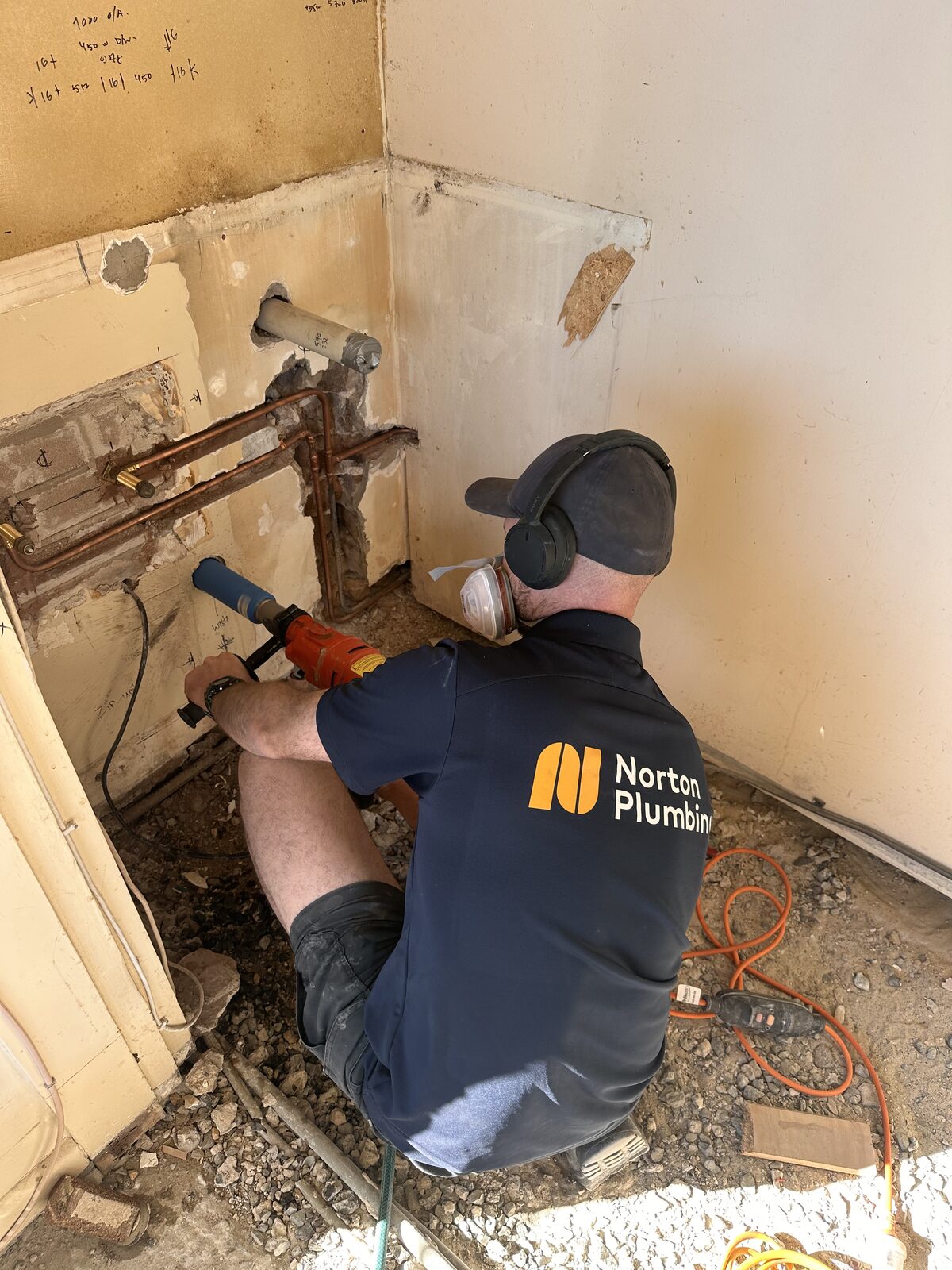
If a camera shows the pipe is cracked, dropped or broken at the joints, clearing it only buys time before the roots return through the same gaps. If it shows the pipe is sound and the roots came in through one tidy joint, a clear and a targeted seal can be enough. Sorting this while the property is already open, rather than once the new floors are down, avoids cutting back into finished work later to reach the same line.
Why tree roots in drains are so common in the Eastern Suburbs
The older harbourside suburbs, Point Piper, Rose Bay and the streets around them, are full of large homes on established gardens with mature trees. Figs, palms and old ornamentals send roots a long way in search of water. The drainage under many of these properties is decades old, often the original clay or earthenware pipe, joined with mortar that has dried and cracked over time.
Every one of those cracked joints is a doorway. Sydney's dry spells make it worse. When there is no rain, the moisture inside a drain is the most reliable water source in the garden, and roots head straight for it.
It is worth knowing where responsibility sits. According to Sydney Water's guidelines, the property owner is responsible for the drainage between the building and the connection at the boundary. For most homes, the drain the roots invaded is the owner's to maintain, not the water authority's.
Signs tree roots are getting into your drain
- Drains that gurgle or run slowly, then clear, then slow again. Roots build up gradually, so the blockage comes and goes before it becomes total.
- A blockage that comes back within months of being cleared. The classic sign the roots were never removed, only pushed aside.
- More than one fixture affected at once, such as a toilet, floor waste and gully all backing up together, which points to the shared underground line rather than one fixture.
- Mature trees within a few metres of the drain run, particularly figs and large established plantings common in older Eastern Suburbs gardens.
- An older home that has never had its drains camera-inspected. If the original pipe is still in the ground, its joints are the most likely entry point.
If any of these sound familiar, a CCTV drain inspection is the way to know for certain. The camera shows whether it is roots, where they are getting in, and whether the pipe needs clearing, sealing or replacing.
Contact Norton Plumbing
Norton Plumbing has cleared and camera-inspected drains across the Eastern Suburbs since 2019, from Point Piper and the harbourside suburbs through to Coogee, Bondi, Randwick and Maroubra. Adam Norton is the primary plumber on the tools and holds NSW plumbing licence 397768C. Phone 0477 858 951. Based at 10/11a-15 Berwick Street, Coogee NSW 2034. See our blocked drains service page for what a CCTV drain inspection and high-pressure jetting involve.
Frequently asked
Common questions
- Can tree roots be removed from a drain without digging it up?
- In many cases, yes. A high-pressure water jetter cuts roots out from inside the pipe and scours the wall clean, clearing the line without excavation. Digging is only needed when the camera shows the pipe itself is cracked, collapsed or dropped and can no longer be sealed.
- How is jetting different from using a drain snake for roots?
- A snake or auger punches a hole through the root mass so water flows again, but it leaves most of the root in place, so it grows back. A jetter cuts the roots back to the pipe wall with high-pressure water, which clears far more and lasts a lot longer.
- Why do tree roots keep coming back after a drain is cleared?
- Because the crack or joint that let them in is still there. Roots follow the water and re-enter through the same gap. Clearing restores flow, but only sealing or replacing the damaged section stops them returning for good.
- Should I get the drains checked before renovating an older home?
- It is well worth it. A renovation is the easiest time to camera-inspect the drains, while access is open and before new floors go down. Finding root intrusion or a failing pipe then avoids cutting into finished work later to reach the same line.
- How can I tell if a slow drain is tree roots or something else?
- A CCTV drain camera shows it directly. Roots appear as fine white or brown strands hanging into the pipe, usually at a joint. Grease, wipes and a collapsed pipe each look different on camera, which is why an inspection is the reliable way to tell them apart.
Related service
Blocked Drains
Fast, professional blocked drain clearing in Eastern Suburbs Sydney
See our blocked drains pageNeed a plumber in the Eastern Suburbs?
Call 0477 858 951