Case study · 6 min read
Hot water relief valve leaking, Coogee
A weeping relief valve left a damp patch under a Coogee kitchen island. The valve had failed, not the Everhot tank, which is the usual answer.
Adam Norton · 27 August 2026
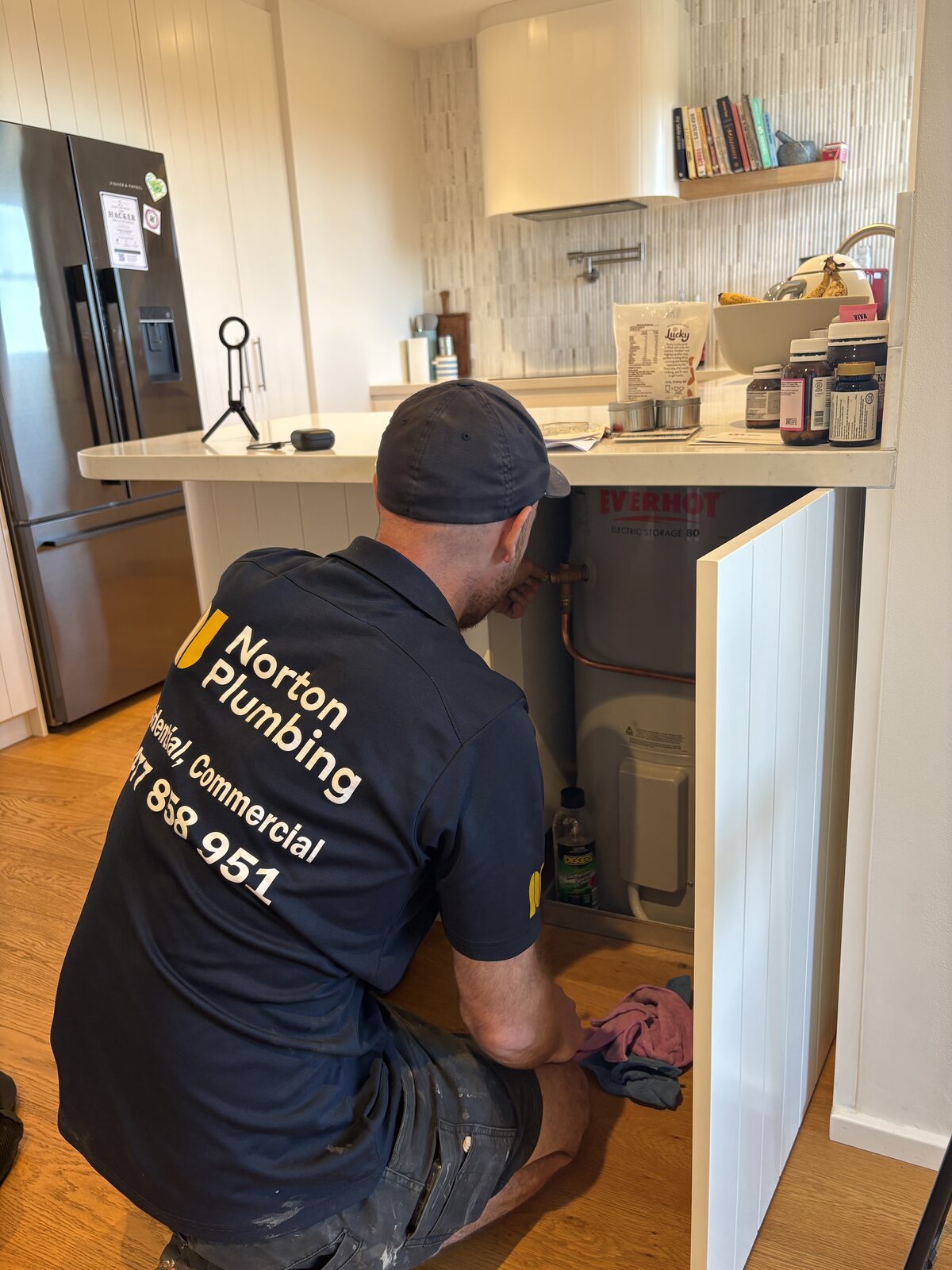
The call was about a damp patch. A home in Coogee had water showing up on the cupboard floor under the kitchen island, which is where the hot water tank lives in this house, and the owners had got as far as assuming the tank was on its way out. It was not. The hot water relief valve on the top of the tank had started weeping, and that is a different problem with a much smaller answer.
This is worth writing up because the damp patch is the part people notice and the valve is the part people have never heard of. When water turns up near a hot water unit, the first assumption is almost always that the cylinder has rusted through, and most of the time that is not what is happening.
What the hot water relief valve actually does
Every storage hot water tank has a temperature and pressure relief valve on it, usually shortened to a TPR valve. Water expands as it heats, and the tank is a sealed vessel, so that expansion has to go somewhere. The relief valve is the designed escape route. It lifts, lets a small amount of hot water out through a drain line, and reseats.
So a relief valve that releases a little water during a heating cycle is doing its job. That is normal and it is not a fault. What is not normal is a valve that keeps weeping between cycles, which means it is no longer sealing when it closes. Once it stops sealing you get a slow, constant trickle rather than an occasional discharge, and it will not fix itself.
How to tell the valve has failed rather than the tank
The two look similar from a distance because both end in water on the floor, but they behave differently. A failing tank generally weeps from the base or from a seam, the water shows up underneath the cylinder, and it is often rusty rather than clear. A failed hot water relief valve leaks from the valve itself or runs out of the drain line attached to it, and the water is clean.
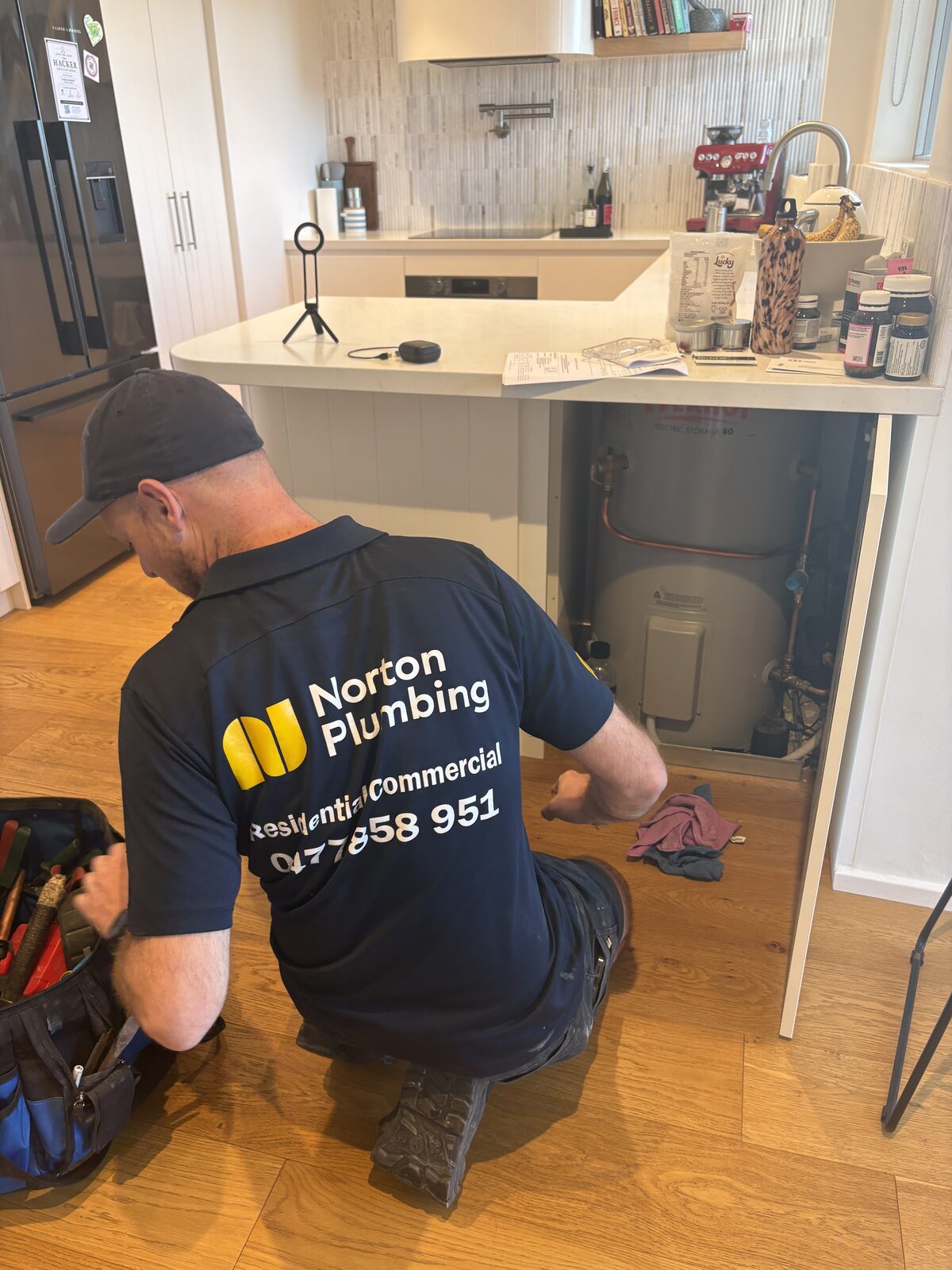
On this Everhot electric storage unit the trail was clear enough. The water was coming from the valve end, the cylinder itself was sound, and the tank was still heating and holding temperature normally. So the fix was the valve, and there was no sensible argument for replacing an otherwise healthy tank because one component on top of it had worn out.
That distinction matters financially. Replacing a relief valve is a small job. Replacing a storage hot water system is not. Getting the diagnosis right is most of the value in a call like this one, and it is why it is worth having someone look before agreeing to a new unit.
Replacing the valve, and the drain line nobody thinks about
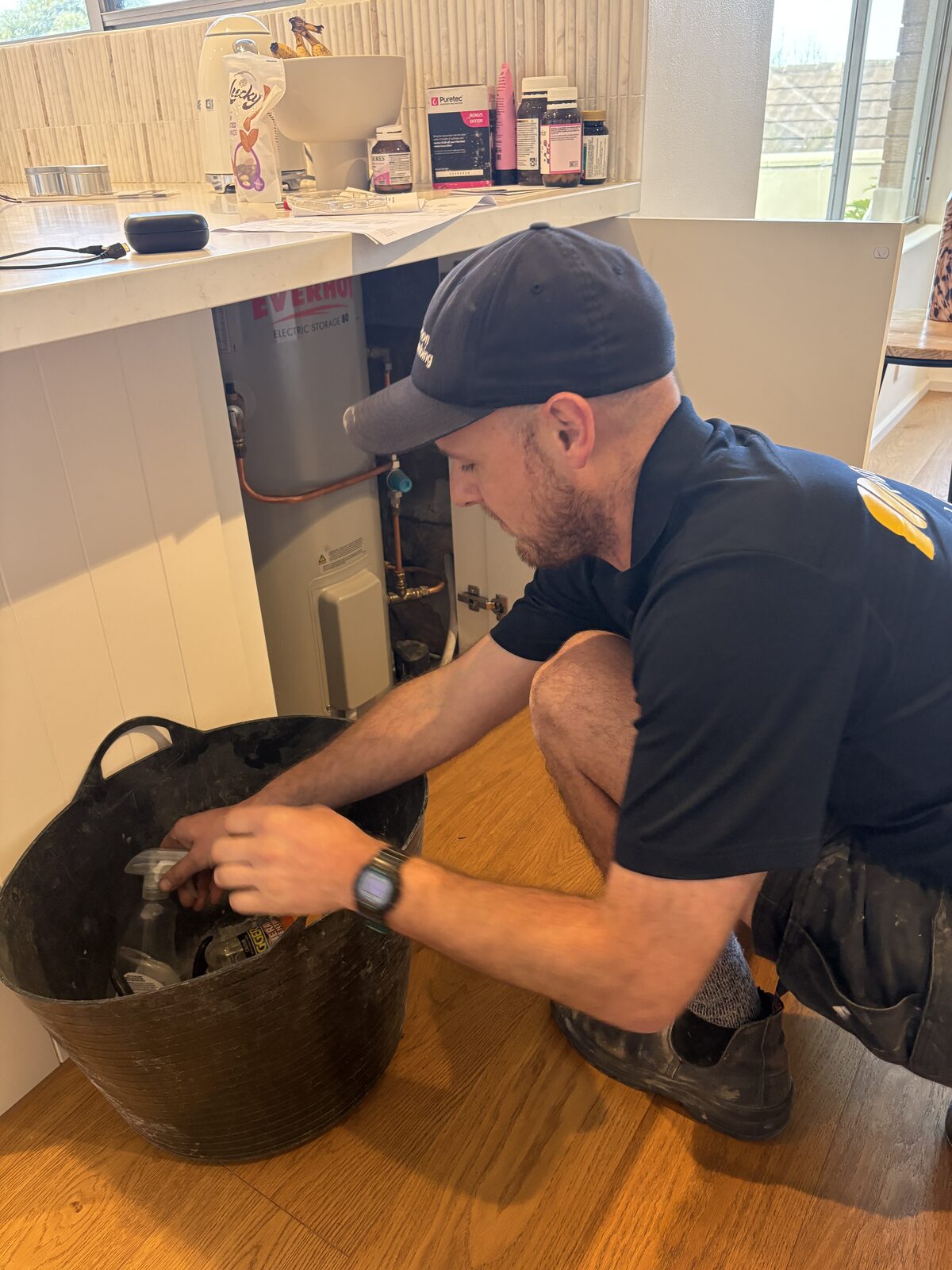
The work itself is straightforward. Isolate the system, drain it down, take the old valve off and fit a new one rated to match the tank's pressure specification. That rating is not a detail to guess at. A valve rated differently to the vessel it is protecting is not protecting it properly, and relief valves are sold in several pressure ratings that look near enough identical on the shelf.
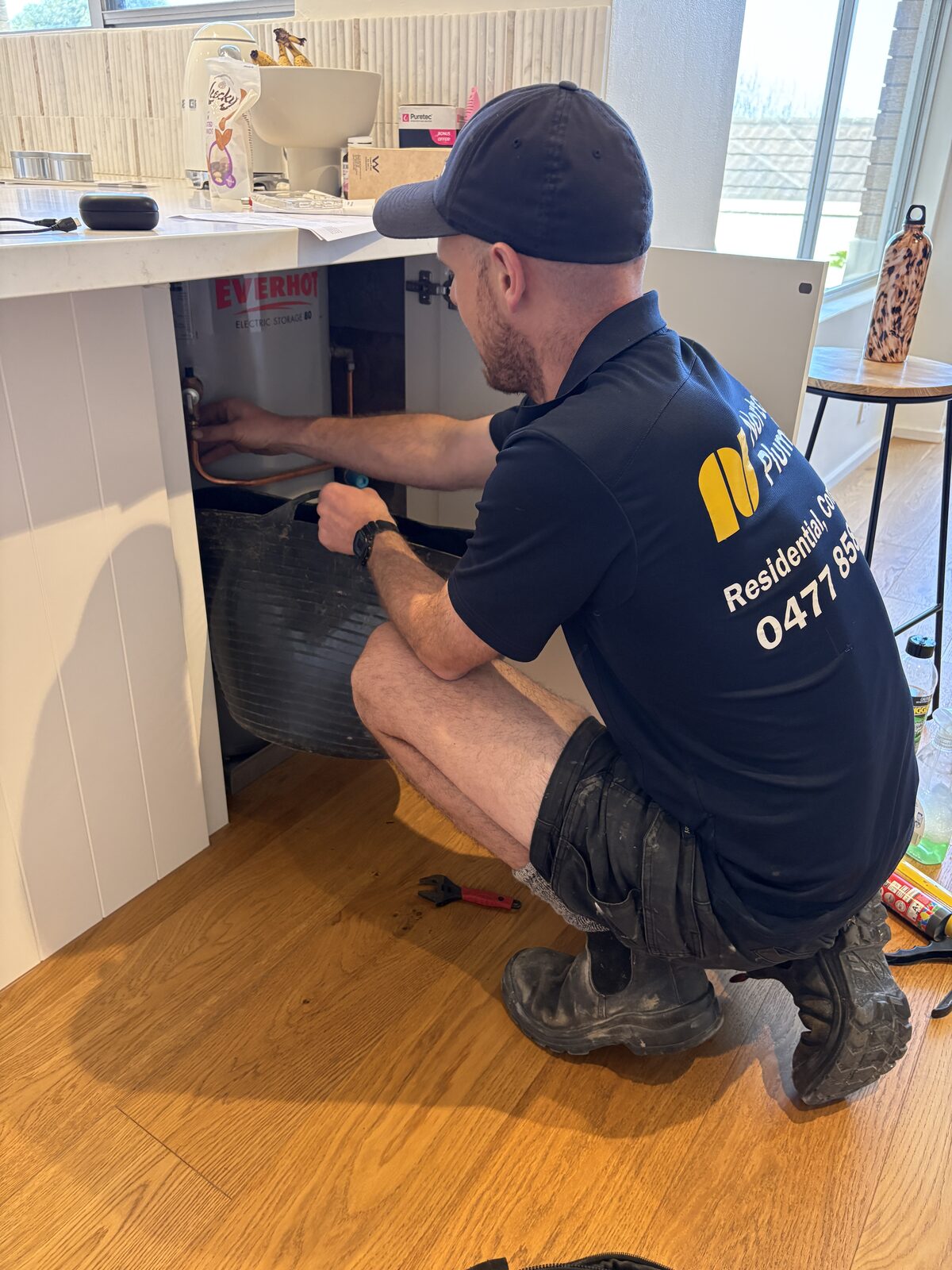
The more useful part of this job was the drain line. The line off the relief valve is what carries any discharge away, and on this install it was finishing where the water could end up on the cupboard floor. So it got refitted to run somewhere sensible. That is the difference between a valve that lifts one day and you never know about it, and a valve that lifts one day and you find out through a swollen kickboard.
Everything was tested under pressure before we packed up, with the cupboard left dry. Norton Plumbing does a lot of these, and the drain line is the thing most often left as it was found, because the valve is what got called in and the line is not strictly the fault.
Why relief valves wear out, and when to replace them
A hot water relief valve is a consumable. It has a seat and a spring, it operates every heating cycle for years, and sediment and mineral deposits build up on the seat over time until it no longer closes cleanly. That is ordinary wear rather than a defect, which is why manufacturers give these valves a service life rather than treating replacement as a repair.
Australian manufacturer instructions, Rheem and Dux included, are consistent on two numbers. Ease the valve's lever gently every six months to flush debris off the seat, and replace the valve at intervals not exceeding five years, more often in areas with heavy water deposits. Stand clear when you operate it, because what comes out of the drain line is hot.
Supply pressure plays into it as well. Sydney Water's water pressure management program notes that most properties across Sydney, the Illawarra and the Blue Mountains receive water at between 15 and 65 metres head, which is roughly 150 to 640 kilopascals, and that low-lying properties get the higher end of it. A relief valve working against the top of that range has a harder life than one working against the bottom, so a pressure limiting valve is worth asking about where pressure is high.
Where these tanks sit in Eastern Suburbs homes
The reason this job is worth reading about is the cupboard, not the valve. Older Eastern Suburbs houses put the storage tank outside on a slab or in a laundry, where a weeping valve ran away down a gully and nobody ever knew. Renovated kitchens in Coogee, Randwick and Bondi routinely build the tank into joinery instead, under an island or behind a cabinet door, because that is where the space is.
That is a fine place for a tank and there is nothing wrong with the install. It just changes what a small leak costs. The same trickle that was harmless on a slab outside now sits against particleboard, cabinet kickboards and engineered timber flooring, none of which recover once they have swollen. The valve failure is cheap. The joinery it soaks is not.
It also changes how quickly you find out. A tank in a cupboard behind a closed door can weep for weeks before anyone opens it. If you have a unit tucked into kitchen joinery, it is worth a look every few months, in the same way you would check the signs a hot water system is failing. We have also written up an electric hot water replacement in Coogee for the point where a tank genuinely is finished rather than just leaking at the valve.
What to look for at your own hot water unit
- A damp patch or staining on the cupboard floor under a tank built into joinery, particularly at the kickboard where water collects and sits.
- A constant trickle from the drain line rather than an occasional release during heating. Occasional is normal, constant is a failed seat.
- Rusty water rather than clean water. Clean points at the valve, rust points at the cylinder, and that is the difference between a small job and a new system.
- A relief valve that has never been eased. Manufacturer instructions say every six months, and most valves in service have never had it done once.
- A valve older than five years. Manufacturers put the replacement interval at five years, so age alone is reason enough to change it before it starts weeping.
How to reach Norton Plumbing
Norton Plumbing has worked in Coogee and across the Eastern Suburbs since 2019, on hot water repairs and replacements, blocked drains, leak detection and general maintenance. I hold NSW plumbing licence 397768C and did this repair myself. The team works out of 10/11a-15 Berwick St, Coogee. If you have found water near your hot water unit and want to know whether it is the valve or the tank, see our hot water page, our Coogee plumber page, or call 0477 858 951.
Frequently asked
Common questions
- Why is my hot water relief valve leaking?
- Most often the valve seat has worn or picked up sediment and no longer seals when it closes. A small release during a heating cycle is normal because water expands as it heats. A constant trickle between cycles means the valve has stopped sealing and needs replacing.
- Is water coming from my hot water system always a sign the tank is dead?
- No. Clean water from the valve or its drain line usually points at the relief valve, which is a small repair. Rusty water appearing underneath the cylinder points at the tank itself. Working out which one you have is what decides whether you need a part or a new system.
- How often should a temperature and pressure relief valve be replaced?
- Australian manufacturer instructions put the replacement interval at not more than five years, and sooner in areas with heavy water deposits. They also recommend easing the lever gently every six months to clear debris off the seat. Take care, because the water discharged is hot.
- Can I replace a hot water relief valve myself?
- It is not a homeowner job. The system has to be isolated and drained first, and the new valve has to match the tank's pressure rating, since valves of different ratings look almost identical. Fitting the wrong one leaves the tank without proper protection.
- Does high water pressure damage a hot water relief valve?
- It shortens its life. Sydney Water supplies most properties at between 15 and 65 metres head, and low-lying properties sit at the higher end of that range. A valve working near the top of it cycles harder and wears sooner, so a pressure limiting valve is worth asking about.
- What happens if a weeping relief valve is left alone?
- The valve will not recover on its own, and the trickle continues. Where a tank is built into kitchen joinery, that water sits against particleboard, kickboards and timber flooring, and the damage to those usually costs far more than the valve that caused it.
Related service
Hot Water Systems
Same-day hot water repair and replacement in Eastern Suburbs Sydney - Rheem, Rinnai, Bosch, Dux, Vulcan, Aquamax and all other brands
See our hot water systems pageNeed a plumber in the Eastern Suburbs?
Call 0477 858 951