
Case study · 5 min read
Electric hot water replacement, Coogee
Lukewarm water, rust at the hot tap or a damp patch under the tank means an electric hot water system is near its end. A Coogee replacement, step by step.
Adam Norton · 30 July 2026
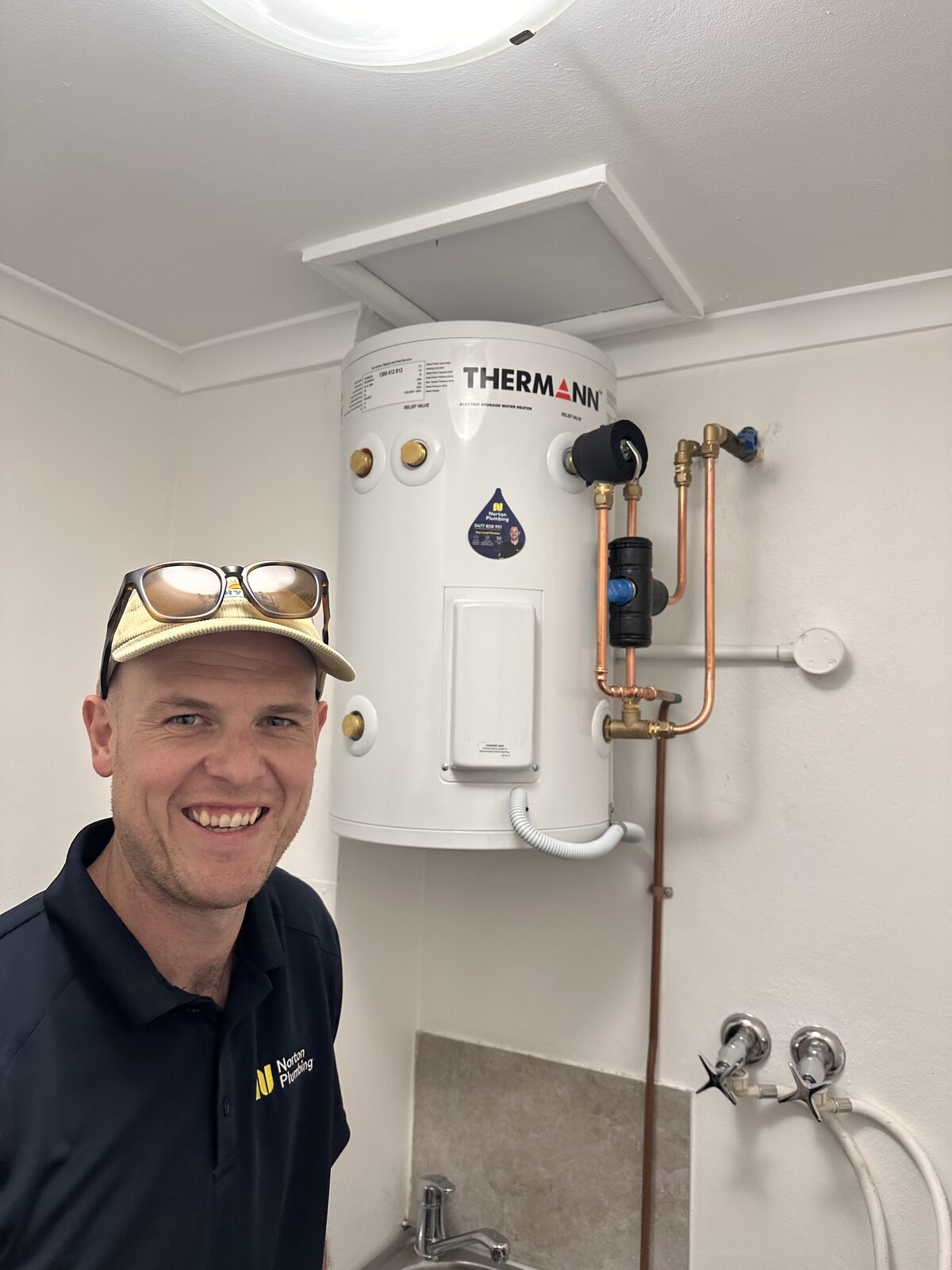
Norton Plumbing was called to a home in Coogee to replace a tired electric storage hot water system. Greg took the old unit off the wall, mounted a new Thermann electric storage heater in its place, ran fresh copper to the inlet and outlet, and fitted new valves while he was there.
This one was a planned replacement rather than an emergency, which is the better way to do it. The owner had noticed the hot water was not lasting the way it used to and called before the tank gave out completely. That meant the job could be booked in, the right unit ordered, and nobody had to find out mid-shower on a cold morning.
What the replacement involved
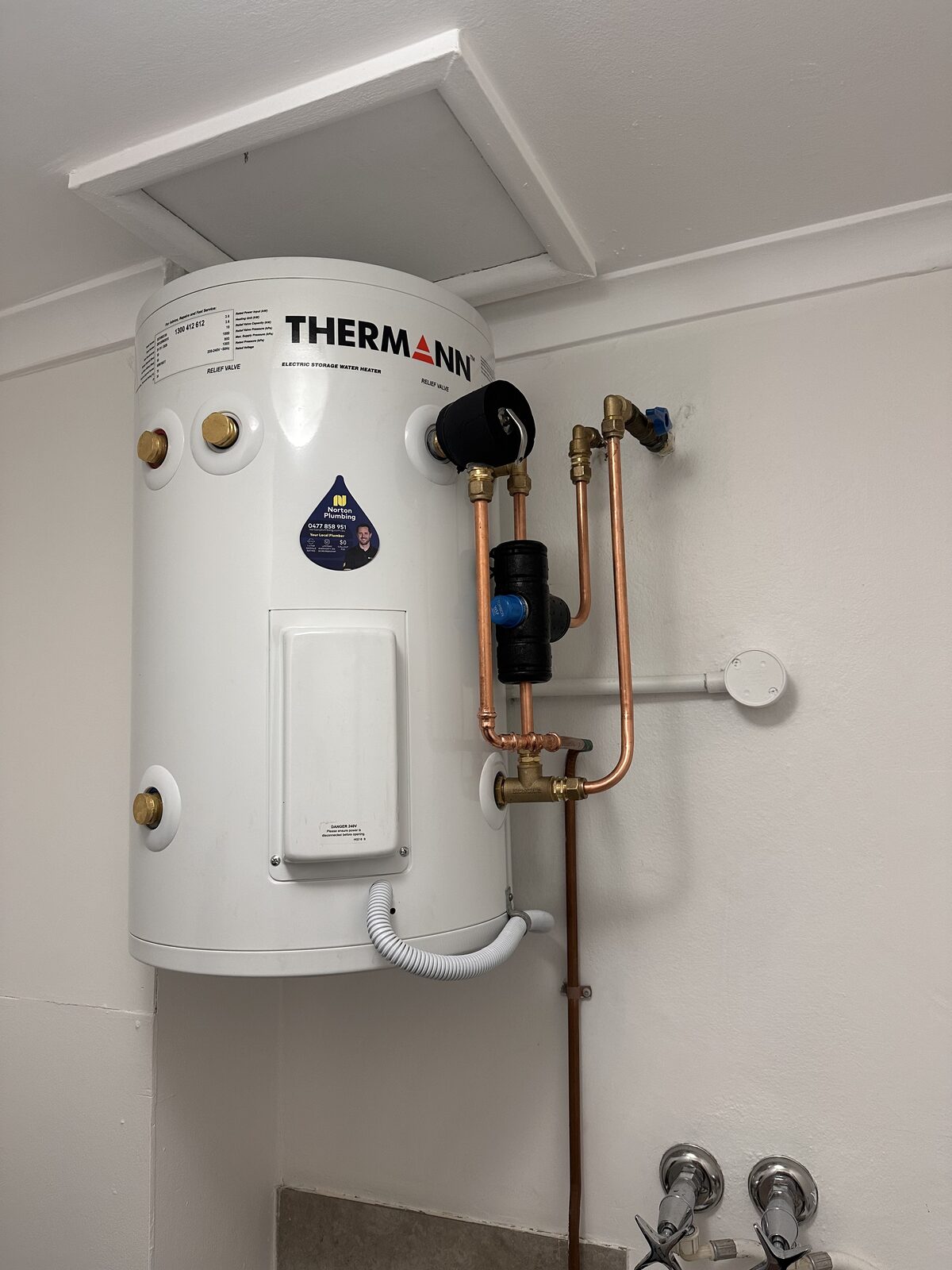
The old unit came off first. Once the space was clear, Greg mounted the new Thermann, then ran new copper to the cold inlet and the hot outlet rather than reusing tired pipework. New valves went on at the same time, along with a new drain line off the relief valve so any discharge runs somewhere sensible instead of down the wall.
Then the tank was filled, the connections checked under pressure, and the line watched for leaks before anyone packed up. The laundry was left tidy, which matters more than it sounds when the unit sits directly above a sink and bench people use every day.
Signs your hot water system is on the way out
Electric storage units rarely fail without warning. They tend to give you a few months of hints first, and most people notice at least one of these before the tank goes:
- The hot water runs lukewarm before it runs out. A tank that used to give you a full hot shower and now fades halfway through is usually losing element or thermostat performance, or filling with sediment.
- Rusty or discoloured water at the hot tap. If it shows at the hot tap and not the cold, the colour is coming from inside the tank.
- A damp patch or rust stain underneath the unit. Water sitting under a hot water system is not condensation. It is the tank telling you it has started to fail.
- The unit is over ten years old. Age on its own is not a fault, but past ten years an electric storage tank is on borrowed time and worth planning around.
Any one of those is worth a look. Together they usually mean replacement rather than repair. Far better to plan it than to discover it on a cold morning.
Why a leaking tank means replacement, not repair
Inside an electric storage unit there is a steel cylinder with a protective lining and a sacrificial anode, a metal rod that is there to corrode on purpose so the tank does not. Once the anode is used up, the cylinder itself starts corroding from the inside out. That is why these units so often fail from underneath: the corrosion works through the tank wall and the water finds the weakest point.
When a leak is at a valve or a fitting, a repair is usually enough, and a failed element or thermostat is a repair too. When the cylinder itself is weeping, there is nothing to repair. The tank is the part that has failed. Having the anode replaced at a service partway through the unit's life is what buys extra years, but once water is coming from the tank it is well past that point.
What a hot water replacement has to comply with in NSW
A replacement is not always a like-for-like swap. A new or replacement installation has to deliver no more than 50 degrees to showers, baths and bathroom basins, which in practice means a tempering valve or thermostatic mixing valve on the hot side. Building Commission NSW publishes the installation requirements for temperature control devices if you want the detail. Hot water installation is licensed plumbing work either way, and on a gas unit the gas connection is licensed gas work as well.
Hot water systems in Coogee homes
A lot of Coogee homes and unit blocks put the hot water unit somewhere tight: a laundry cupboard, a high wall bracket, a hatch in the ceiling. This one sat high on a laundry wall with the ceiling access panel directly above it. That works, but it means the pipework has to be neat and the relief drain has to be run properly, because there is a sink and a bench underneath and nothing forgiving about the space. Replacing a unit in a spot like that is as much about the set-out as the tank.
The flip side is that an internal unit in a dry cupboard tends to age better than one in an open side passage. Coogee sits close enough to the water that salt air works on anything exposed, so the units we see looking worst for their age are usually the ones outside.
How to reach Norton Plumbing
Norton Plumbing has replaced and repaired hot water systems across Coogee and the Eastern Suburbs since 2019. Adam Norton holds NSW plumbing licence 397768C, and the team works out of 10/11a-15 Berwick St, Coogee. If your hot water is fading, discoloured or leaking, see our hot water service or our Coogee plumber page, or call 0477 858 951.
Frequently asked
Common questions
- Can an electric hot water system be repaired instead of replaced?
- Often, yes. A failed heating element, thermostat or valve is a repair, and those are common faults that do not need a new tank. What cannot be repaired is the cylinder. If the steel tank itself is leaking, the unit needs replacing, because the part that has failed is the tank.
- Is water under my hot water system always a leak?
- Almost always. Unlike an air conditioner, a storage hot water unit does not produce condensation in normal operation. A damp patch, a rust stain or pooling water underneath usually means either the relief valve is discharging or the tank has begun to corrode through. Both are worth checking quickly.
- Does a replacement hot water system need a tempering valve?
- In NSW a new or replacement installation has to deliver no more than 50 degrees to showers, baths and bathroom basins, so a tempering valve or thermostatic mixing valve is fitted on the hot side to achieve it. That is a compliance requirement rather than an optional extra, and it is also what prevents scalding at the tap.
- How long does an electric storage hot water system last?
- It varies with water quality, how hard the unit works and whether it was ever serviced. Past about ten years an electric storage tank is worth keeping an eye on. We typically find the units that had their sacrificial anode replaced along the way outlast the ones that never did.
- Can I replace a hot water system myself?
- No. Hot water installation is licensed plumbing work in NSW, and on a gas unit it is licensed gas work as well. Beyond the legal side, an incorrectly run relief valve or drain line turns a working unit into a flooding risk, and unlicensed work will generally void the manufacturer warranty.
Related service
Hot Water Systems
Same-day hot water repair and replacement in Eastern Suburbs Sydney - Rheem, Rinnai, Bosch, Dux, Vulcan, Aquamax and all other brands
See our hot water systems pageNeed a plumber in the Eastern Suburbs?
Call 0477 858 951

