Case study · 5 min read
Stormwater pits and drainage, Bondi
Downpipes in a Bondi side passage had nowhere to drain. A new PVC stormwater line and a 450 x 450 concrete pit now carry the rain away from the house.
Adam Norton · 26 October 2026
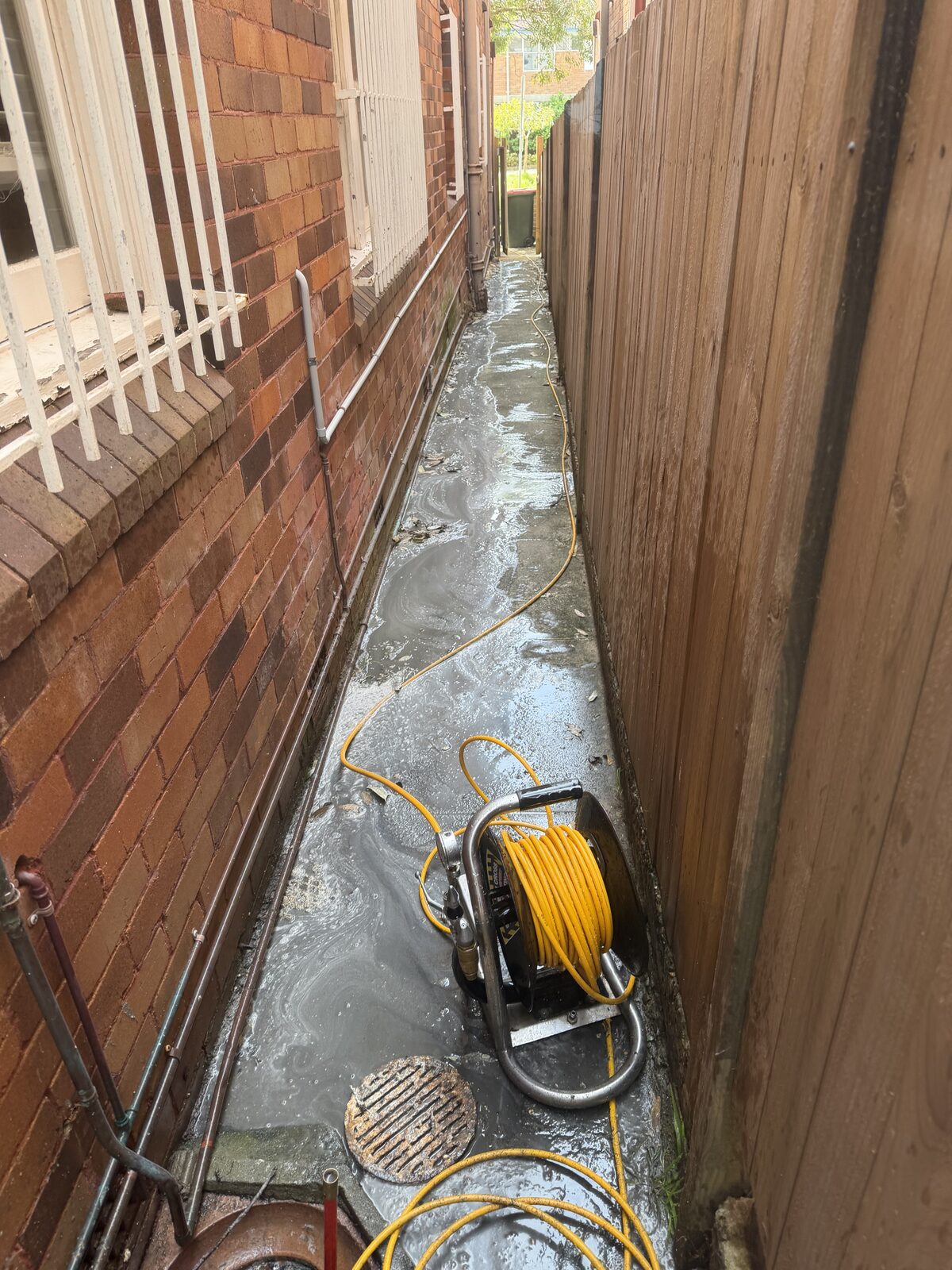
This Bondi home had downpipes running down a narrow side passage with nowhere proper for the water to go. Each one dropped rain straight into the ground beside the house. When stormwater drainage has no planned route, the water ends up sitting against the walls, and sooner or later it finds its way under the floor.
The fix was a proper stormwater line along the full length of the passage, picking up every downpipe, with a concrete pit at the low point. Here is how Greg and Adam did it, and why Bondi's sandy ground needs a bit of extra care.
Why stormwater against a house is a problem
Water that soaks in beside a wall doesn't disappear. It keeps the ground wet against the footings and the base of the brickwork, and in a narrow side passage there is little sun or air to dry it out. Over time that tends to show up as damp patches low on the walls, a white salty bloom on the bricks, or a musty smell under the floor.
Digging out the side passage
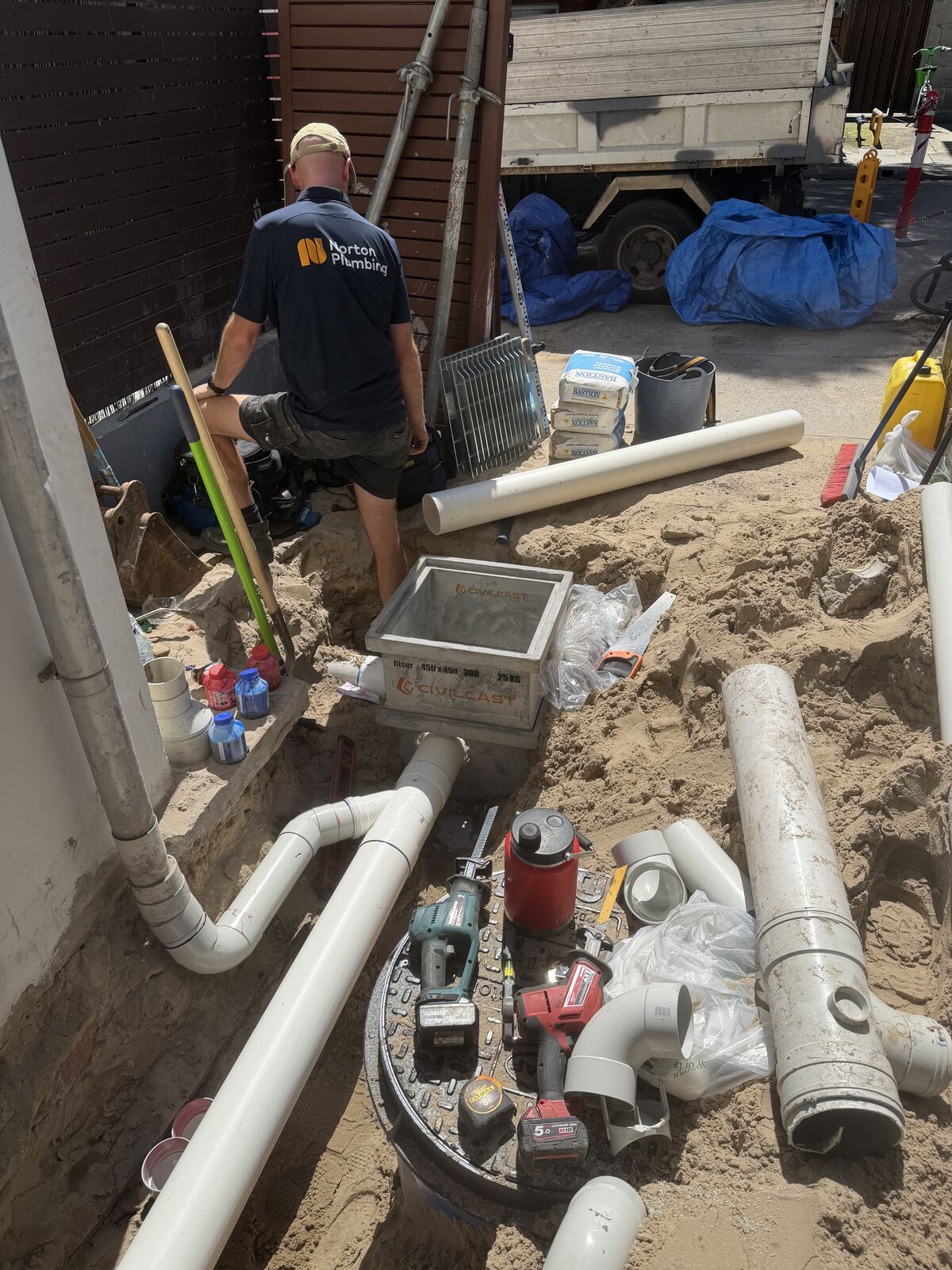
Greg and Adam dug out the full length of the passage and ran new PVC stormwater line, picking up each downpipe along the way. Bondi sand is easy digging, but it moves just as easily. A trench in sand can slump back in, and pipe laid on loose sand can settle out of line. So every length was bedded properly before they moved on to the next.
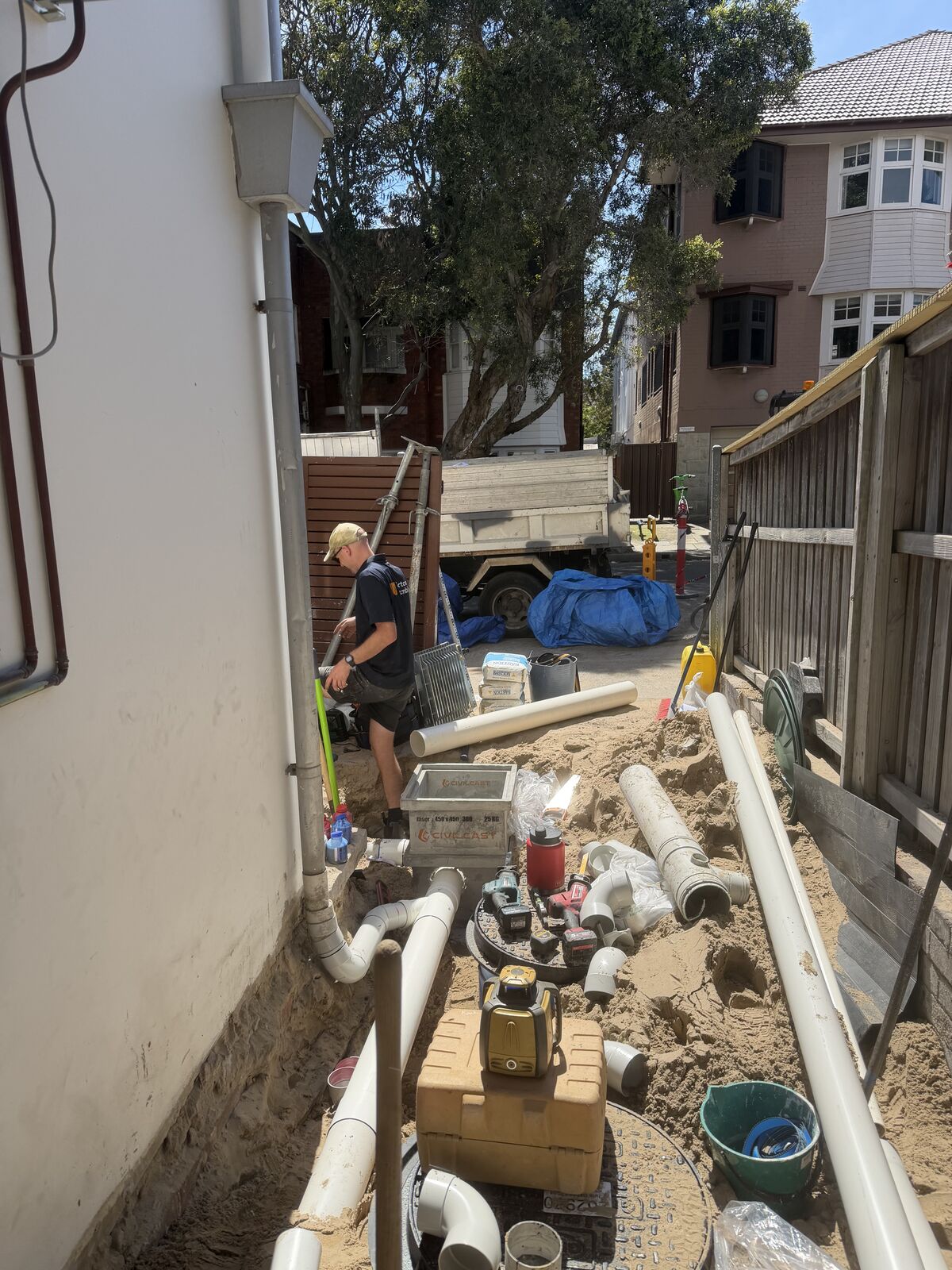
The falls were set with a laser level. A stormwater pipe needs a steady fall along its whole length so the water keeps moving. Any dip in the line holds water, and still water drops the silt and leaves it was carrying, which is how blockages start.
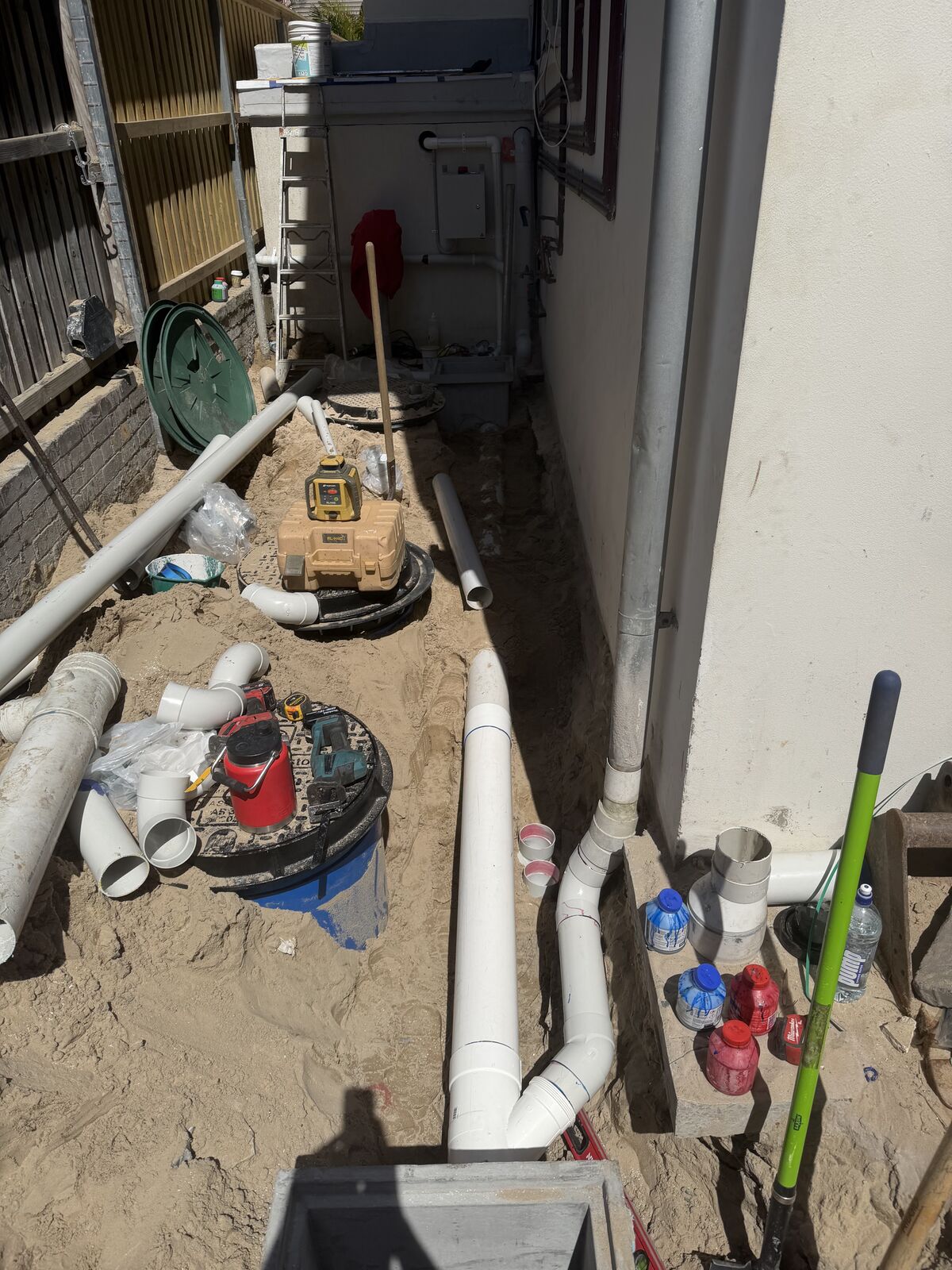
Setting a stormwater pit at the low point
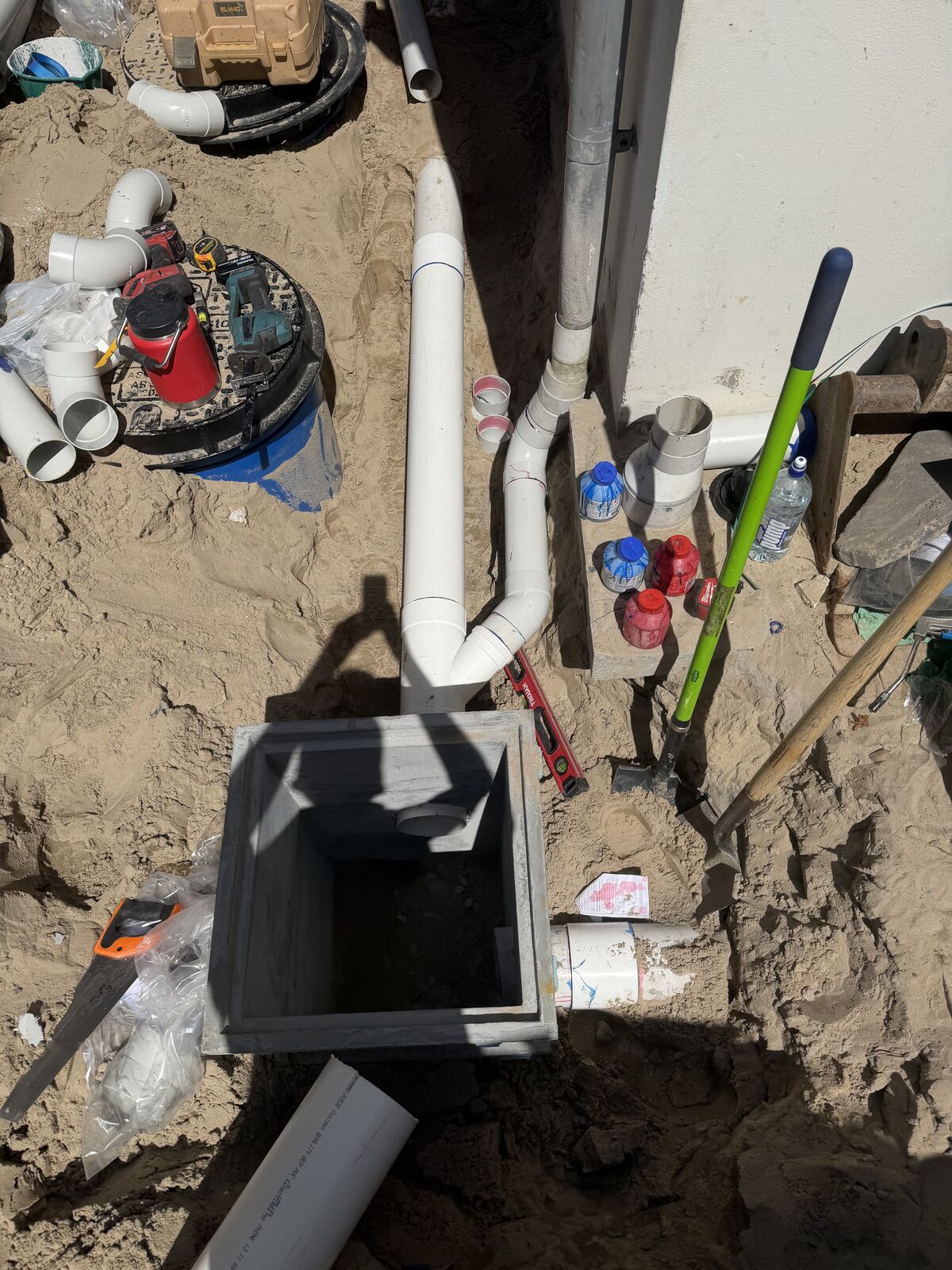
At the low point of the run they set in a 450 x 450 concrete pit. A pit gives the water somewhere to collect and change direction, and it gives you a way in. If the line ever needs checking or clearing, a plumber can lift the grate and get straight into it. Many older stormwater systems have no access point at all, as on this Double Bay stormwater job.
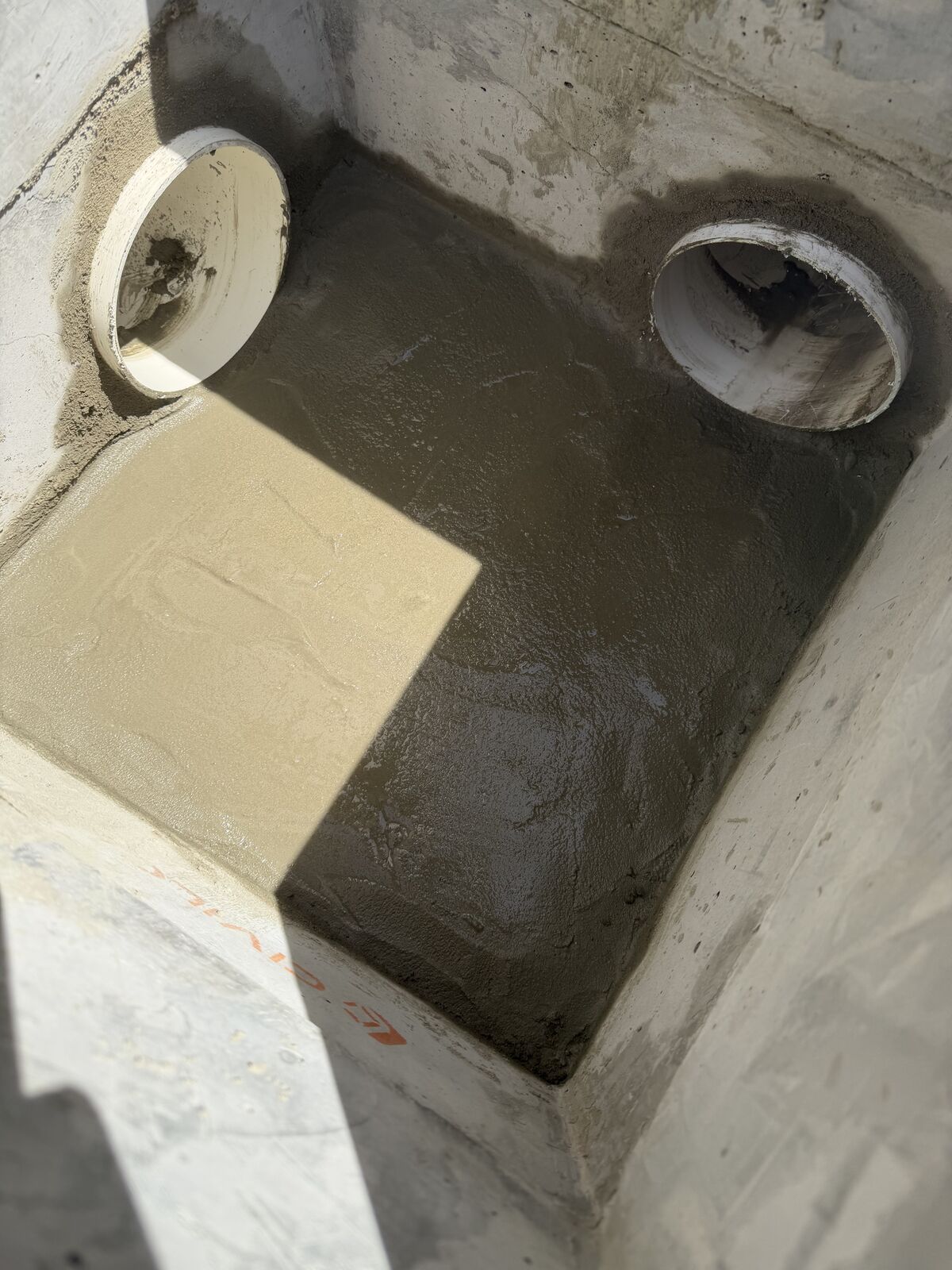
Inside, each pipe connection was mortared in and the base rendered smooth. A rough base with square corners gives leaves and silt places to settle. A smooth rendered base lets them wash through with the water instead of building up.
The result is a clean run from the downpipes, through the pit and away from the house.
Stormwater drainage in Bondi homes
Bondi has a lot of semis, cottages and walk-up blocks built close to the boundary, with narrow side passages between them. Downpipes often run down those passages, and on some older properties they were never connected to more than a short pipe into the ground. Sandy soil drains well on a dry day. But a whole roof's worth of rain concentrated at one downpipe can soak a narrow strip of ground faster than it can drain.
In Waverley, the drainage on your own property is the owner's responsibility, up to the legal point of discharge, which is usually the kerb outlet or a council pit. Stormwater must also stay out of the sewer: Sydney Water is clear that rainwater and stormwater must not enter your wastewater system. A downpipe with nowhere to go needs a proper stormwater line, not a shortcut into the nearest sewer gully.
Signs your stormwater needs looking at
- Water pooling down the side of the house after rain.
- A downpipe that just ends at the ground or on a splash block.
- Damp patches, white salty bloom or moss low on the walls along a side passage.
- A musty smell under the floor after wet weather.
- Water spilling out of a grate or pit instead of draining away.
If water pools down the side of your house after rain, or a downpipe just ends at the ground, it's worth getting the stormwater looked at before that water finds its way under the floor.
How to reach Norton Plumbing
Norton Plumbing has worked in Bondi and across the Eastern Suburbs since 2019, on stormwater, drainage and pits, blocked drains, CCTV inspections and pipe relining. I hold NSW plumbing licence 397768C. The team works out of 10/11a-15 Berwick St, Coogee. If water is pooling around your house after rain, see our blocked drains page, our Bondi plumber page, or call 0477 858 951.
Frequently asked
Common questions
- Why does water pool down the side of my house after rain?
- Usually because the downpipes along that wall have no proper stormwater line to carry the water away. Rain from a whole section of roof comes down one downpipe, and if it just soaks in beside the wall, the ground stays wet against the footings until it slowly drains or dries out.
- What is a stormwater pit for?
- A stormwater pit collects water from one or more pipes and lets it change direction or drop into the next line. It also gives access from above, so the system can be checked and cleared without digging. A smooth rendered base helps silt and leaves wash through rather than settle.
- Can downpipes be connected to the sewer?
- No. Stormwater must not enter the sewer. In heavy rain it can overload the wastewater system and cause overflows, and in NSW it is treated as an illegal connection. Downpipes should run to a stormwater line that discharges to the kerb, a council pit or another approved point.
- Who is responsible for stormwater pipes on my property?
- The owner. In Waverley, which covers Bondi, all drainage on private property up to the legal point of discharge is the owner's responsibility. That point is usually the kerb outlet or a council pit. Beyond it, the council looks after the public network.
- Why does the fall of a stormwater pipe matter?
- Water only moves through a gravity pipe if the pipe keeps falling along its full length. A section that dips or runs flat holds water, and still water drops the silt and leaves it was carrying. Over time that builds into a blockage, which is why the fall is set with a laser level.
Related service
Blocked Drains
Fast, professional blocked drain clearing in Eastern Suburbs Sydney
See our blocked drains pageNeed a plumber in the Eastern Suburbs?
Call 0477 858 951