Water filtration · 7 min read
Is Sydney tap water safe to drink?
Sydney tap water is safe. It meets every Australian guideline. But safe and high quality are not the same thing. Here is what is actually in the water, what the latest research says, and what filtering changes.
Rebecca Norton · 3 June 2026
The short answer
Sydney tap water is safe to drink. Sydney Water meets the Australian Drinking Water Guidelines set by the National Health and Medical Research Council (NHMRC), and publishes daily water quality reports to prove it.
But safe and high quality are not the same question. Most of the families we talk to across Coogee, Bondi, Randwick, Maroubra and right across the Eastern Suburbs already know the water is safe. What they want to know is why it tastes the way it does, what is actually in it, and whether filtering makes a difference they would notice. This article unpacks this increasingly common conversation.
What Sydney Water adds and why
Sydney's drinking water is treated at filtration plants before it enters the distribution network. The two main additions are chlorine and fluoride.
Chlorine is added as a disinfectant. Its job is to keep the water microbially safe as it travels through kilometres of pipes from the treatment plant to your tap. Without it, bacteria could grow in the network between the plant and your house. The NHMRC health-based guideline for chlorine in drinking water is 5 mg/L. Sydney's actual levels are well below that. But the threshold at which most people can taste or smell chlorine is around 0.6 mg/L, and some people notice it as low as 0.2 mg/L. The gap between the health limit and the taste threshold is large. Your water can be completely safe and still smell a bit like a swimming pool.
Fluoride is added as a public health measure to reduce tooth decay, in line with NSW Health policy. Sydney's fluoride level sits at around 1.0 mg/L, within the NHMRC target range of 0.6 to 1.1 mg/L. A standard whole-home sediment and carbon filter does not remove fluoride. Removing fluoride requires reverse osmosis at a specific drinking-water tap, which is a different product and a different conversation.
What is already in the water before treatment
Sydney's catchments are well-managed by comparison with many cities worldwide. The raw water that arrives at the treatment plant is relatively clean to begin with. After treatment, Sydney Water's published data shows the water is slightly alkaline (pH around 7.6), soft by Australian standards (around 42 to 55 mg/L calcium carbonate), and low in dissolved solids.
Soft water is actually a positive for household plumbing and skin. Hard water, which is common in parts of Melbourne, Adelaide, and regional NSW, is the type more strongly linked in research to dry skin and irritation. Sydney does not have that problem.
PFAS: what the latest research found
PFAS (per- and polyfluoroalkyl substances, sometimes called forever chemicals) have become a growing area of public concern. In August 2025, researchers at UNSW Sydney published a study in the peer-reviewed journal Chemosphere that tested Sydney tap water across multiple locations. The study found 31 PFAS chemicals in Sydney tap water samples, including 21 that had not previously been recorded in Australian tap water.
The important context: all detections were below the Australian Drinking Water Guideline values. Australia tightened its PFAS guidelines in June 2025, dropping the PFOS limit from 70 parts per trillion to 8 parts per trillion, an 88% reduction. Sydney's water meets the new, stricter limits.
The honest framing is this: PFAS are present at very low levels, the guidelines have been significantly tightened, and Sydney's water complies. Whether those guideline levels are strict enough is a question researchers and regulators are still working through. Australia's current PFOS limit (8 parts per trillion) is higher than the US EPA's advisory limit of 4 parts per trillion. The science is moving, and the guidelines are following.
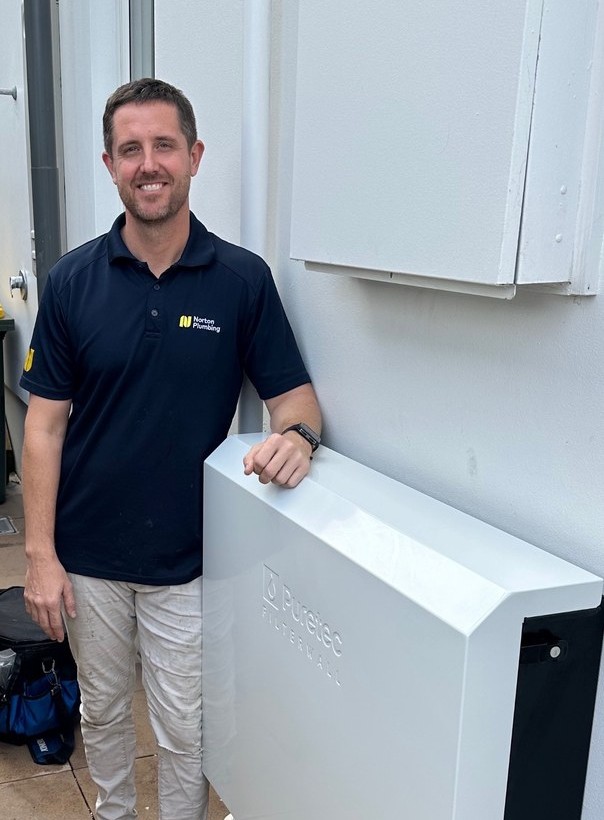
For households that want to reduce PFAS exposure further, certain filtration systems are designed to reduce PFAS. The Puretec FilterWall F Series, which Norton Plumbing installs, is one of them.
Chlorine, skin, and the honest version
One of the most common reasons families ask Norton Plumbing about whole-home filtration is skin and hair. Chlorine in shower and bath water can leave skin feeling dry and hair feeling brittle, and many households with young children or family members with sensitive skin, including eczema, notice the difference. Families who have switched to filtered water across the whole house consistently tell us their skin feels less irritated and their hair feels softer.
We are plumbers here at Norton Plumbing, not dermatologists. What we can say is that removing chlorine from the water you shower and bathe in is the single most common reason our customers choose whole-home filtration over an under-sink system. An under-sink filter covers the kitchen tap. A whole-home filter covers every tap, every shower, and every bath.
What filtering actually changes
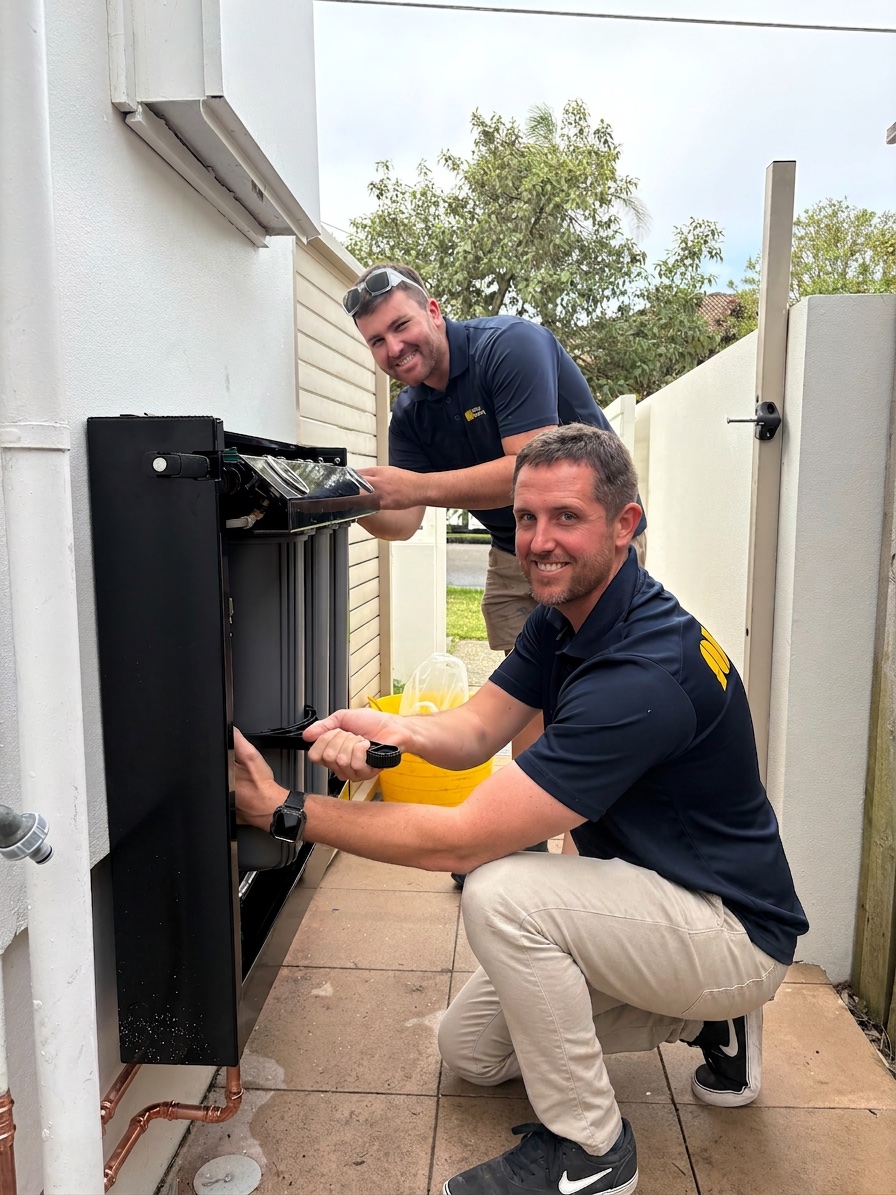
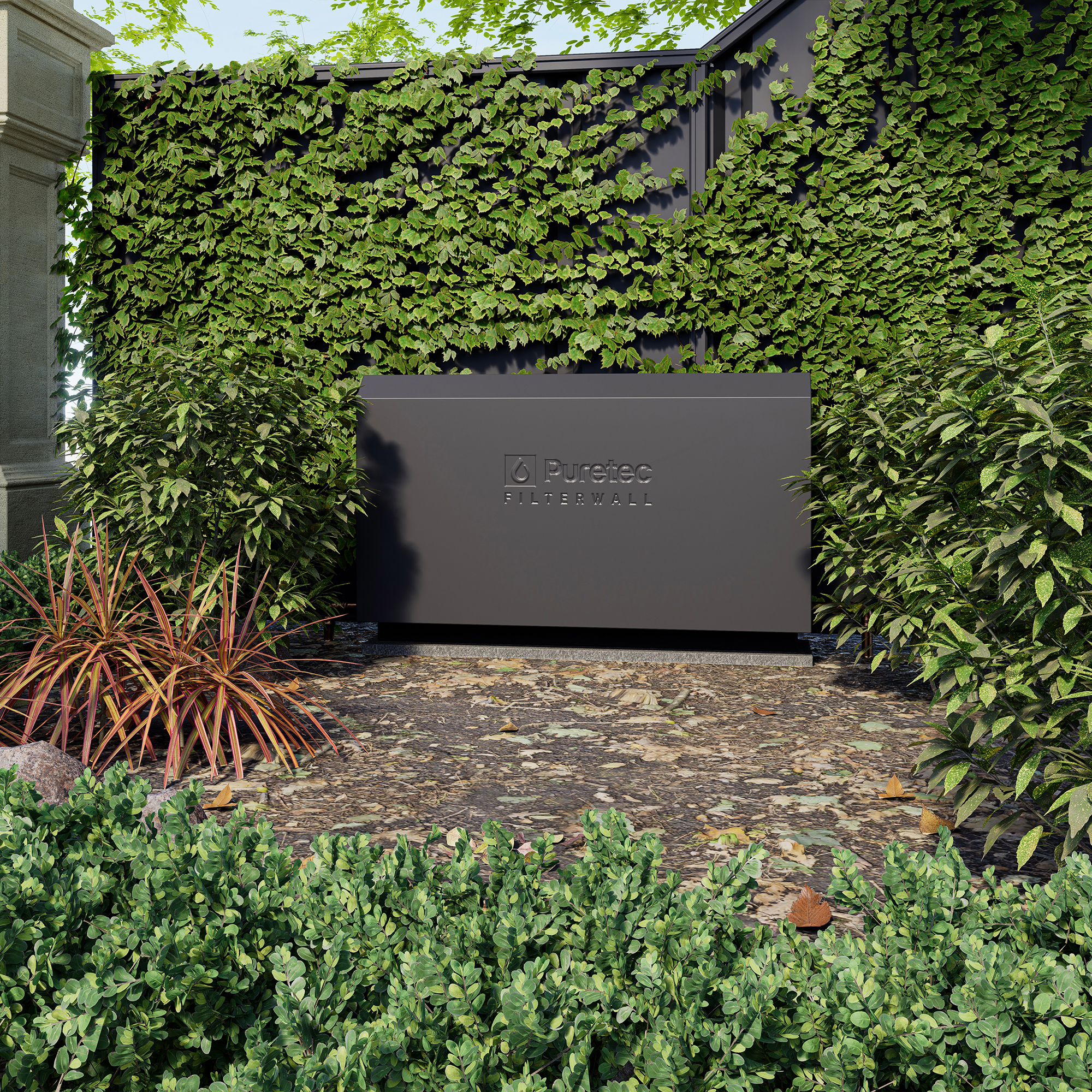
A whole-home water filter like the Puretec FilterWall sits on the incoming mains and filters every drop of water before it reaches any tap inside the house. The FilterWall F Series is a three-stage system, WaterMark certified to AS 3497. It removes:
- Chlorine taste and odour, so the water at every tap tastes and smells clean
- Sediment, including rust flakes, sand, and fine pipe scale from aging mains infrastructure
- Chemical contaminants including PFAS (the FilterWall F Series is designed to reduce PFAS through activated carbon filtration)
What it does not do is equally worth being clear about. A standard whole-home filter does not soften the water (Sydney's is already soft, so this is not a concern for most Eastern Suburbs homes). It does not remove fluoride. And it does not make unsafe water safe, because Sydney's water is already safe.
The practical difference is in what you notice every day:
- Better tasting water at every tap, in the kettle, and from the fridge
- No chlorine smell when you run a bath or shower
- Less skin and hair irritation for sensitive family members
- Reduced sediment reaching hot water systems, dishwashers, and washing machines, which can extend their service life
For most Sydney households, filtration is a quality-of-life improvement.
What Norton Plumbing recommends
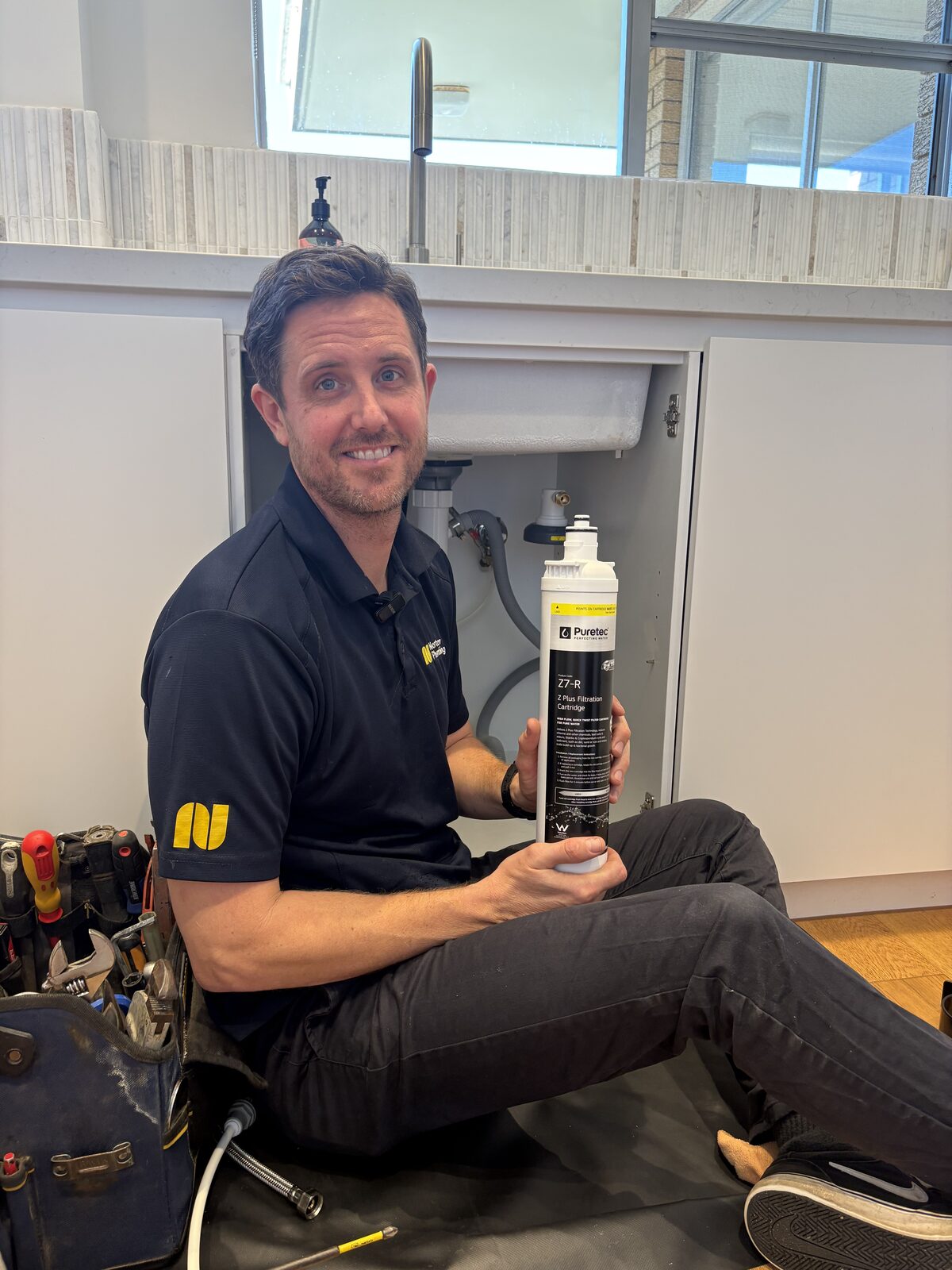
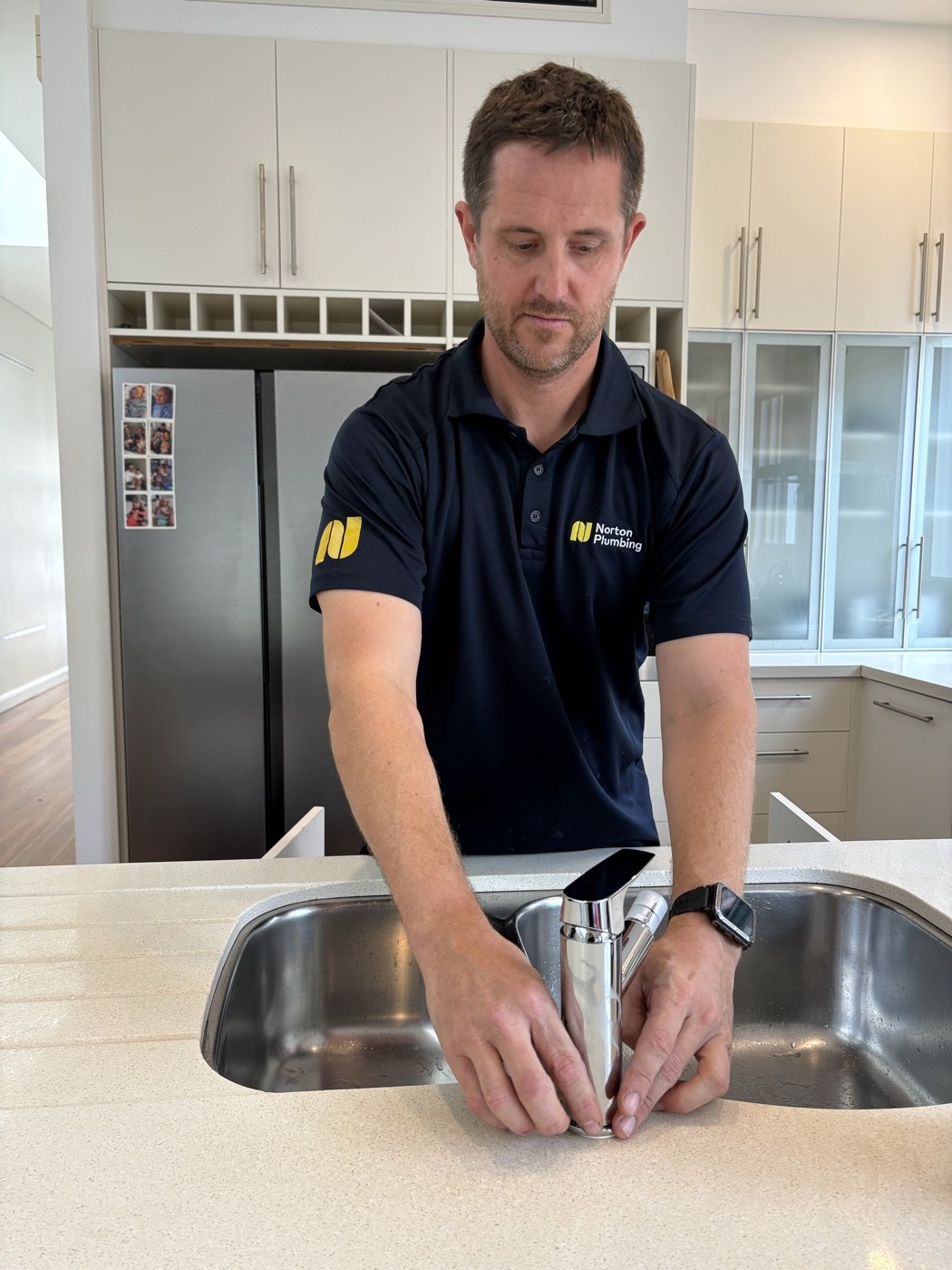
Norton Plumbing installs Puretec filtration systems across the Eastern Suburbs. For households that want filtered water at every tap, the FilterWall is the system we come back to most. For households that mainly want filtered drinking and cooking water, a Puretec PureMix under-sink system does the job for a fraction of the upfront cost.
If you are not sure which one suits your home, we talk through the options on-site. There is no pressure to choose whole-home if under-sink covers what you need.
How to reach Norton Plumbing
Norton Plumbing has been installing water filtration systems across Sydney's Eastern Suburbs since 2019. We operate from 10/11a-15 Berwick Street, Coogee NSW 2034. Phone: 0477 858 951. Adam Norton holds NSW plumbing licence 397768C and is the primary on-site technician. We work across the Eastern Suburbs including Coogee, Bondi, Randwick, Maroubra, and Kingsford. During business hours there is no callout fee. For more detail on the systems we install, our water filtration page covers the FilterWall and PureMix options.
Frequently asked
Common questions
- Is Sydney tap water safe to drink without a filter?
- Yes. Sydney Water meets the Australian Drinking Water Guidelines set by the NHMRC and publishes daily water quality reports. Chlorine is added at the treatment plant to keep the supply safe through the distribution network. A filter does not make unsafe water safe. It removes the chlorine taste and smell, catches sediment from aging mains infrastructure, and on rated systems can reduce chemical contaminants including PFAS.
- What PFAS chemicals have been found in Sydney tap water?
- A UNSW study published in Chemosphere in August 2025 found 31 PFAS compounds in Sydney tap water, including 21 not previously recorded in Australian tap water. All were below the Australian Drinking Water Guideline values, which were tightened significantly in June 2025.
- Does chlorine in tap water affect skin?
- Chlorine in shower and bath water can leave skin feeling dry and hair feeling brittle, particularly for people with sensitive or eczema-prone skin. Many households that switch to whole-home filtered water report noticeably less skin irritation. A whole-home filter removes chlorine from every tap and shower, which an under-sink filter does not.
- What is the difference between a whole-home filter and an under-sink filter?
- A whole-home filter sits on the incoming mains and filters every tap, shower, and appliance in the house. An under-sink filter feeds one dedicated tap at the kitchen sink. Whole-home covers showers and baths, which is where chlorine contact with skin and hair matters most. Under-sink is cheaper and sufficient if the concern is only drinking and cooking water.
- Does a water filter remove fluoride?
- Standard whole-home filters using sediment and carbon cartridges do not remove fluoride. Removing fluoride requires reverse osmosis, typically installed at a single drinking-water tap rather than whole-home. NSW Health adds fluoride to Sydney's water supply as a public health measure for dental health.
Related service
Water Filtration
Whole-home Puretec FilterWall installation in Eastern Suburbs Sydney - two-stage sediment and carbon filtering for every tap in the house
See our water filtration pageWant better-tasting water from every tap?
Sydney water is safe, but a whole-home Puretec filter removes the chlorine taste, sediment and odour, on every tap in the house. We are Puretec Specialist Plumbers across the Eastern Suburbs.
Explore water filtrationNeed a plumber in the Eastern Suburbs?
Call 0477 858 951