Drainage · 8 min read
Blocked drains in Sydney's Eastern Suburbs: why they keep coming back
Why some blocked drains keep coming back in Sydney's Eastern Suburbs, what a real diagnosis looks like, and the long-term fixes that work.
Adam Norton · 8 March 2026
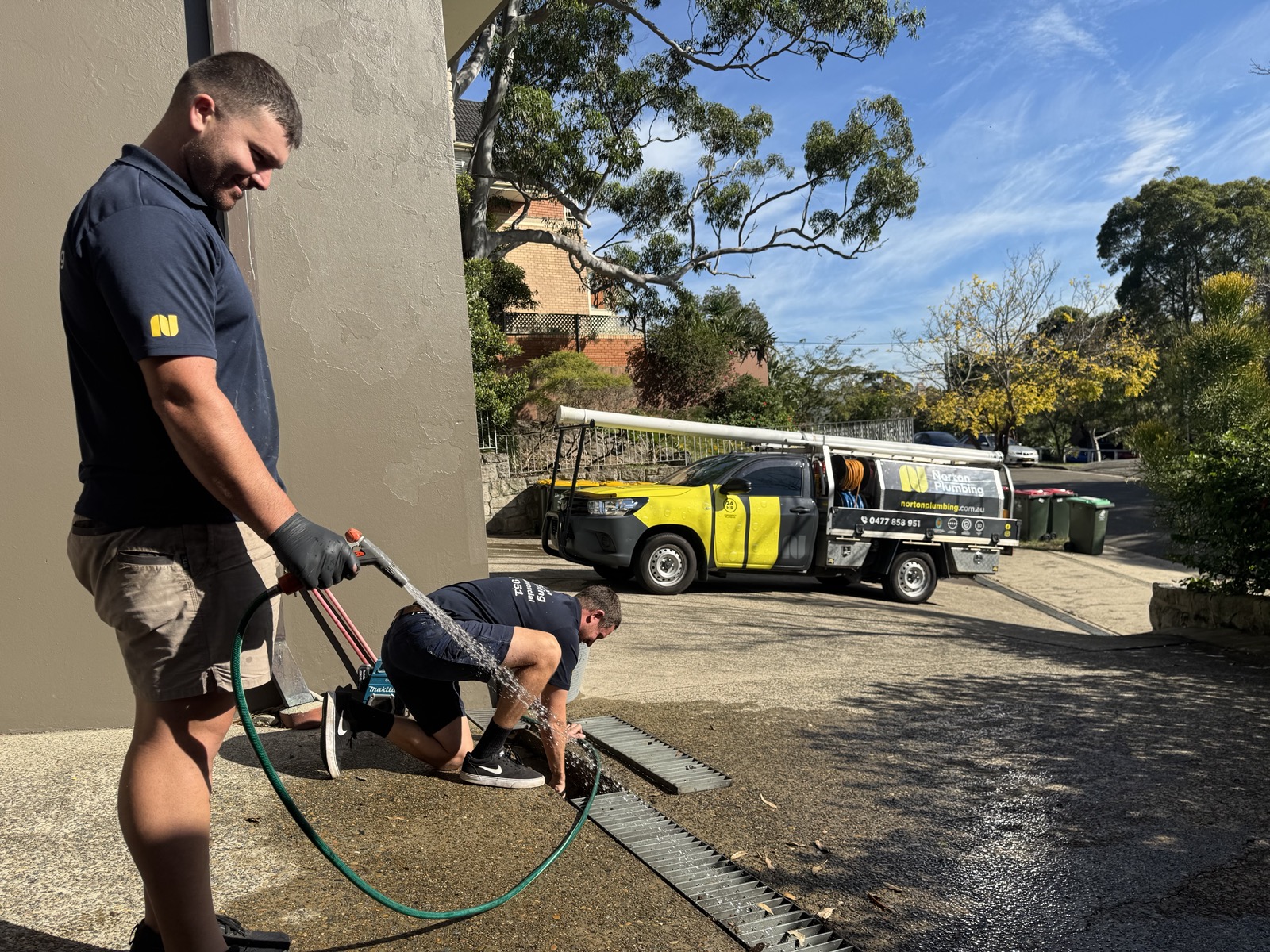
Some blocked drains are a one-off. A child flushed something they shouldn't have, or a build-up of grease finally choked a kitchen line. You jet it once, the problem goes away, and you don't think about it again for years.
Other drains keep coming back. Same line, same blockage, sometimes every winter, sometimes every couple of years like clockwork. If your home is one of those, the problem isn't the blockage. It's whatever's letting the drain block again in the first place. This article is what causes recurring blocked drains in Sydney's Eastern Suburbs, how a proper investigation tells you which problem you've got, and what a long-term fix actually looks like.
Why some drains keep blocking and others don't
A one-off blockage and a recurring blockage need different responses. The one-off is a clearing job. The recurring blockage is a diagnostic problem. If a plumber jets a drain three times in two years without putting a camera through it, they're billing for the same job repeatedly without solving what's causing it.
A recurring blocked drain in the Eastern Suburbs almost always has one of three things going on. Roots are finding a way in through a cracked or open joint. The pipe has a defect that traps debris in the same spot every time. Or the pipe's fall (the downhill slope toward the sewer) isn't steep enough to clear naturally. None of those go away with a jet alone. The jet clears the symptom; the underlying problem is still there.
The Eastern Suburbs pattern: clay, roots, and big trees
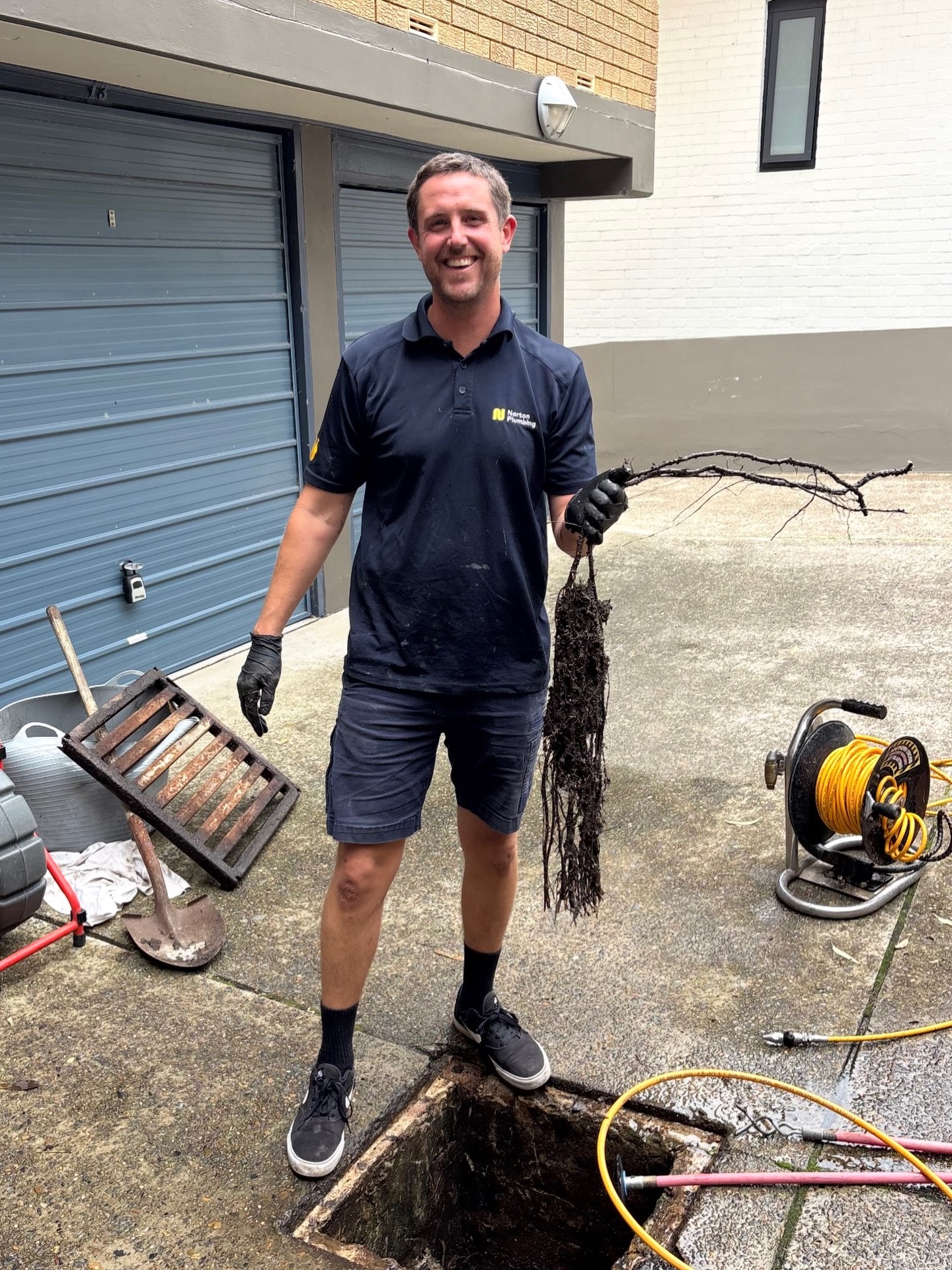
A meaningful share of houses in Bondi, Coogee, Randwick, Bronte, and Clovelly still have their original terracotta drainage. Terracotta is a perfectly good material when intact, but every joint between sections is a potential entry point, and every section has a working life that doesn't extend forever.
What makes the Eastern Suburbs particular is the combination of three local factors:
- Old housing stock. A large share of the area's freestanding homes were built before drainage moved to PVC. Terracotta from the 1950s and 60s is still in the ground in most older streets.
- Mature trees. Eastern Suburbs streets carry decades of established planting. Tree roots are constantly searching for moisture, and any leaking joint in a terracotta sewer is the most reliable moisture source on the block.
- Heritage-area planting density. Many parts of the area carry dense canopy and small lots, which means trees are often very close to the sewer line itself. Roots find pipes early.
If your home is on a tree-lined street, predates the 1980s, and the drain keeps blocking in the same spot, the chances that you're dealing with terracotta and roots are high before a plumber has even arrived.
Other causes that keep coming back
Not every recurring blockage is roots. The other patterns we see:
- Pipe fall too shallow. Australian standards specify a minimum grade for sewer drains (typically 1 in 60, around 1.65%) to keep solids moving. If a section was laid below that, often a fault dating to the original build, wastewater moves slowly through it and solids settle out. The pipe blocks again every few months no matter how clean it is.
- Pipe deformation or partial collapse. Older clay pipes sometimes settle out of true, partially collapse, or develop a deformation that catches material. The flow path narrows. The blockage point doesn't move because the defect doesn't move.
- Misalignment at joints. Even without a collapse, a joint that's misaligned by a few millimetres becomes a permanent snag point. Wipes, hair, and grease all catch there first.
- Inadequate venting. A drain that gurgles when other fixtures are used is often signalling a vent problem rather than a blockage problem. Insufficient venting causes intermittent backups that look like blockages but aren't fixed by clearing.
- Foreign objects no one removed. Sometimes a wet wipe, a toy, or a section of root has been pushed past the camera reach by previous jetting but not actually cleared. It stays in the line, re-catches debris, and blocks again.
A real case study: a toilet freshener from a Coogee apartment drain
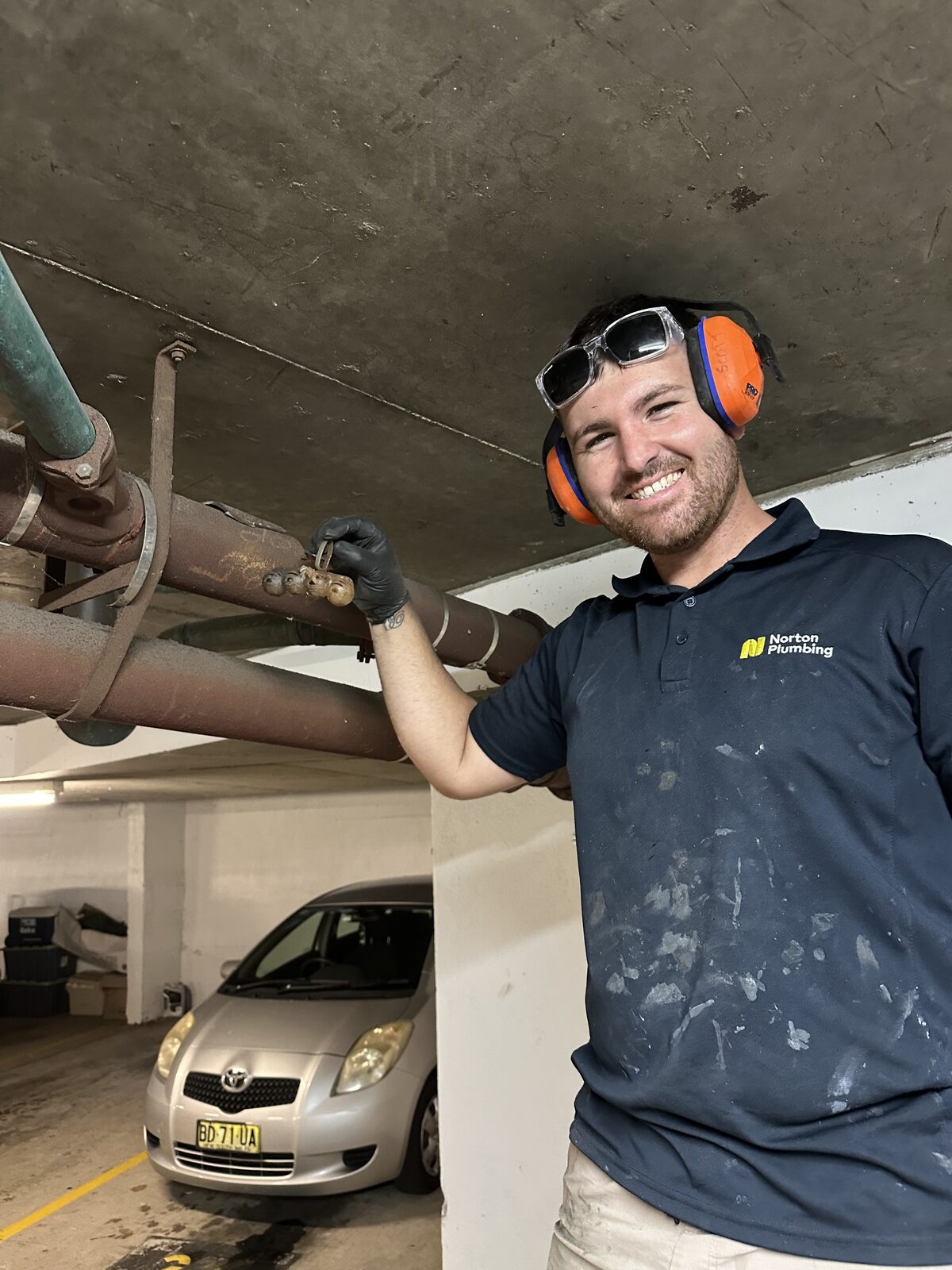
Here's a recent job that captures exactly the pattern this article is about. An apartment building in Coogee had been getting a recurring blockage in the common-area stack. Two previous plumbers had cleared it; each time the blockage came back within months. The owners corporation called Norton Plumbing for a third opinion.
The first thing we did was run a CCTV camera through the line. Just a few metres in, the camera showed what the previous visits had missed: a plastic toilet rim freshener wedged at the first bend in the stack, with months of accumulated wipes and toilet paper caught on it.
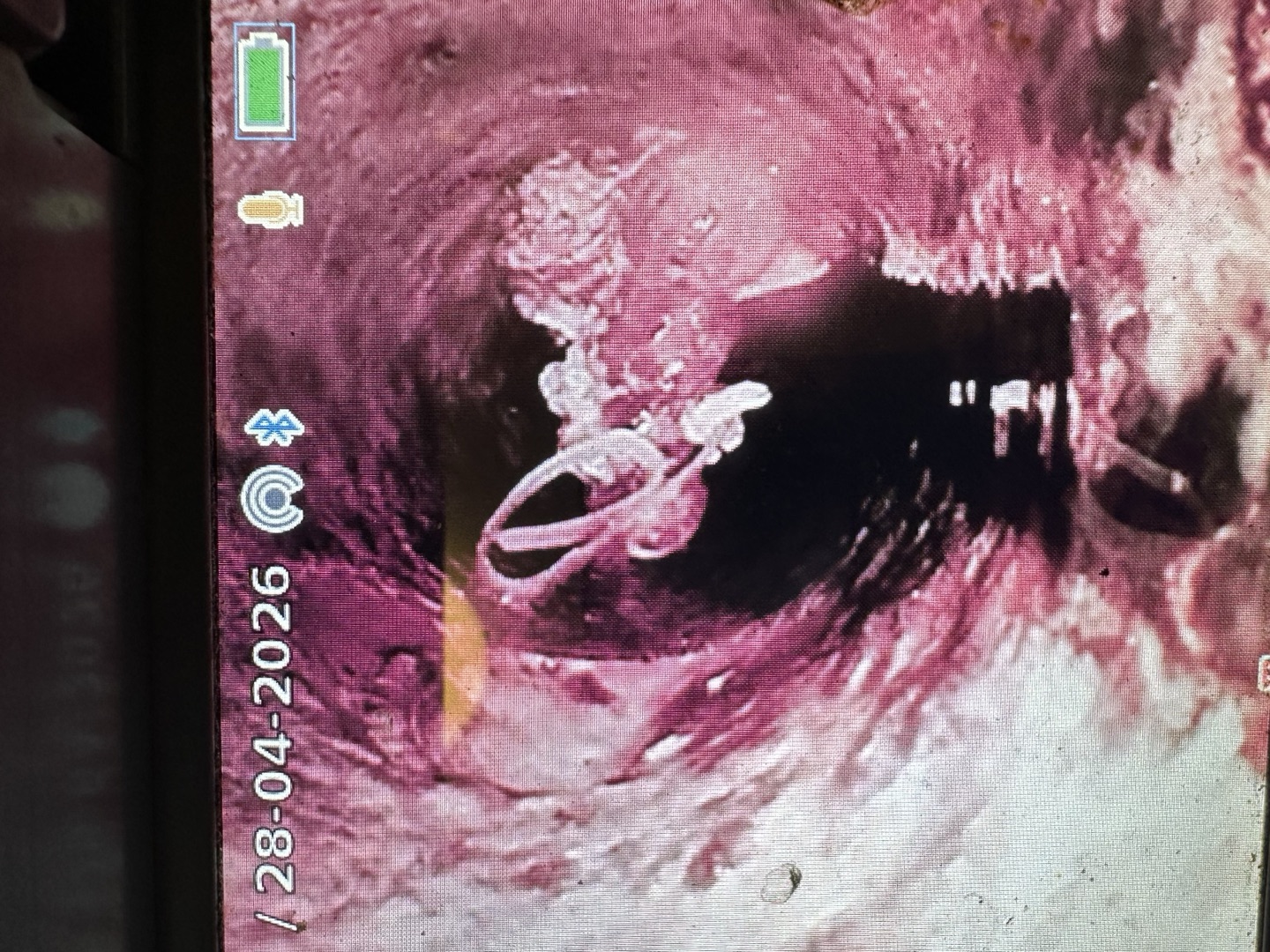
Toilet rim fresheners are sold with packaging that often suggests they're toilet-safe. They aren't. The chain itself is plastic, and once it gets dislodged from the bowl rim, the first awkward bend in the drain is where it stops. From that point on, every flush adds another small amount of debris to the snag, until the drain backs up properly.
Once the camera had pinpointed the location, recovery was straightforward through the inspection opening on the stack. No excavation, no special equipment, just the right access point and a pair of gloves.
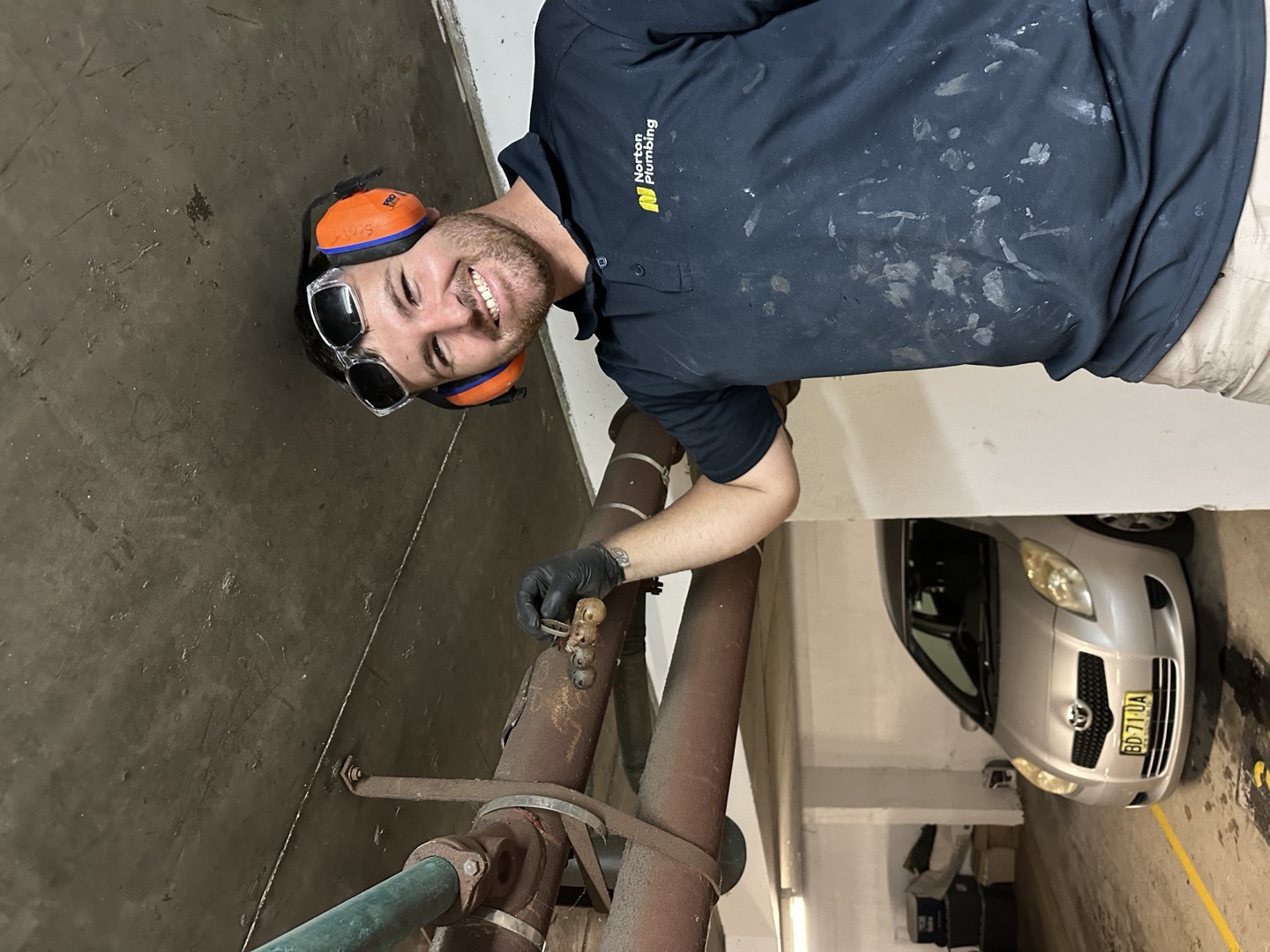
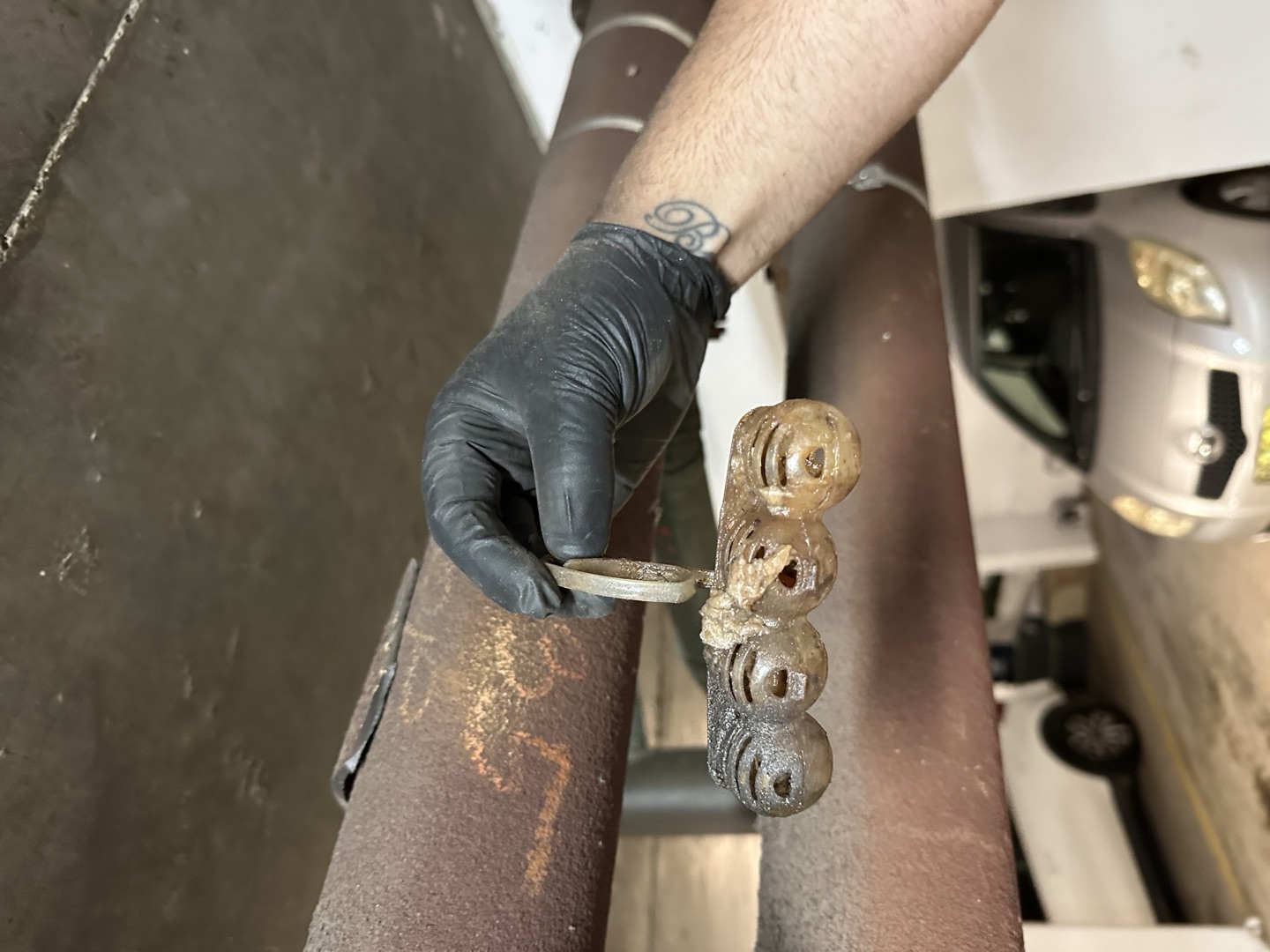
This is the 'Foreign objects no one removed' pattern from the list above, and it's exactly why CCTV is non-negotiable on a recurring blocked drain. Without the camera footage, you keep paying for jetting visits that restore flow temporarily without solving what's causing the cycle. With the camera, the cause shows up in the first few minutes and the recovery becomes one job rather than four.
What proper investigation looks like
If a drain has blocked more than twice on the same property, the next visit shouldn't just be jetting. From Norton Plumbing's standard process, the visit should include:
- A CCTV camera run through the cleared line, recorded so the homeowner has a copy to keep. Without footage, anything you're told about the pipe condition is unverifiable.
- Location and depth of any defects, marked on the surface so excavation, if needed, doesn't dig in the wrong spot. A pipe locator paired with the camera fixes the position of cracks, root entries, or deformations within centimetres.
- Notes on the fall (slope) of the pipe through the problem zone. A camera with an inclinometer can show whether the pipe is sloped correctly through the area where blockages keep occurring.
- A written summary of what was found, what should be done, and what can be left alone. Not every defect needs immediate repair. Knowing which ones can wait protects the homeowner from being upsold.
Long-term fixes that actually work
Once the investigation tells you what you're dealing with, the fix follows. Recurring blocked drains in the Eastern Suburbs usually resolve through one of these paths:
- Root cutting plus barrier treatment. Suitable when the root intrusion is localised, the pipe is otherwise sound, and the homeowner is willing to repeat the treatment every couple of years. Cheapest option, but not a permanent fix.
- Spot reline. A short section of pipe-within-a-pipe inserted to repair a single cracked or rooted joint. Useful when the rest of the drain is in good condition. No excavation required.
- Full reline. A continuous resin liner cured inside the existing pipe along its full length. Once cured, the new internal pipe is structurally a new pipe with a design life of 50 years or more, typically backed by a 10 to 25 year warranty. Standard fix for terracotta lines that have multiple root entries or general degradation.
- Excavation and replacement. Reserved for collapsed sections, severely deformed pipe, or fall corrections that can't be achieved without relaying the line. More disruptive but sometimes the only option.
Which option fits depends on the camera footage, the length of the affected line, the access conditions on the property, and budget. Norton Plumbing quotes each path in writing on-site so the homeowner can see the trade-offs rather than be asked to accept a single recommended fix without alternatives.
How to reach Norton Plumbing
Norton Plumbing has handled recurring blocked drains across Sydney's Eastern Suburbs since 2019. We operate from 10/11a-15 Berwick Street, Coogee NSW 2034. Phone: 0477 858 951. I'm Adam Norton, NSW plumbing licence 397768C, and I attend most blocked-drain investigations personally with someone from the team. We work across Eastern Suburbs including Bondi, Coogee, Randwick, Maroubra, and Kingsford. During business hours there is no callout fee. For more detail on what we do on a blockage call, our blocked drains service page walks through CCTV inspection and jetting, and the pipe relining page covers the long-term fix when terracotta lines are at end-of-life.
Frequently asked
Common questions
- Why does my drain keep blocking in the same spot?
- A drain that blocks in the same place repeatedly almost always has a fixed defect causing it: a cracked joint that lets roots in, a section of pipe with insufficient fall, a misaligned joint that snags debris, or a deformed pipe wall. The blockage doesn't move because the cause doesn't move. CCTV inspection identifies which one.
- How often should I have to clear a blocked drain?
- On a healthy drainage system, almost never. A one-off blockage from grease or a foreign object can happen, but the same drain blocking every winter, every six months, or every year is a sign of underlying pipe defects. Repeated jetting without diagnosis treats the symptom and lets the cause keep working.
- Is pipe relining worth it on a 60-year-old terracotta drain?
- In most Eastern Suburbs cases, yes. Relining inserts a new structural pipe inside the old one with a 50-year design life, typically a 10 to 25 year warranty, and it avoids excavating gardens, driveways, or tiled floors. For drains with multiple root entries or general age-related deterioration, the lifetime cost is usually lower than repeated clearing.
- What does a CCTV drain inspection involve?
- A camera attached to a flexible rod is fed through the cleared drain from a boundary trap or inspection point. Footage shows the pipe interior in real time, and a locator marks the surface position of any defects so future excavation, if needed, hits the right spot. Homeowners should be given a copy of the recording.
Related service
Blocked Drains
Fast, professional blocked drain clearing in Eastern Suburbs Sydney
See our blocked drains pageNeed a plumber in the Eastern Suburbs?
Call 0477 858 951