
Local insights · 6 min read
Whole-home water filter in Clovelly
A look at the Puretec FilterWall whole-home water filter Norton Plumbing installed at a Clovelly home, and why this kind of system suits Eastern Suburbs houses.
Adam Norton · 12 May 2026
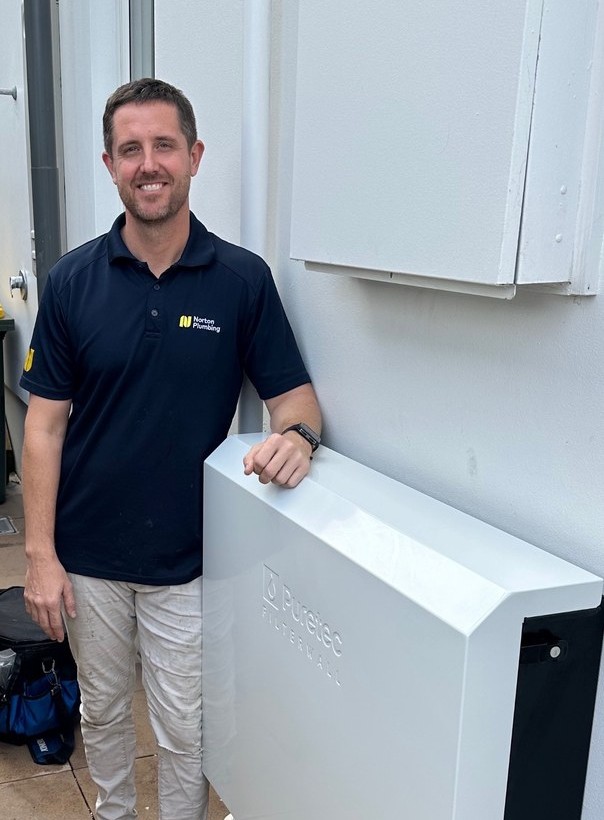
We installed a Puretec FilterWall at a home in Clovelly last week - a whole-home water filtration system that sits on an external wall and filters every drop of mains water coming into the house before it reaches any tap inside. The photos in this post are the actual install. This article is what one of these systems does, who they suit, and what to expect if you're thinking about putting one in at your own Eastern Suburbs home.
What we installed
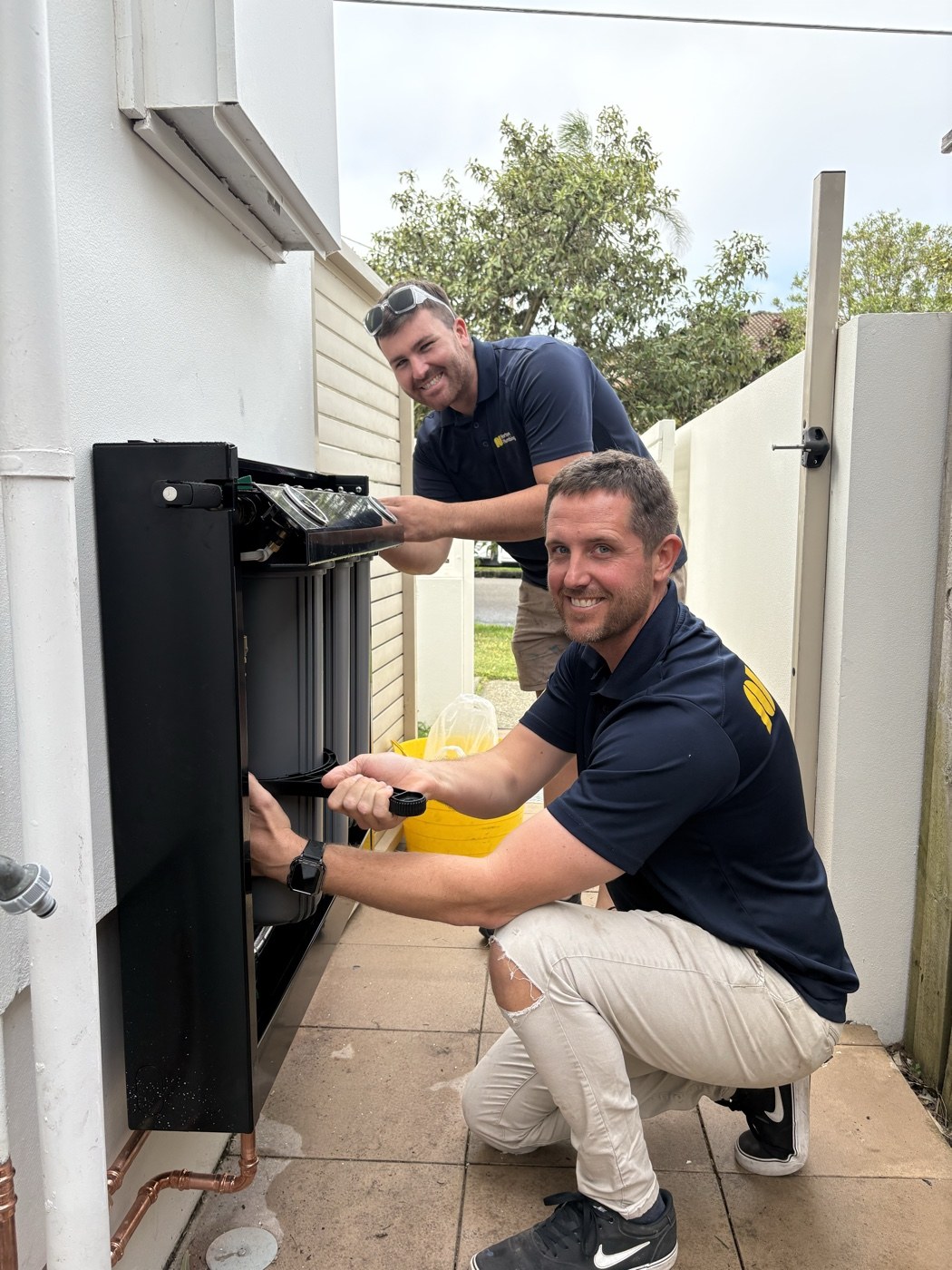
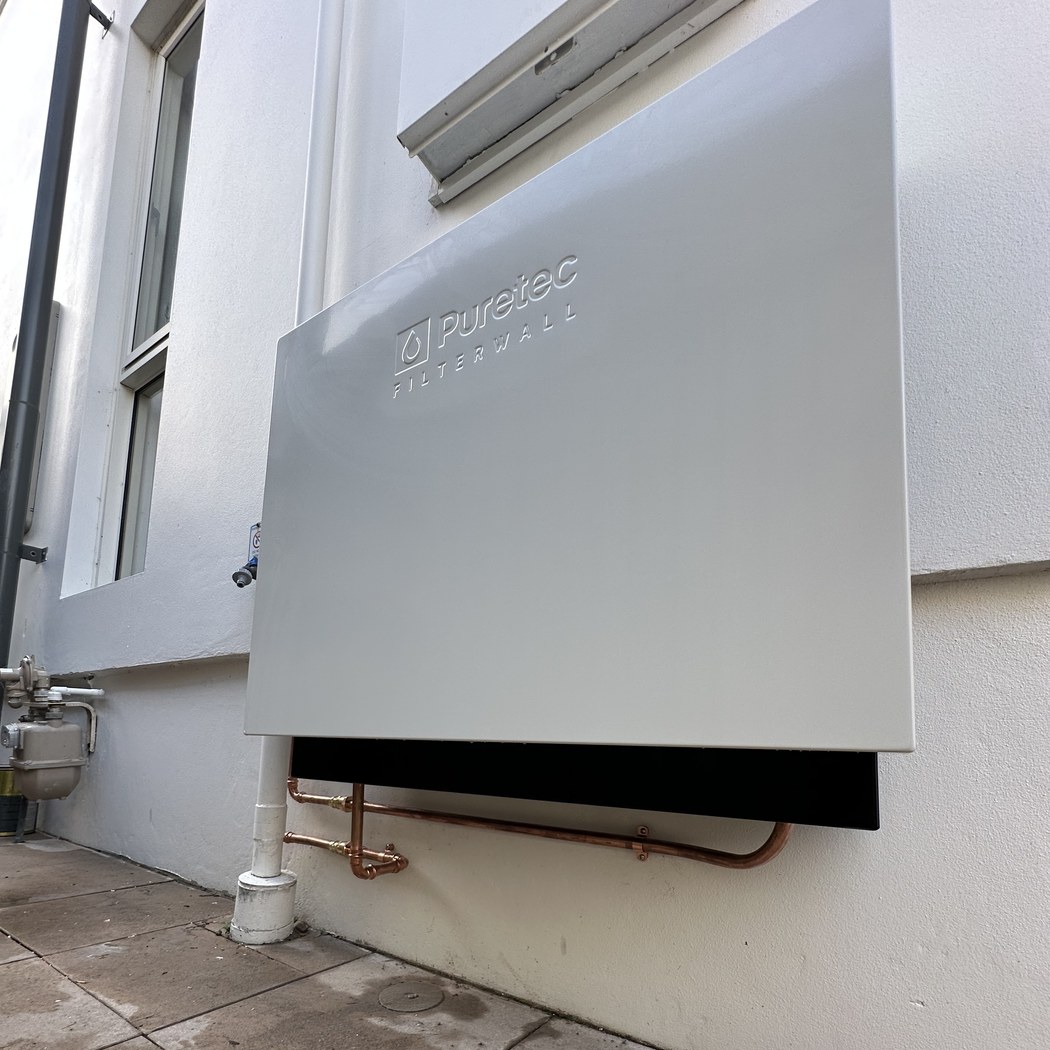
The unit is the Puretec FilterWall, a slim white housing mounted flat against the external wall of the home and fed directly off the incoming cold water mains. Inside the housing sit two cartridges in series: a sediment cartridge that catches rust flakes, sand, and pipe scale, and a carbon block cartridge that strips chlorine and improves taste. From the moment the system is commissioned, every tap inside the house - kitchen, bathrooms, laundry, outdoor - runs filtered water. The Clovelly install sits on the rear courtyard wall, next to the existing service infrastructure, with isolation valves either side so the homeowner can bypass the unit for cartridge changes without losing mains water to the house.
What a whole-home water filter actually does
Norton Plumbing fits a few different types of water filtration each year, and most customers ask the same first question: what does a filter actually take out? The FilterWall reduces up to 98% of chlorine in Sydney's mains water, along with sediment and PFAS. In practice that comes down to three things:
- Removes sediment. Rust flakes, sand, and fine pipe-scale particulates from any aging metal pipework upstream - including the public water main itself - are caught at the first cartridge. Sediment is one of the things people first notice in their tap water once they start paying attention, especially in older Eastern Suburbs housing stock with original copper or galvanised supply lines.
- Reduces chlorine taste and odour. Sydney Water adds chlorine at the reservoir level to keep the public water supply microbially safe through the distribution network. By the time the water reaches a Clovelly tap, that chlorine is still present, and it's the source of the swimming-pool taste and smell that comes out of a Sydney tap straight off the mains. The carbon block cartridge chemically binds chlorine and removes that taste.
- Reduces PFAS. PFAS, the group of synthetic compounds often called forever chemicals, have been found in mains water supplies including Sydney's. Puretec lists PFAS reduction among what the FilterWall's activated carbon filtration targets, so the same carbon stage that handles chlorine also works on PFAS.
What this kind of filter does not do is equally worth being honest about. It does not soften the water - Sydney's water carries moderate hardness from dissolved calcium and magnesium, and a sediment-and-carbon system does not touch those minerals. It does not remove fluoride - NSW Health adds fluoride as a public health measure, and removing it requires reverse osmosis at a specific drinking-water tap rather than whole-home filtration. And it does not add anything to the water; the filtered output still meets Sydney Water's safety standards. What changes is taste, odour, and particulate load.
Whole-home filter vs under-sink filter: when each one makes sense
Two valid options for most households, and the choice between them is the conversation we have most often:
- A whole-home filter like the FilterWall puts filtered water at every tap. Showers, baths, kettles, washing machines, ice makers, hot water heaters, and outdoor taps all benefit. The trade-off is higher upfront cost and the need to find space on an external wall or in a utility area to mount the unit.
- An under-sink filter feeds a single dedicated tap at the kitchen sink. Cheaper to install, smaller footprint, and the cartridge swap is straightforward. The trade-off is that nothing else in the house is filtered. The shower still runs chlorinated water, the kettle still gets sediment, and any appliance with a separate water inlet stays on the unfiltered mains.
A reasonable rule of thumb: if the main concern is drinking and cooking water, an under-sink does the job for a fraction of the upfront cost. If you have noticed sediment marks on shower fittings, can smell chlorine in the bathroom, or want filtered water at every appliance that uses water, whole-home is the right call. The Clovelly job was the second scenario.
What to expect from a Puretec FilterWall
Practical things worth knowing if you are considering one of these:
- Filter changes. The two cartridges inside the FilterWall - sediment and carbon block - need replacing periodically. Puretec specifies cartridge life of 6 to 12 months depending on water quality and household usage. We book most customers in for an annual cartridge change, which keeps the system performing at rated capacity and keeps the manufacturer warranty intact.
- Water pressure. A properly installed whole-home filter operates at mains pressure with negligible loss for normal household flow rates. If you notice a pressure drop after the system has been running for some time, the most common cause is a cartridge that has reached end-of-life and needs swapping rather than a problem with the filter itself.
- Isolation valves. Every install Norton Plumbing does on a FilterWall includes bypass valves on either side. That means if the system ever needs service or a cartridge change, the homeowner does not lose mains water to the house. The valves divert around the unit while the work happens.
- Mounting. The unit is designed to mount on an external wall in a sheltered position. It needs to be accessible for filter changes and protected from direct weather where possible. Tight courtyards and narrow side returns - common in Eastern Suburbs terraces and semi-detached homes - are fine because the housing is slim.
For households that have already been thinking about filtered water, the FilterWall is the system we have come back to most. It is well-suited to the housing stock we work in, the install is tidy, and the maintenance is straightforward. Sydney Water's own safe drinking water page is a useful starting point if you want to read about the public water supply before deciding how to filter it.
How to reach Norton Plumbing
Norton Plumbing operates from 10/11a-15 Berwick Street, Coogee NSW 2034. Phone: 0477 858 951. We can reach most of the Eastern Suburbs in under 20 minutes including Bondi, Bronte, Randwick, and Maroubra. We are available 24/7 for emergencies, and during business hours there is no callout fee. I'm Adam Norton, NSW plumbing licence 397768C. I attend most filter installs personally; otherwise it'll be Greg, our other licensed plumber. If you'd like to talk through whether a whole-home filter or an under-sink makes more sense for your place, give us a call and we'll walk you through it.
Frequently asked
Common questions
- What's the difference between a whole-home water filter and an under-sink filter?
- A whole-home filter sits at the incoming mains and filters every tap in the house - kitchen, bathrooms, laundry, outdoor. An under-sink filter feeds one dedicated tap at the kitchen sink only. Whole-home costs more upfront but covers showers, kettles, washing machines, and appliances; under-sink covers only drinking and cooking water at one location. The right choice depends on whether the concern is taste at every tap or just at the one you drink from.
- Is Sydney tap water safe to drink without a filter?
- Yes. Sydney Water adds chlorine at the reservoir to keep the public supply microbially safe, and tap water across the network meets the Australian Drinking Water Guidelines. A filter does not make safe water safe; it changes the taste, removes the chlorine smell that drinking water carries through the mains, and catches sediment from aging pipework. Some households install filtration for the taste and clarity rather than the safety question.
- How often do whole-home filter cartridges need changing?
- For a Puretec FilterWall, every 6 to 12 months per the manufacturer specification, depending on water quality and household usage. An annual change is the standard cadence for most Eastern Suburbs homes and keeps the system performing at its rated capacity. A noticeable drop in water pressure is usually the first sign a cartridge has reached end-of-life.
- Will a whole-home water filter affect water pressure?
- A properly installed and properly sized whole-home filter operates at mains pressure with negligible loss at normal household flow rates. A pressure drop after the system has been running for some time almost always means a cartridge has reached end-of-life and needs swapping. If pressure was poor from day one, the install or sizing is worth a second look.
Related service
Water Filtration
Whole-home Puretec FilterWall installation in Eastern Suburbs Sydney - two-stage sediment and carbon filtering for every tap in the house
See our water filtration pageNeed a plumber in the Eastern Suburbs?
Call 0477 858 951Keep reading
More from the workshop
Local insights · 7 min read
Plumber Coogee: what we see most on local jobs
1 May 2026
Local insights · 8 min read
Bondi apartments: the plumbing issues worth knowing about
30 April 2026
Local insights · 6 min read
Eastern Suburbs pipe corrosion: how we spot copper leaks before they get expensive
18 April 2026