Local insights · 6 min read
Eastern Suburbs pipe corrosion: how we spot copper leaks before they get expensive
Copper plumbing in Sydney's Eastern Suburbs ages faster than the same pipework installed inland. Here's what to watch for, how we find pinhole leaks before they get expensive, and what the repair options actually look like.
Adam Norton · 18 April 2026
Copper plumbing in Sydney's Eastern Suburbs ages faster than the same pipework installed twenty kilometres inland. Salt-laden coastal air, older soldered joints, and pre-1985 housing stock combine to corrode copper from the outside in - and by the time a copper system is in its fifth decade, the first weeping pinhole leaks start appearing. We attend more of these in Coogee, Bondi, Maroubra and Randwick than almost any other cluster of suburbs in the city.
The hard part is they don't announce themselves. A pinhole leak inside a cavity wall can run for months before anyone notices a stain on the ceiling below. By the time it's visible, the water damage often costs more than the plumbing repair itself. This article is what to watch for, how we find these leaks before they get expensive, and what the repair options actually look like.
Why Eastern Suburbs copper pipes don't last as long
Standard copper plumbing has an industry-cited service life of 50 to 70 years. In coastal Sydney that ceiling drops, and the reason is mostly external rather than internal:
- Salt-laden coastal air. Within a kilometre or two of the ocean, chlorides in the air settle on exposed copper surfaces and penetrate the protective oxide layer, triggering pitting corrosion from the outside. Pipes in subfloor crawlspaces, in roof voids, on external walls, and exposed under sinks see it worst. The further from the coast, the slower it runs. Sydney's drinking water itself is slightly alkaline (pH around 7.6 per Sydney Water's reporting) and not significantly corrosive to copper from the inside - the dominant failure mode in our area is exterior chloride attack, not internal water chemistry.
- Era-specific installation practices. Older homes were piped with thinner-gauge copper than modern standards, and soldered with tin-lead solder (lead-based plumbing solder for drinking-water lines was banned in NSW around 1989). Those soldered joints, especially where they sit in salt-laden cavities, are usually the first failure points.
The combination means a pipe run that would last 60-plus years in an inland Sydney suburb often starts weeping somewhere in its fifth decade in Coogee or Bondi.
The early warning signs we look for
When we inspect older Eastern Suburbs homes, these are the visual cues that tell us copper corrosion is active:
- Green or blue-green crystalline staining at exposed joints. Called verdigris. It's the visible product of copper oxidising, and it tells us the joint is reactive even if it hasn't started leaking yet.
- Small drip marks on the underside of pipes in laundries, under sinks, or in subfloor spaces. Often dried, with a chalky white mineral residue around them.
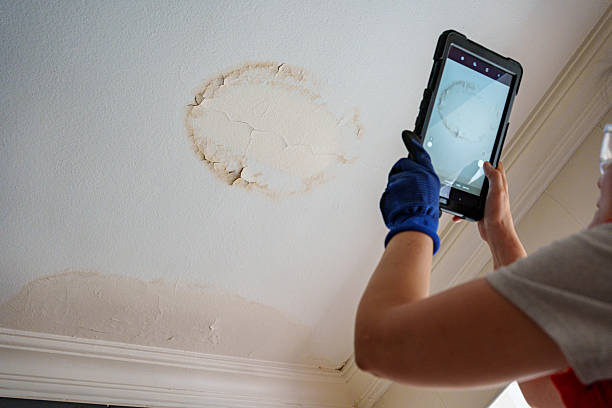
- A persistent damp patch on a wall or ceiling with no obvious source - especially if it returns after drying out.
- The water meter ticking with everything switched off. Turn off every tap and appliance, watch the meter for a couple of minutes. If it moves at all, there's a leak somewhere on the supply side.
- A higher water bill with no changed usage. A pinhole losing roughly 50 millilitres a minute adds up to around 6,500 litres a quarter - enough to show up clearly on the bill.
- Discoloured or rusty water from one tap intermittently. That's internal pipe scale starting to break loose, which usually means significant interior surface corrosion is also underway.
If you have any two of these and your home is more than 30 years old, a detection visit is worth booking before the next ceiling stain appears.
What detection actually looks like
A copper leak detection visit is straightforward. We start with the water meter test to confirm there's an active leak, then narrow down which line:
- Acoustic listening equipment is the main tool. A pinhole leak under pressure makes a specific high-frequency sound that travels through pipework and structure. With a sensitive contact microphone on the wall, we can usually pinpoint the leak to within a small section before opening anything.
- Thermal imaging picks up the temperature difference between leaking water and the surrounding wall cavity. Useful for hot-water-side leaks where the temperature contrast is strong. Less useful on cold lines in summer.
- Pressure testing isolates which section of pipework holds pressure and which doesn't, which narrows the search before the acoustic step.
Most pinhole leaks can be located without exploratory wall demolition. The follow-up access cut is then a single targeted hole rather than ripping out a whole wall to chase the source.
Repair options, in order of severity
Once we know where the leak is, there are three levels of repair:
- Targeted section replacement. One leak, one cut, replace the affected pipe section, refit. Most common outcome and the cheapest.
- Partial repipe. When the leak is one of several on the same run (a bathroom or kitchen circuit), replacing that whole circuit in modern Pex or PE-RT is often more economical than coming back repeatedly for separate pinholes on the same line.
- Full house repipe. Reserved for genuinely end-of-life systems where multiple circuits have failed or are obviously about to. We CCTV, pressure-test, and present the case before recommending it - never as a default. Full repipes are a real disruption to a household and we only suggest one when the maths actually justify it.
We quote each option in writing on-site, with a clear honest take on which one is right for your situation. The targeted patch is what we do most of the time.
How to reach Norton Plumbing
Norton Plumbing operates from 10/11a-15 Berwick Street, Coogee NSW 2034. Phone: 0477 858 951. We can reach most of the Eastern Suburbs in under 20 minutes including Bondi, Bronte, Randwick, and Maroubra. We are available 24/7 for emergencies, and during business hours there is no callout fee. I'm Adam Norton, NSW plumbing licence 397768C. I attend most Eastern Suburbs jobs personally, otherwise it'll be Blake or another licensed plumber from the Norton Plumbing team. For more detail on what a detection visit covers, our leak detection service page walks through the process.
Frequently asked
Common questions
- How long do copper pipes last in coastal Sydney suburbs?
- Industry averages put copper at 50 to 70 years. Coastal suburbs in Sydney's Eastern Suburbs tend toward the lower end of that range because of salt-air exposure. Properties within a kilometre of the ocean see the most aggressive corrosion. Soldered joints from older installations are usually the first failure points; long pipe runs inside cavity walls tend to outlast exposed runs.
- What does a pinhole leak in a copper pipe actually look or sound like?
- Early signs are mostly visual: green or blue-green crystalline staining around joints (verdigris), small dried drip marks on the underside of pipes, or a damp patch on a wall or ceiling with no obvious source. If you can hear water running with everything turned off, the leak is usually well past the early stage and is already inside a wall cavity.
- Can a pinhole leak be repaired without ripping out the wall?
- Often yes. Acoustic and thermal detection lets us pinpoint the leak to a small section, so the access cut is a single targeted hole rather than full-wall demolition. Larger or multiple-leak situations sometimes need bigger access, but full-wall openings are uncommon with modern detection.
- Should I repipe the whole house, or just fix leaks as they appear?
- It depends on the age of the pipework and how many leaks have already appeared. One pinhole in a 50-year-old system is usually a targeted patch repair. Multiple pinholes within a short window is the system telling you it's at end-of-life, and a partial or full repipe is often more economical than chasing leaks individually. We CCTV and pressure-test before recommending repiping, never as a default.
Related service
Leak Detection
Find and fix hidden leaks in Eastern Suburbs Sydney - before they cause real damage
See our leak detection pageNeed a plumber in the Eastern Suburbs?
Call 0477 858 951