Case study · 5 min read
Blocked sewer Coogee: strata tree roots
A blocked sewer at a Coogee strata block was full of tree roots. Greg found them on camera, then Adam and Greg jetted the shared line clear.
Adam Norton · 16 November 2026
The shared sewer at this Coogee strata block had blocked, and the units draining into it were feeling it. The line runs from the building down a narrow side path and out under the back garden, past established trees and a strip of jungle-thick planting along the fence. That is a familiar setting for a blocked sewer in Coogee, and tree roots turned out to be the cause.
Greg and Adam went out together. The aim was to find the blockage on camera first, then clear the full line so the building was draining properly again.
Finding the blockage with a CCTV camera
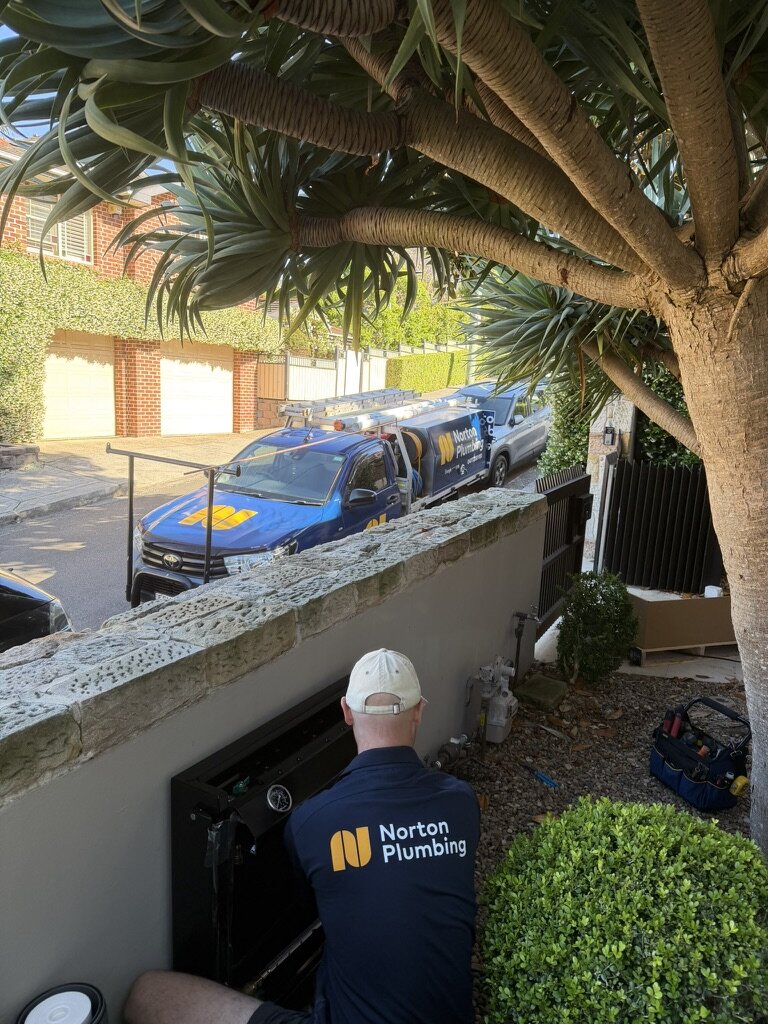
Greg set up in the side path between the building wall and the garden bed. He fed the CCTV drain camera into the line and watched the pipe on the screen as it went, looking for where the flow stopped and what was stopping it.
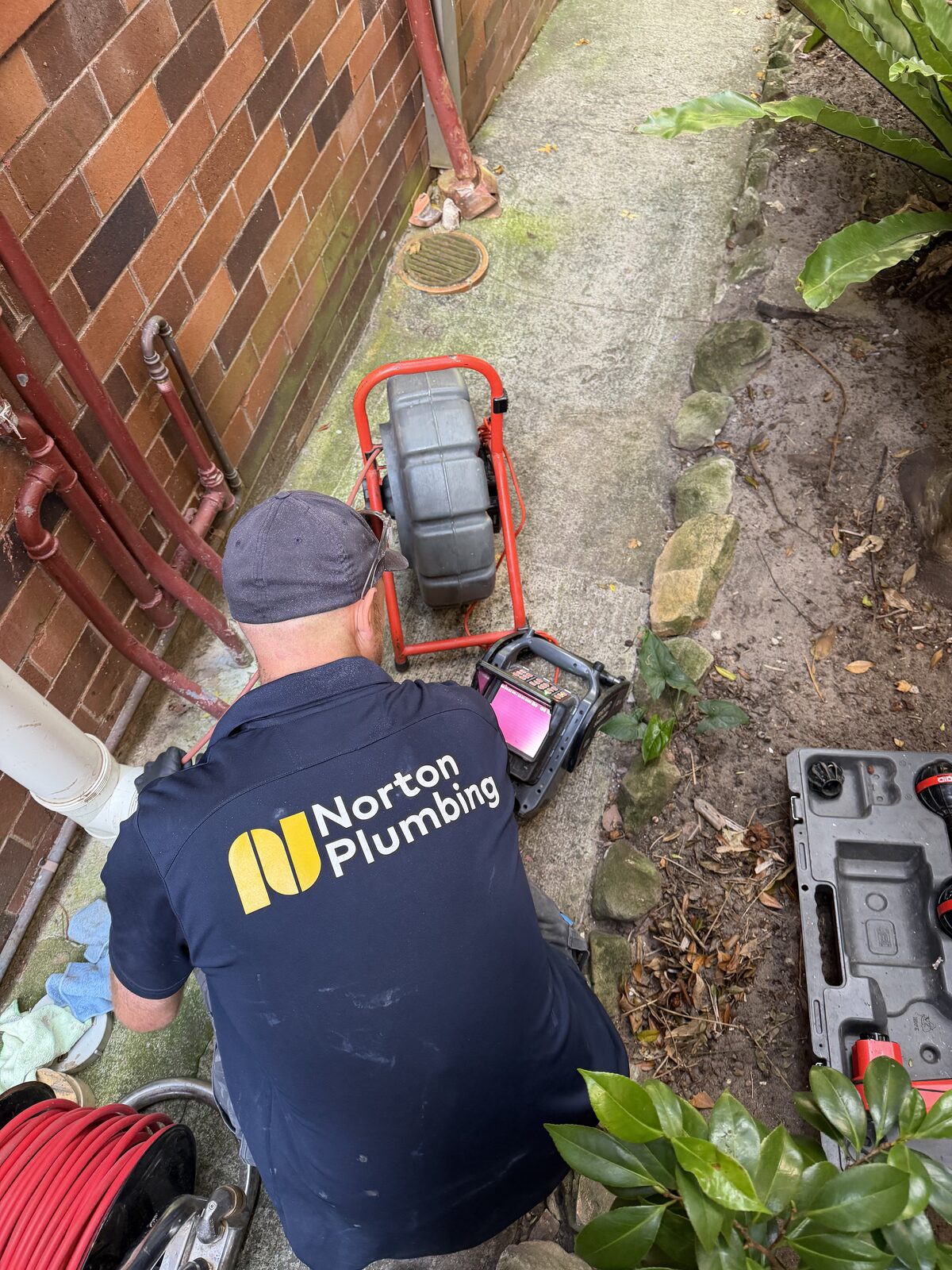
The camera showed tree roots grown into the line. Seeing them on screen first matters on a strata job. It tells you where to work from, and it gives the building clear evidence of what was wrong and why.
Jetting the shared sewer line clear
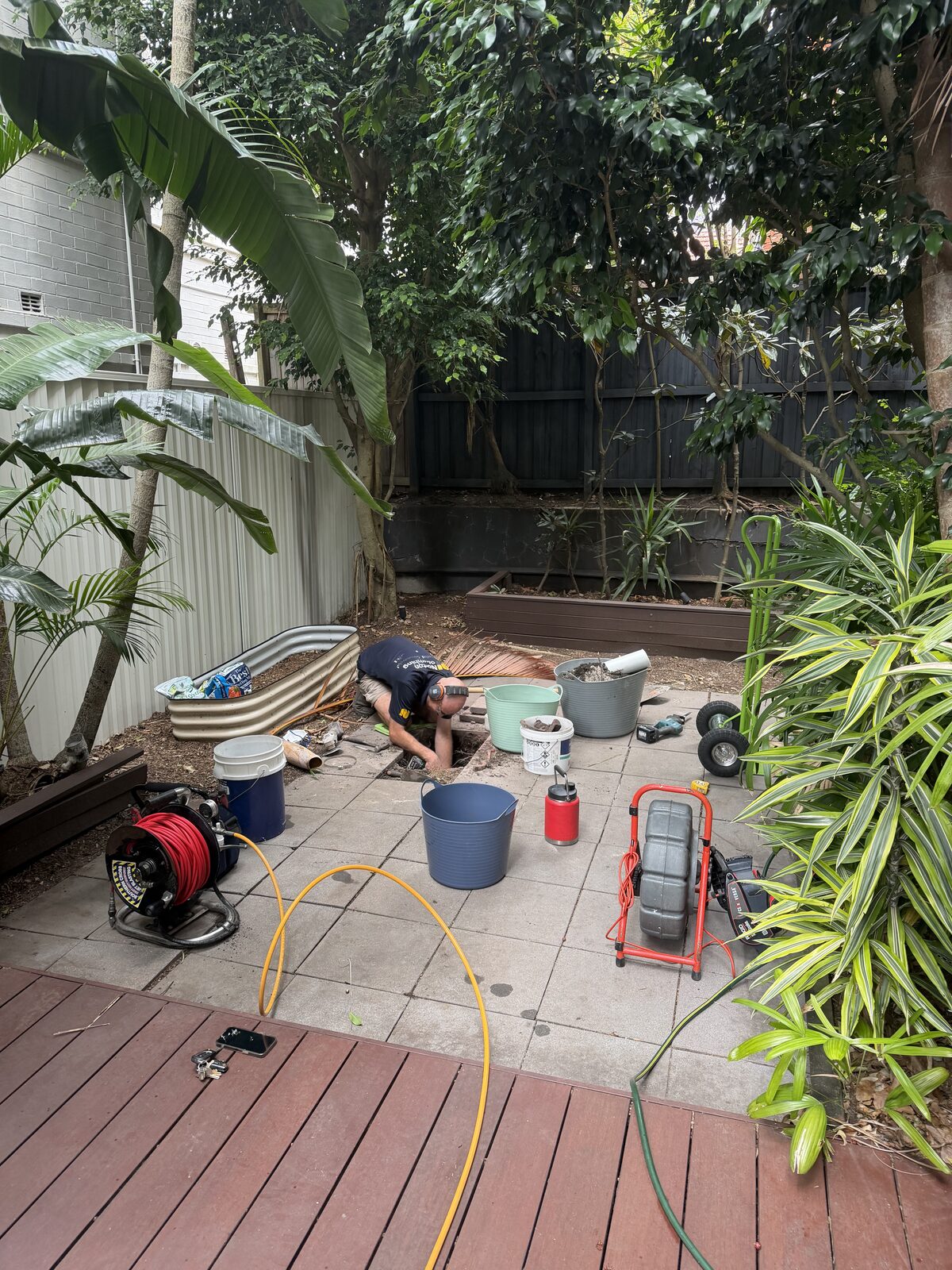
With the blockage found, the high-pressure jetter went in. A jetter sends water through the pipe at high pressure through a nozzle that scours the full width of the pipe. It cuts roots away from the pipe wall and flushes them and the built-up waste out, rather than just punching a hole through the middle of the blockage.
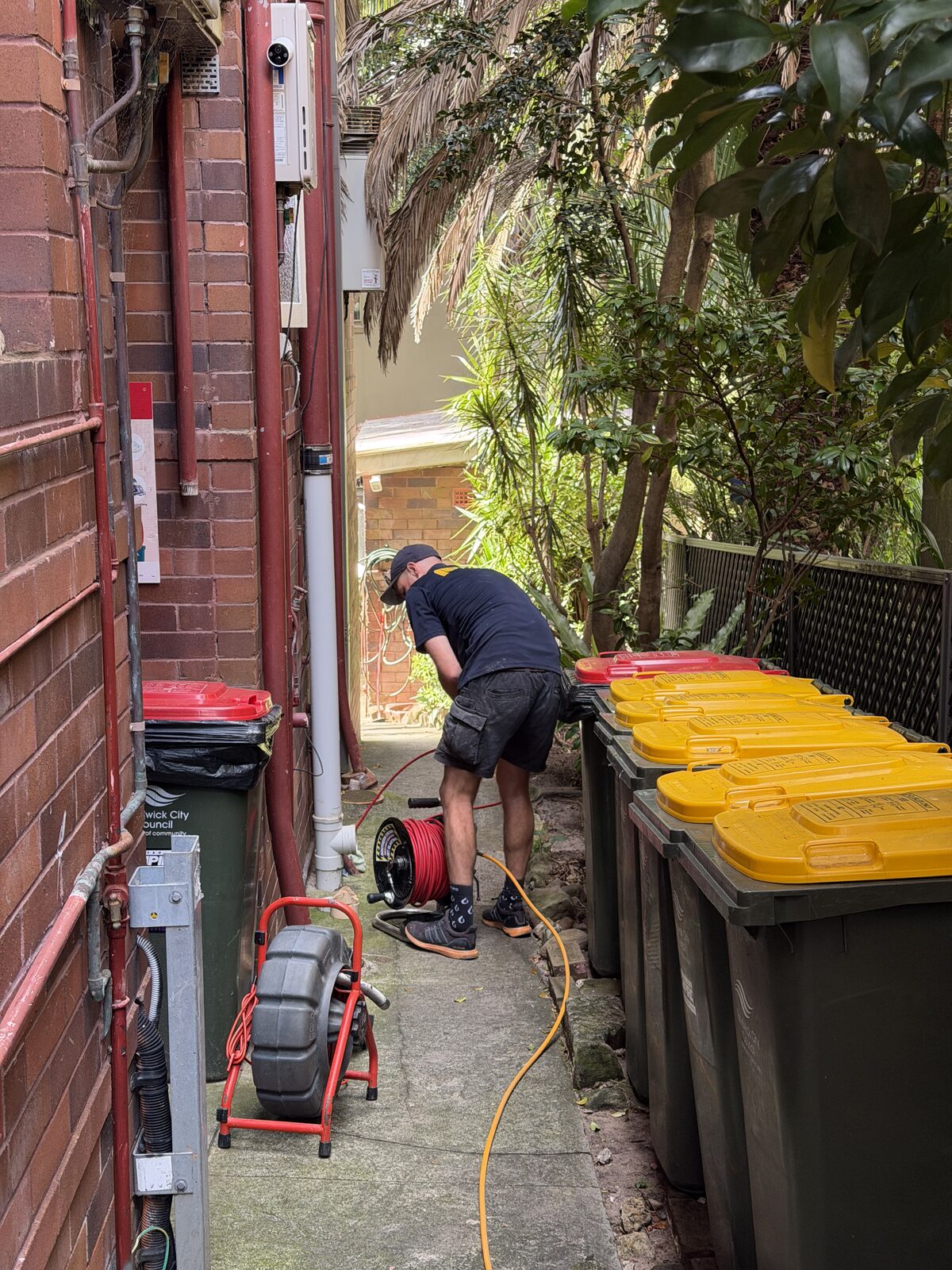
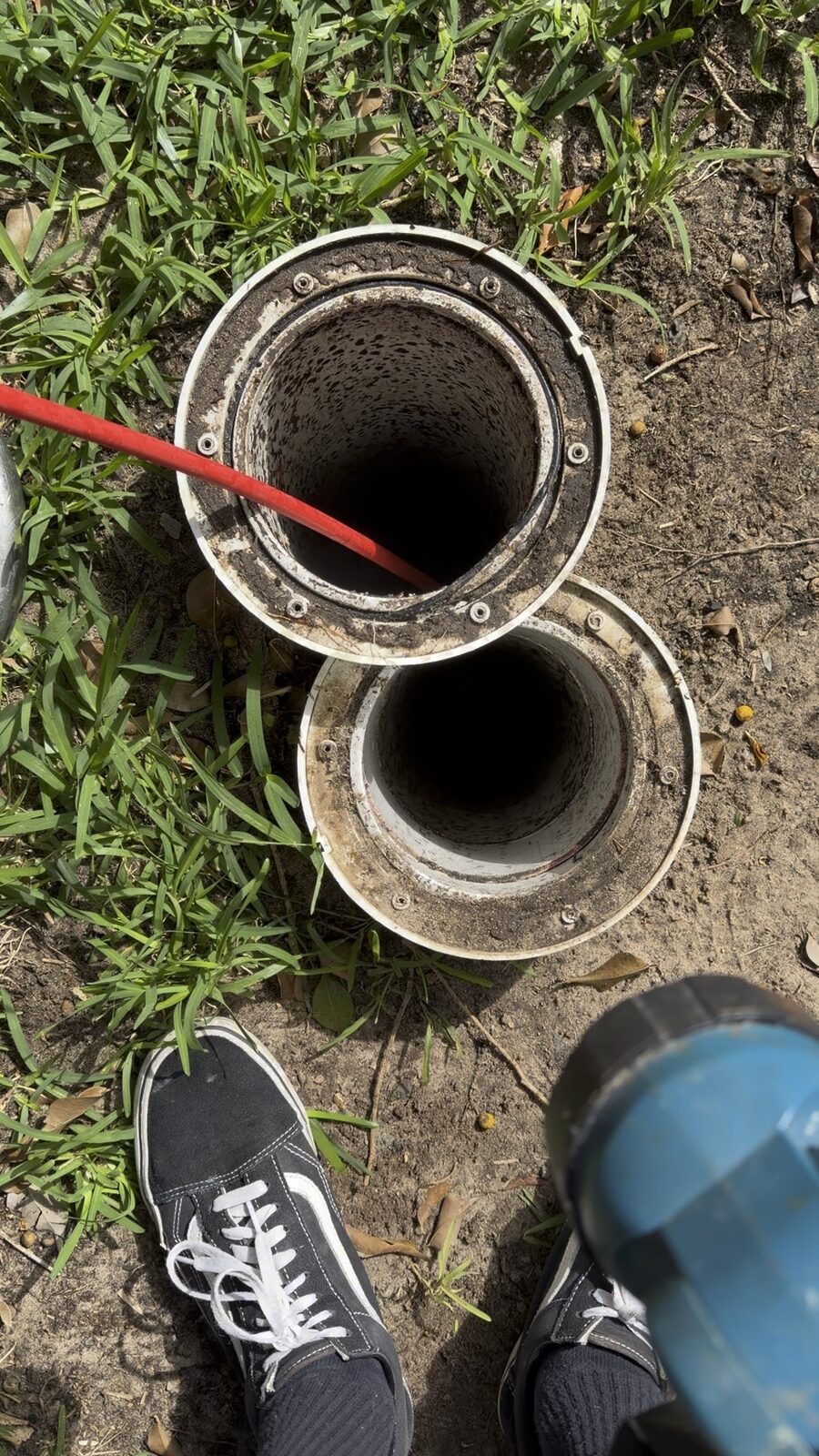
The jetter hose went in through the sewer inspection openings in the back garden, the capped access points that let a plumber get straight into the line.
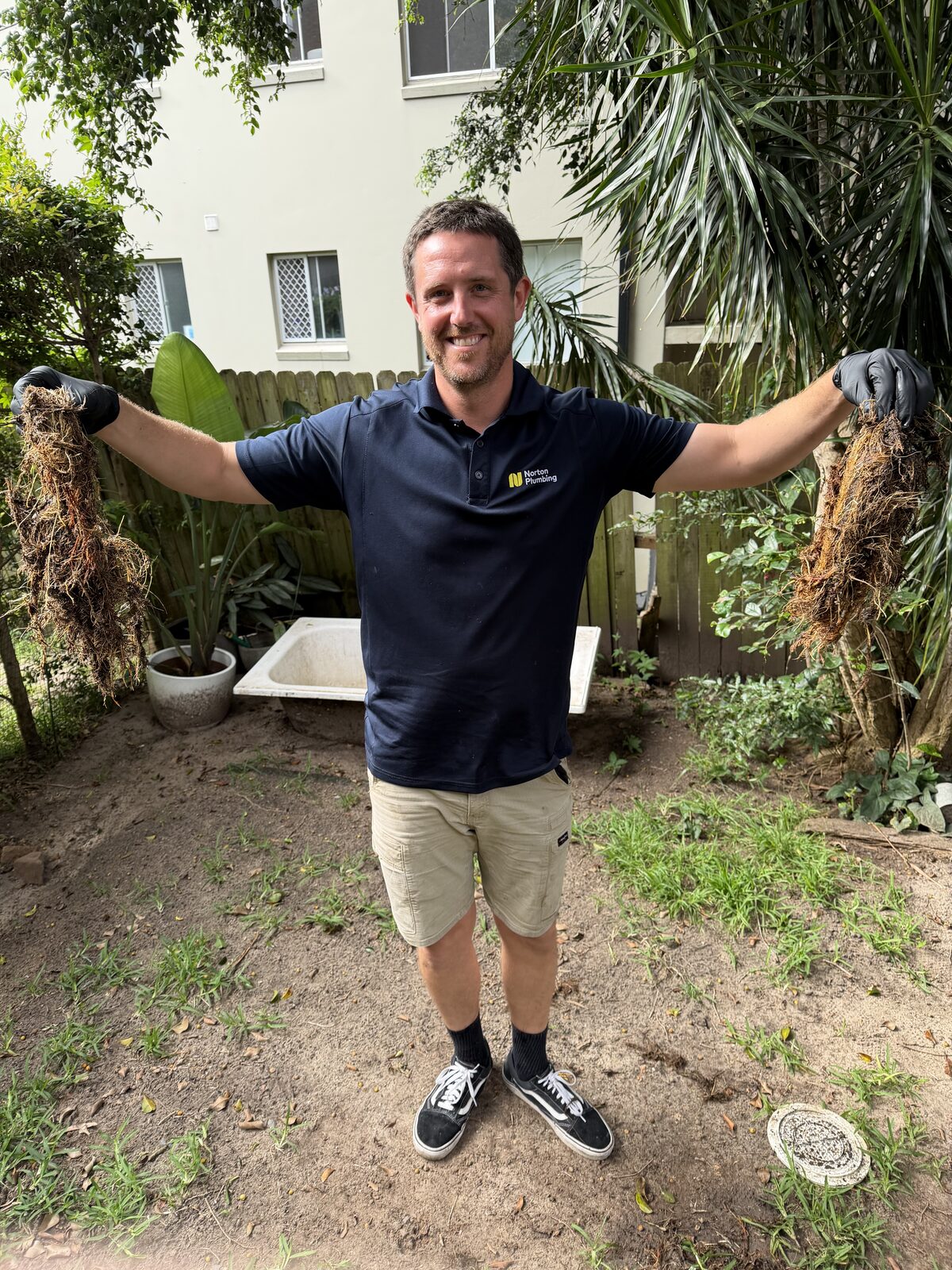
What came out says it all. Adam pulled two big masses of fine, matted roots out of the line, each one shaped by the inside of the pipe it had been growing in.
Why Coogee strata sewers block with tree roots
Coogee has a lot of red-brick walk-up apartment blocks from the mid twentieth century, many sitting in gardens that have had decades to grow. The sewer lines under those gardens are often the original pipes, and older clay sewers were laid in short lengths with a joint every metre or so. Each joint is a place a root can find moisture and push in.
In a strata building the shared sewer also carries several units' worth of waste, so a partial root blockage shows up quickly. Shared lines under common property are generally the owners corporation's responsibility, which is why it pays for the committee to know what condition the line is in. The NSW Government explains who looks after what in its guide to strata repairs and maintenance. Our post on who pays when tree roots get into a drain covers the rest.
Signs a strata sewer has roots in it
- Gurgling in more than one apartment. Air being pushed back up through several units points to the shared line, not one unit's pipes.
- Ground-floor units back up first. The lowest toilets, showers and floor wastes on a shared sewer are where a blockage shows itself.
- It blocks, gets cleared, then blocks again. Roots come back to the same joints, so a repeat blockage every year or so is a classic root pattern.
- A sewage smell or wet patch in the garden. Over a line with mature trees nearby, that is worth a camera inspection.
- An overflow gully that bubbles or spills. The gully is the sewer's safety valve. If it is overflowing, the line downstream of it is blocked.
How to reach Norton Plumbing
Norton Plumbing has worked in Coogee and across the Eastern Suburbs since 2019, clearing blocked sewers and stormwater drains, drain jetting, CCTV inspections and pipe relining for strata buildings and homes. I hold NSW plumbing licence 397768C. The team works out of 10/11a-15 Berwick St, Coogee. If your building's sewer keeps blocking, see our blocked drains page, our Coogee strata waste stack case study, our Coogee plumber page, or call 0477 858 951. Quotes are free across the Eastern Suburbs.
Frequently asked
Common questions
- How do tree roots get into a sewer pipe?
- Roots grow towards moisture. Sewer pipes leak a small amount of warm, nutrient-rich vapour at their joints and any cracks, and fine roots find their way in. Once inside they grow quickly in the steady flow, forming a mat that catches paper and waste until the line blocks.
- Who pays for a blocked sewer in a strata building?
- A sewer line that serves more than one lot, or runs under common property like a shared garden or side path, is generally the owners corporation's responsibility. Pipes that only serve one unit can be the lot owner's. The strata plan and by-laws decide it, so check with the strata manager if unsure.
- Will jetting stop tree roots coming back?
- Jetting cuts the roots out and clears the full bore of the pipe, but the opening the roots came in through is still there, so they usually return over time. How quickly depends on the trees nearby and the pipe's condition. A camera inspection shows whether relining or a repair is worth considering.
- Why use a CCTV camera before jetting a sewer?
- The camera shows exactly where the blockage is, what it is made of and what condition the pipe is in. That tells the plumber the best place to jet from and whether the pipe has cracks or broken sections. It also gives the strata committee clear footage to base decisions on.
- What are the signs of a blocked sewer in an apartment block?
- Slow drains or gurgling in more than one unit, ground-floor toilets or showers backing up, a sewage smell in the garden, or water sitting in an overflow gully. When several apartments notice it at once, the problem is usually in the shared line, not one unit's pipes.
Related service
Blocked Drains
Fast, professional blocked drain clearing in Eastern Suburbs Sydney
See our blocked drains pageNeed a plumber in the Eastern Suburbs?
Call 0477 858 951