Local insights · 7 min read
Gas at home: what needs a gasfitter?
In NSW, almost any work on gas pipes or a fixed gas appliance needs a licensed gas fitter and a certificate of compliance. Here's what you can and can't do yourself.
Adam Norton · 10 November 2026
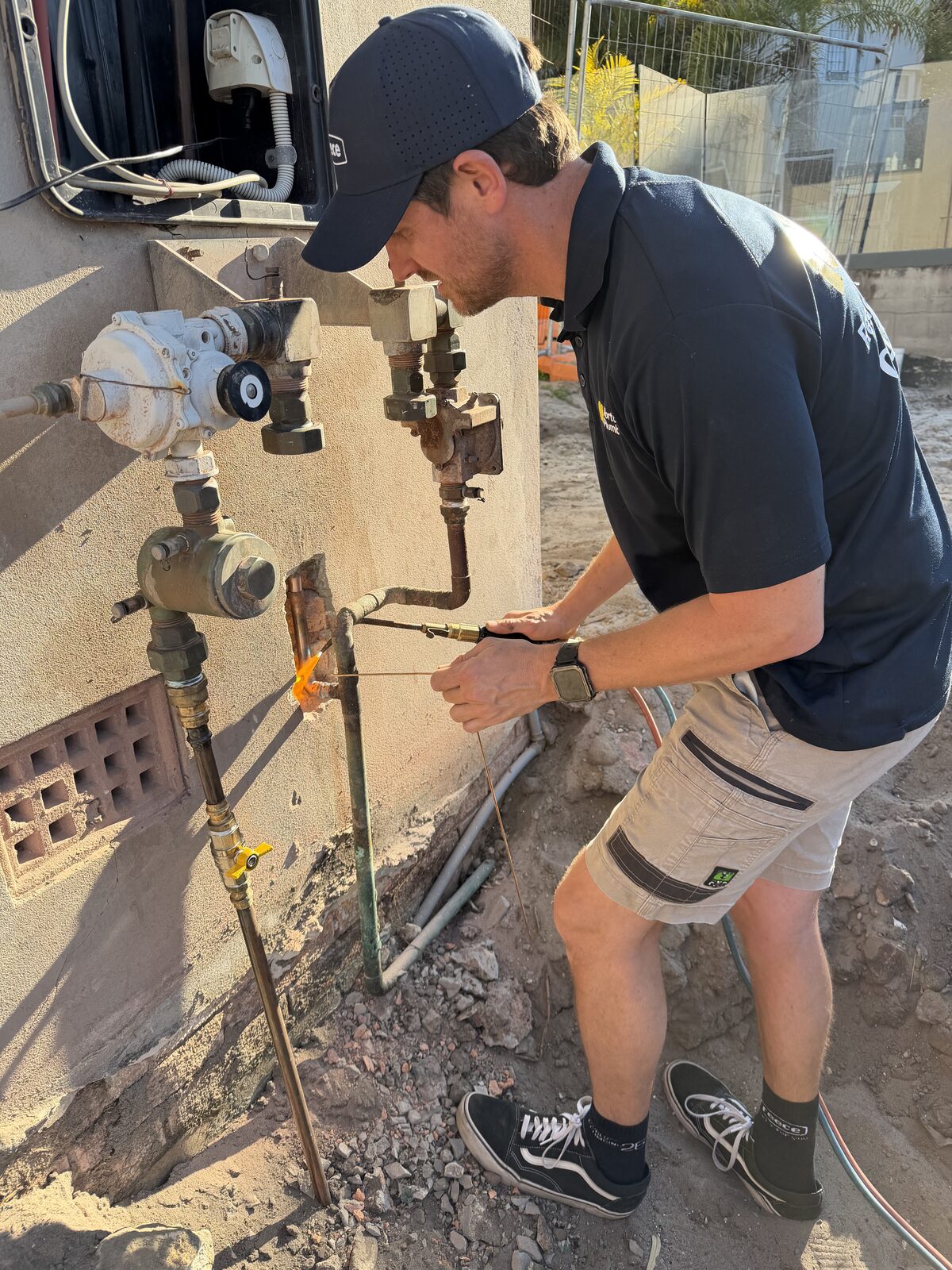
In NSW, almost any work on your gas pipes or a fixed gas appliance needs a licensed gas fitter. That covers installing, moving or repairing gas pipework, connecting or disconnecting a gas hot water system or cooktop, and fixing a leak. The NSW Government's guidance is plain about it: only licensed gasfitters can do repairs or renovations involving gas, whatever the size of the job.
The list of things you can do yourself is short. This guide walks through each part of a home gas setup, from the meter to the appliances, so you know where the line sits and what you should get back from a gas fitter when the job is done.
What counts as gasfitting work in NSW
The NSW Government's gasfitter rules define gasfitting work as installing, altering, extending or repairing a gas installation, working on a flue, and connecting or disconnecting a gas appliance or regulator. The one carve-out is an appliance designed to be readily detached, like a portable heater or BBQ that clicks into a bayonet point.
In everyday terms, a licensed gas fitter is needed for:
- New gas pipework, or moving or extending existing pipes.
- Installing, replacing or moving a gas hot water system.
- Connecting or disconnecting a gas cooktop, oven or fixed heater.
- Adding a new bayonet point, inside or outside.
- Finding and repairing a gas leak.
- Converting an appliance from LPG to natural gas, or back.
What you can do yourself: plug a portable heater or BBQ into an existing bayonet and unplug it again, swap an LPG bottle, and keep vents and flues clear. NSW Fair Trading also treats changing a worn LPG pigtail or changing over cylinders as outside gasfitting work.
The gas meter: Jemena's, not yours
On the natural gas network in Sydney, Jemena owns and is responsible for the gas meter. The pipework on your side of the meter, running to your appliances, is yours. Interfering with the meter itself is an offence, so if the meter needs moving or replacing, the gas fitter arranges it with Jemena.
This split matters when something goes wrong. A fault on the network or in the meter is Jemena's to fix. A leak in the pipe under your house or behind the cooktop is a job for your own licensed gas fitter.
Gas hot water
Replacing a gas hot water system is gasfitting work as well as plumbing work, because the gas supply, flue and regulator are all part of the job. In a Clovelly gas hot water swap, a failed Rinnai Infinity was replaced with a new unit in the same wall recess, on the existing gas supply. Like-for-like swaps are usually simpler. Moving a system, or changing from a storage tank to continuous flow, can mean new gas pipe sized for the new unit.
Each maker sets its own service interval in the owner's manual, so check yours. If you are deciding between gas, electric and heat pump, see our hot water service page.
Cooktops, ovens and heaters
A fixed gas cooktop or oven is hard-connected to the gas pipe, so connecting, disconnecting or moving one is a licensed job. That includes a kitchen renovation where the cooktop comes out for the cabinetmaker and goes back in later. Both the disconnection and the reconnection need a gas fitter, with the reconnection tested.
Portable gas heaters that plug into a bayonet can be connected by you. Servicing is another matter. Fire and Rescue NSW advises that outdoor gas heaters are safety checked and serviced every two years, and that flames or radiant panels burning yellow or producing soot are not working properly and need servicing. It is sensible to treat indoor heaters the same way, because a heater that is not burning cleanly can produce carbon monoxide.
Gas leaks and warning signs
Signs worth acting on: a rotten-egg smell near an appliance, the meter or under the house, a hissing sound near gas pipe, a flame that burns yellow or leaves soot, or a gas bill that climbs with no change in use.
If you smell gas, the order of steps matters more than anything else. Our guide on what to do in the first 60 seconds of a gas leak covers it. Once the leak is fixed, the line should be pressure tested before the gas goes back on. In a Rose Bay regulator replacement, the job finished with a full pressure test of the house line to confirm the new setup was safe.
The certificate you should get
After gasfitting work on a home connected to the gas network, the gas fitter must test the installation and lodge a certificate of compliance with Building Commission NSW within 5 business days, according to the NSW Government's gasfitter rules. For LPG systems not on the network, the gas fitter attaches a compliance plate and gives the owner a certificate of inspection.
Ask for a copy for your records. It shows the work was done and tested by a licensed gas fitter, which helps if you sell the house or ever need to make an insurance claim. Before work starts, you can also check the gas fitter's licence on the NSW Government's online licence check.
How to reach Norton Plumbing
Norton Plumbing does gas fitting across Sydney's Eastern Suburbs, including gas hot water, cooktops, heaters, bayonet points and leak repairs, and has done since 2019. We operate from 10/11a-15 Berwick Street, Coogee NSW 2034. Phone: 0477 858 951. Adam Norton is the primary technician on every job and holds NSW plumbing and gasfitting licence 397768C. See our gas fitting service page, or gas fitting in Coogee for local jobs.
Frequently asked
Common questions
- Can I connect a gas cooktop myself in NSW?
- No. A fixed cooktop is hard-connected to the gas pipe, and connecting or disconnecting it is gasfitting work under NSW rules. It needs a licensed gas fitter, who tests the connection and lodges a certificate of compliance. Only appliances designed to be readily detached, like a heater on a bayonet, can be plugged in yourself.
- Do I need a certificate after gas work?
- Yes, for homes on the natural gas network. The gas fitter must test the installation and lodge a certificate of compliance with Building Commission NSW within 5 business days of finishing. For LPG systems, the gas fitter attaches a compliance plate and gives you a certificate of inspection. Keep a copy.
- Who is responsible for the gas meter?
- On Sydney's natural gas network, Jemena owns and is responsible for the meter. The pipework on your side of the meter, running to your appliances, belongs to the property. Don't touch the meter yourself. If it needs moving or replacing, a licensed gas fitter arranges it with Jemena.
- How often should gas heaters be serviced?
- Fire and Rescue NSW advises a safety check and service every two years for outdoor gas heaters, and it is sensible to do the same for indoor heaters. Book one sooner if the flame burns yellow, leaves soot or the heater smells when running, as these are signs it is not burning cleanly.
- Can I swap my own LPG bottle?
- Yes. Changing over an LPG cylinder, or replacing a worn pigtail, falls outside the definition of gasfitting work in NSW. Turn the bottle off before disconnecting, check the new connection for leaks with soapy water, and call a gas fitter if bubbles keep appearing.
Related service
Gas Fitting
Licensed gas fitting and repairs in Eastern Suburbs Sydney - safety is non-negotiable
See our gas fitting pageNeed a plumber in the Eastern Suburbs?
Call 0477 858 951