Local insights · 7 min read
Burst pipe or leak: who pays in NSW?
Insurance usually pays for the water damage, not the pipe that burst. In strata, who pays depends on whether the pipe serves one unit or the building.
Rebecca Norton · 20 October 2026
When a pipe bursts or a slow leak finally shows itself, the question after "how do I stop it" is "who pays for this?" The short answer: home and strata building insurance usually covers the water damage from a sudden burst pipe, but not the cost of fixing the pipe that failed. In a strata building, who pays for that repair depends on whether the pipe serves only your unit or the building as a whole.
This guide explains how that plays out in houses and apartments across Sydney's Eastern Suburbs, using burst pipe and leak jobs our team has attended, and what to do in the first day to keep an insurance claim on track.
What home insurance usually covers after a burst pipe
Most Australian home insurance policies include "escape of liquid" cover. CHOICE found every insurer it compared covers sudden, accidental bursts. What that cover pays for is the damage the water does: wet plaster, ruined flooring, swollen cabinetry, damaged belongings. The repair or replacement of the pipe, hose or fitting that leaked is usually not included.
In practice, the plumbing repair to cut out and replace a burst section is normally paid by the owner, or by the owners corporation when the pipe is common property (more on that below), while the insurer handles the resulting damage. Some policies also contribute to the cost of locating a hidden leak. The escape of liquid section of your Product Disclosure Statement (PDS) has the exact wording for your policy.
Sudden burst vs slow leak: why it matters for burst pipe insurance
Insurers draw a firm line between a sudden event and gradual leaking. CHOICE found about 20% of insurers exclude gradual leaks entirely, and most of the rest cover them only when the leak was hidden and a reasonable person would not have noticed it. Damage from wear and tear or poor maintenance is generally excluded.
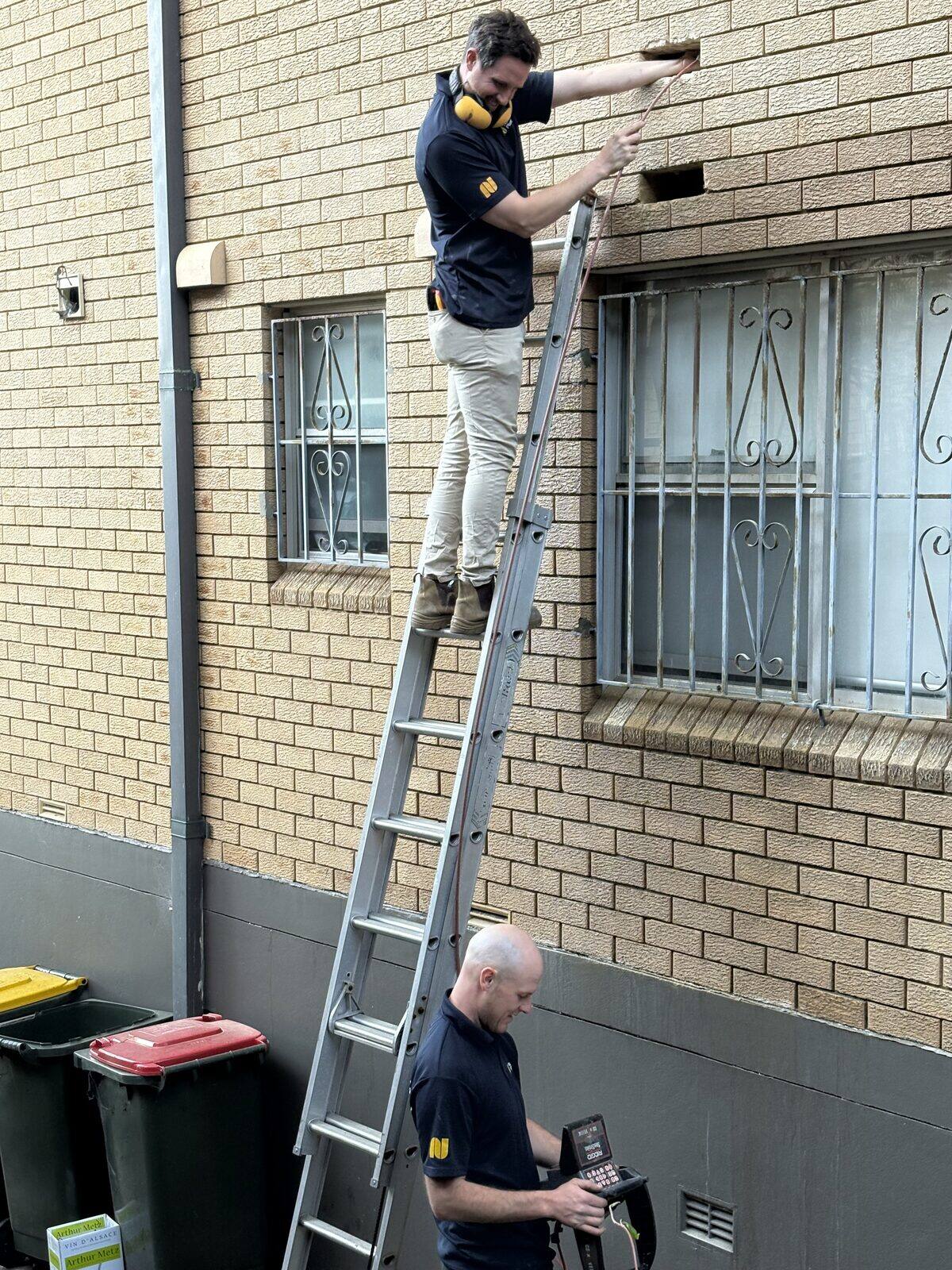
That is why what the plumber finds and records matters. On a burst water pipe job in Maroubra, water coming up through the pavers in dry weather turned out to be an old copper water service that had corroded through and split. In a Coogee block of flats, water running down the outside wall traced back to a burst pipe a full storey above where it showed. In both cases, photos of the failed pipe and a plain description of what happened are the evidence an insurer or strata manager works from.
Who pays in a strata building: your unit or the owners corporation?
In NSW strata, the starting point is the difference between your lot and common property. Under section 106 of the Strata Schemes Management Act 2015, the owners corporation must maintain and repair common property, and under section 160 it must insure the building. Lot owners look after what belongs to their lot.
For pipes, the test is who the pipe serves, not where it sits. Under the Strata Schemes Development Act 2015, a lot does not include common infrastructure, which generally means a pipe shared with other units is common property even when it runs through your apartment. A pipe that serves only your unit, such as the supply to your own basin or the flexi hose under your sink, is usually yours.
- Usually the lot owner: flexi hoses, taps, mixers and isolation valves inside the unit, the toilet cistern, and fittings that serve only that unit.
- Usually the owners corporation: waste stacks, shared sewer and stormwater lines, the water supply riser, and shared pipes in boundary walls, floor slabs and under the building.
- Check first: the registered strata plan and by-laws can change the default, so read them before assuming either way.
Where a building's documents leave it unclear, the owners corporation can adopt the NSW Government's common property memorandum by special resolution. It sets out a standard list of who maintains what.
Our Coogee Bay Road waste stack job is a clear example. Leaks kept turning up in different apartments because the original cast iron waste stack had corroded at its joints. A waste stack carries waste from every unit stacked above it, so it is common property, which made the replacement an owners corporation job rather than any single owner's.
Shared drains work the same way. At a Bondi strata block, years of grease from the kitchens above had set hard inside the shared sewer and sent sewage up through the gully in the side passage. One line served every unit, so clearing it was a building matter.
When water from the unit above damages yours
The awkward case is water from upstairs coming through your ceiling. The source decides who is responsible. If it came from a fitting that belongs to the unit above, like a burst flexi hose or a failed shower mixer, that owner is usually responsible for fixing it. If it came from common property, such as a shared stack or a pipe in the floor slab, it falls to the owners corporation.
Either way, tell your strata manager straight away. The building insurance policy is held by the owners corporation, so claims for damage to the building go through them. Your own belongings are a matter for your contents insurance.
The source is often not obvious from inside the damaged unit. Water travels along slabs, through cavity walls and down pipe penetrations before it shows. Finding the true source before anyone opens walls is what settles the question fairly, and it is where proper leak detection pays for itself.
What to do in the first 24 hours to protect your claim
- Stop the water. Turn off the isolation valve under the fixture, or the main at the water meter. Insurers generally expect you to limit the damage.
- Photograph and film everything before cleaning up: the source if you can see it, the wet areas and any damaged belongings.
- In strata, tell your strata manager or building manager the same day.
- Call a licensed plumber and ask for photos of what failed, plus a short written note on the likely cause.
- Keep the failed part if it is removed, such as a burst flexi hose or a cut-out section of pipe.
- Start drying out wet areas, and contact your insurer early to check what your PDS covers.
If water is still running, our first 60 seconds guide covers where to find the shutoffs.
How to reach Norton Plumbing
Norton Plumbing has repaired burst pipes and hidden leaks across Sydney's Eastern Suburbs since 2019, in houses and in strata blocks. We operate from 10/11a-15 Berwick Street, Coogee NSW 2034. Phone: 0477 858 951. Adam Norton is the primary technician, holds NSW plumbing licence 397768C, and can provide photos and a written note on what failed for your strata manager or insurer. Strata managers and committees can find more on our strata plumbing service page, and the leak detection page covers what a hidden-leak investigation involves.
Frequently asked
Common questions
- Does home insurance cover a burst pipe?
- Usually the water damage, yes, if the burst was sudden and accidental. What most policies do not cover is repairing or replacing the pipe itself. That cost normally falls to the owner, or to the owners corporation if the pipe is common property. The escape of liquid section of your PDS has the exact terms.
- Who pays for a burst pipe in a strata apartment in NSW?
- It depends on which pipe failed. A pipe or fitting that serves only your unit, like a flexi hose or tap, is usually the lot owner's. Shared pipes such as waste stacks, risers and common drains are usually common property, so the owners corporation pays. Your strata plan and by-laws can change this.
- Is a slow leak covered by insurance?
- Sometimes. CHOICE found about 20% of insurers exclude gradual leaks completely. Most others cover them only when the leak was hidden and a reasonable person would not have noticed it. Damage from wear and tear or poor maintenance is generally excluded, so acting on early signs like damp patches matters.
- Who is responsible when water leaks from the unit above?
- Whoever is responsible for the source. If it came from a fitting that belongs to the unit above, that owner usually pays to fix it. If it came from common property, the owners corporation does. Report it to your strata manager straight away, because the building insurance is held by the owners corporation.
- What should a plumber's report include for an insurance claim?
- What failed, where it was, and the likely cause, with photos of the pipe or fitting before and after the repair. A clear note on whether the failure looked sudden or long-running helps, because that is the distinction most policies turn on. In our experience, keeping the failed part is worth it too.
Related service
Strata Plumbing
Strata plumbing in Eastern Suburbs Sydney - annual maintenance, riser inspections, emergency callouts. Experienced with 1960s-80s buildings.
See our strata plumbing pageNeed a plumber in the Eastern Suburbs?
Call 0477 858 951