Case study · 5 min read
Burst pipe Coogee: leak inside a wall
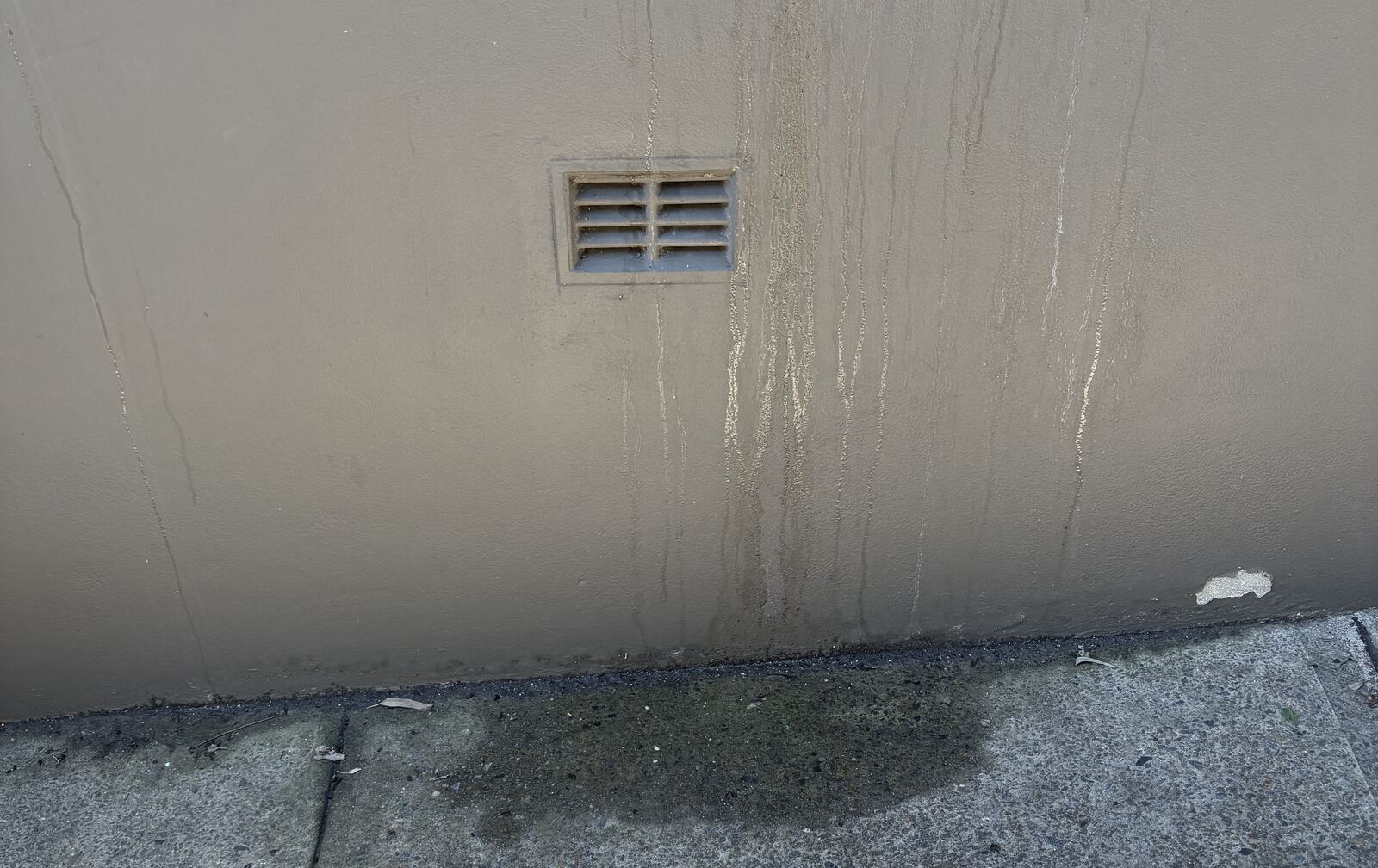
Water showing at the base of a wall rarely marks the break. In this Coogee block it ran out at ground level and the burst pipe was a full storey above.
Adam Norton · 7 August 2026
A tenant in a Coogee block of flats called about water running down the outside wall of the building. It had not rained that week. Just a steady run down the render, out through a subfloor vent, and pooling on the path along the side of the block. Water on an external wall in dry weather is not weather. It is a burst pipe until something proves otherwise.
Why the wet patch is not where the burst pipe is
The instinct is to open the wall where the water is showing. On a job like this that is the quickest way to make a mess and still not find the leak.
Water inside a cavity wall does not drop straight down and come out the nearest hole. It runs down the inside face of the brickwork, following mortar lines and wall ties, until it reaches something that lets it out. In a block of this era that is usually a subfloor vent, a weep hole, or the damp proof course. So the water surfaces at the lowest exit it can find, which can be well below the pipe that actually failed and off to one side of it.
On this job the water was leaving the wall at a subfloor vent at ground level. The break was a full storey above that, above a bedroom window.
Finding a burst pipe inside a wall without opening it up
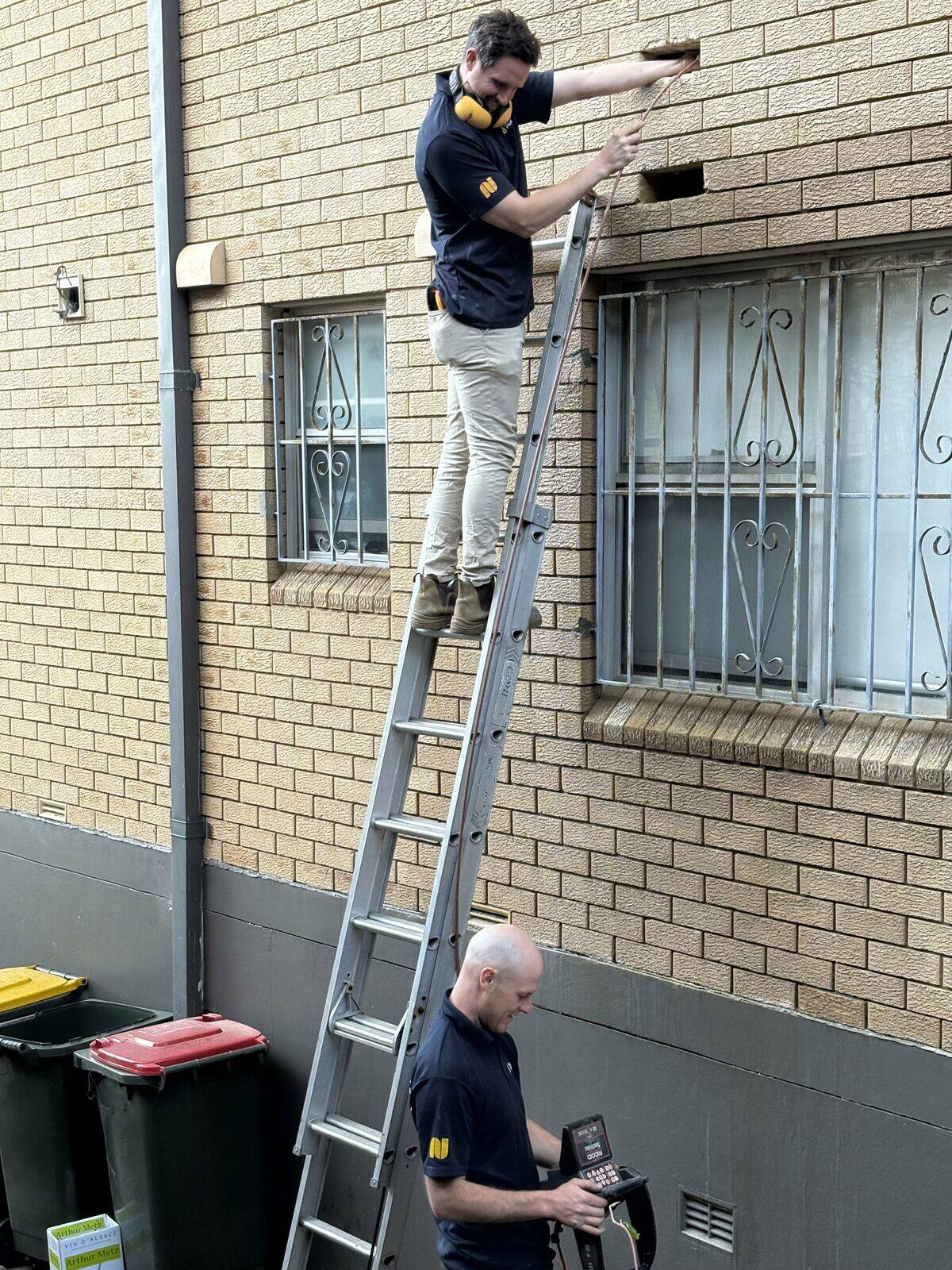
We traced the pipe run from outside before touching a brick. The line in the wall is energised and a receiver reads it through the brickwork, which maps where the pipe runs and how deep it sits behind the face bricks.
That is the difference between two neat openings and a wall full of holes. Once the run is mapped, we know where the pipe goes, where it changes direction, and where it is worth opening up.
Sydney Water makes the same point about concealed leaks. Their leak detection guidance notes that not all plumbers carry the tools and skills needed to find leaks hidden underground and inside walls, and it sets out the meter test you can run yourself before calling anyone: shut off every tap and water-using appliance, read the meter, then read it again an hour later without using water. If the numbers moved, you have a leak.
Two openings instead of a demolition
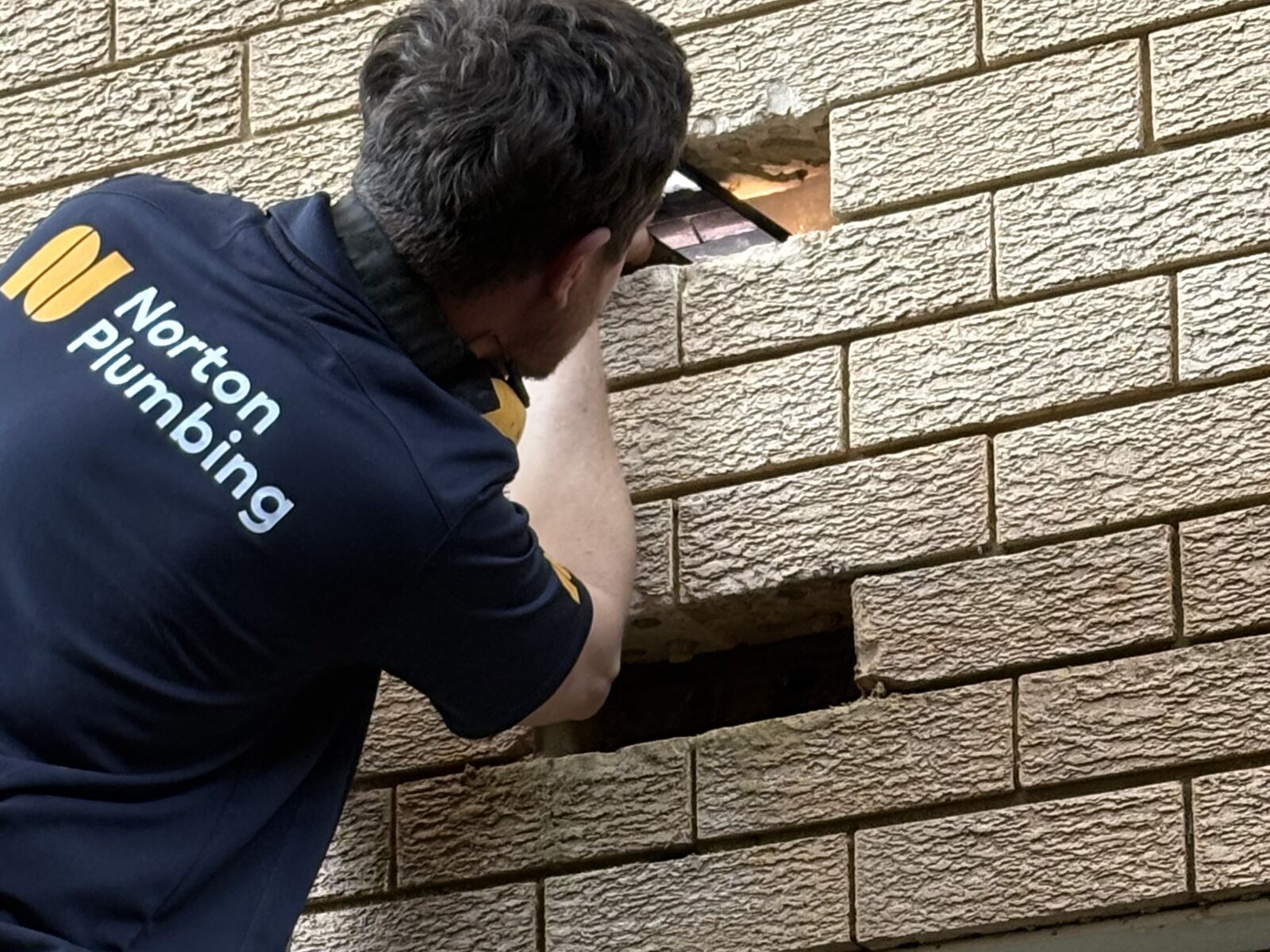
Two openings went into the brickwork at first floor level, both above the window line, both cut to the run we had already mapped rather than to a guess. Access on a wall like this is all ladder work, so one of us worked off the ladder while the other footed it and ran the locator from the ground.
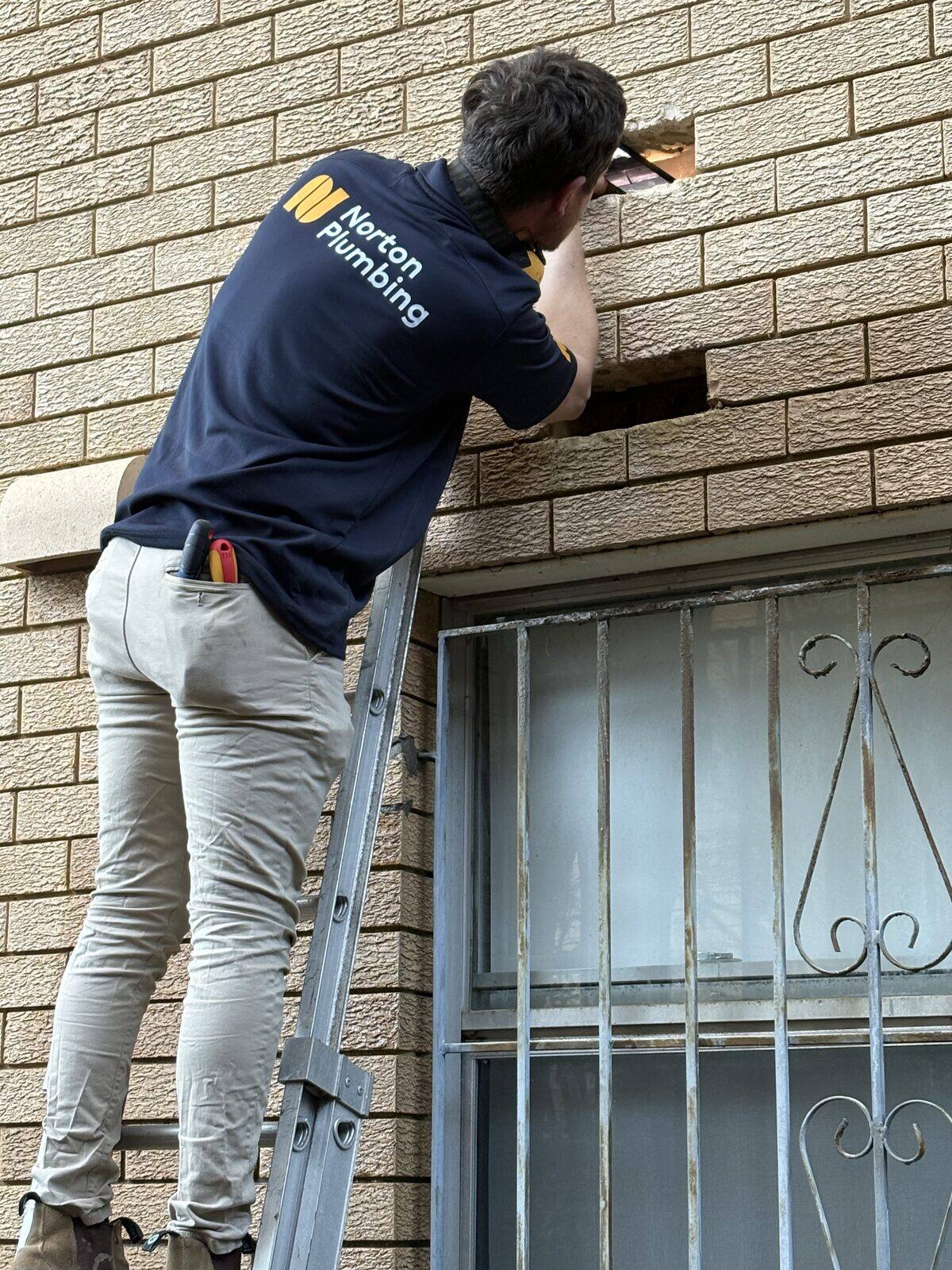
Cutting the bricks out cleanly is what lets them go back in looking like they were never touched. On a strata block that matters, because the owners corporation is left with the wall long after the pipe is fixed.
Why concealed burst pipes keep happening in Coogee walk-ups
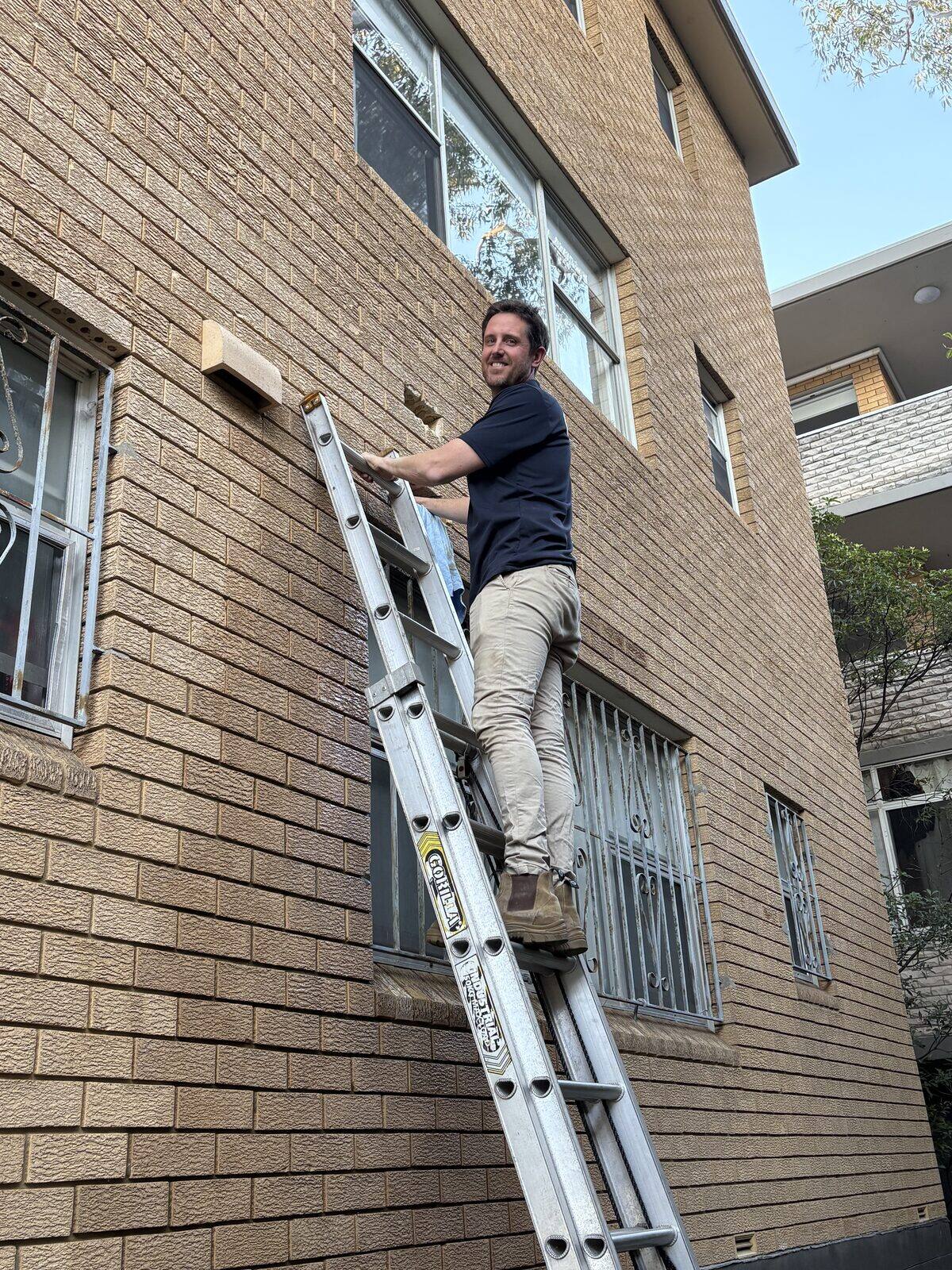
Coogee is full of two and three storey blonde brick walk-ups built between the late 1950s and the early 1970s. A lot of them still run significant lengths of their original pipework vertically inside cavity walls to serve the units above.
Concealed pipe inside a masonry wall is fine until it is not. There is no access panel and nothing is visible, so the first sign of a problem is usually water appearing somewhere that looks unrelated to plumbing. Because these blocks are strata, the fault also lands in the awkward space between what a tenant notices, what a lot owner is responsible for, and what is common property.
Water tracking through a cavity does not stay in the cavity. It gets into wall framing, floor structure and the units either side of the pipe run. That is the reason a wet external wall is worth acting on rather than watching.
Warning signs in an Eastern Suburbs walk-up
- Water on an outside wall when it has not rained. The clearest sign of the lot. Render that stays dark, or a wet run below a vent, in dry weather is a plumbing leak until proven otherwise.
- A damp or musty smell in a ground floor unit with no visible source. Cavity water often reaches the subfloor well before it reaches anyone's ceiling.
- The water bill for the block climbing with no change in how anyone is using water. A concealed burst runs day and night.
- The meter still ticking over with every tap in the building shut off. This is the test that turns a suspicion into a fact.
- Paint bubbling or render blowing in a vertical line. Brick and render tend to show a concealed pipe run as a stripe rather than a patch.
One thing worth knowing if the leak turns out to have been running for a while: Sydney Water offers a hidden leak allowance, a goodwill credit of 50 per cent of the water usage charge for the worst affected quarter. It applies where the leak was genuinely hidden, a licensed plumber repaired it, and you apply within a year of the repair. It is limited to one allowance every five years, and visible leaks do not qualify, so whether a particular job fits is worth checking with Sydney Water directly.
How to reach Norton Plumbing
Norton Plumbing has found and repaired leaks across Coogee and the Eastern Suburbs since 2019. Adam Norton holds NSW plumbing licence 397768C, and the team works out of 10/11a-15 Berwick St, Coogee. If you have water showing on a wall and no idea where it is coming from, see our leak detection service, our strata plumbing page, or our Coogee plumber page, or call 0477 858 951.
Frequently asked
Common questions
- How do you find a burst pipe inside a wall without demolishing it?
- The pipe run is traced from outside first, using a locator that follows the line of the pipe through the brickwork and reads how deep it sits. That gives the path before anything is opened. Only then are openings cut, sized to reach the section that failed.
- The water is showing at the bottom of the wall. Is that where the pipe broke?
- Usually not. Water inside a cavity runs down the inside face of the brickwork until it finds a way out, normally a subfloor vent, a weep hole or the damp proof course. The wet patch marks the lowest exit, not the break, which often sits a storey or more above it.
- Who is responsible for a burst pipe in a strata block, the owner or the owners corporation?
- Under NSW strata law, pipes running inside common property walls, floors or ceilings are generally common property, which makes them the owners corporation's responsibility. Pipework serving only one lot is usually the lot owner's. Because the line is not always obvious, get what was found and where it sat put in writing, and check your scheme's by-laws.
- Can I claim anything back from Sydney Water for a concealed leak?
- Sydney Water offers a hidden leak allowance, a goodwill credit of 50 per cent of the water usage charge for the most affected quarter. The leak must have been genuinely hidden, repaired by a licensed plumber, and claimed within a year. It is capped at one allowance every five years and visible leaks are excluded.
- What should I do before a plumber gets there?
- If the leak is running hard and you can find the isolation valve for your own unit, shut it off. In a block, the main isolation for common property pipework is generally not something a tenant should be operating, so report it and let the plumber or the strata manager handle that valve.
Related service
Leak Detection
Find and fix hidden leaks in Eastern Suburbs Sydney - before they cause real damage
See our leak detection pageNeed a plumber in the Eastern Suburbs?
Call 0477 858 951