Case study · 7 min read
Sewage overflow in a South Coogee yard
Sewage overflowing in the yard is not a second fault. The gully is designed to surcharge outside so the blockage does not come up inside the house.
Adam Norton · 16 September 2026
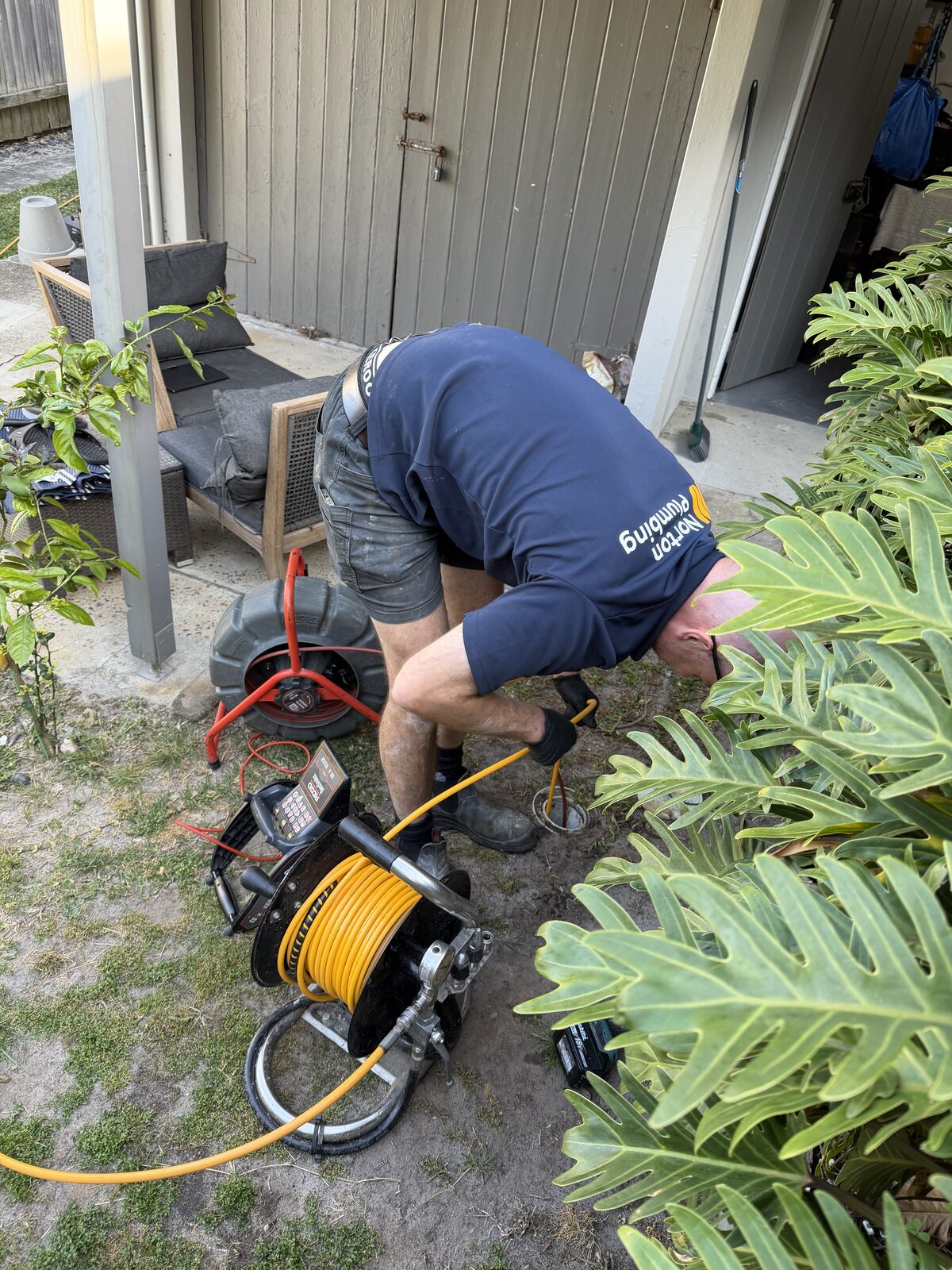
The call came from a South Coogee owner who had walked out to sewage overflowing in his back yard. That is not a small thing to find, and the instinct is to assume something has gone badly wrong on top of whatever caused the blockage.
It had not. The overflow was the system doing exactly what it was built to do. The real fault was underground, and the clue to it was standing right next to the drain: a large philodendron in a raised bed, growing directly over the line for years. That does not prove roots are in the pipe. It means roots are the first thing worth ruling out.
Why it overflowed outside instead of inside the house
Every property connected to the sewer has a gully outside, usually an open grate at ground level near an external tap. It is required, and it sits lower than the drains inside the house for one specific reason.
When the line downstream blocks, the wastewater backs up and has to go somewhere. It takes the lowest opening it can find. Because the yard gully sits below the shower base, the floor wastes and the toilet, the surcharge comes out there, on the ground, outside. If that gully were missing, damaged or set too high, the same blockage would have pushed up through the floor waste in the bathroom instead.
So the overflow in the yard is the safety valve, not the failure. It is also the clearest signal you will get that the blockage sits downstream of everything in the house.
Two practical things while you wait. Do not lift the grate to help it drain away, because it is already doing the job you want it to do. And keep children and pets off the area, then hose it down once the line is clear rather than while it is still surcharging.
Why the jetter goes down the line before anything else
A high pressure water jetter is the right tool for roots. It is not a plunger and it is not a chemical. It is water at pressure through a nozzle, cutting the root mass back to the pipe wall and flushing the debris down the line instead of packing it in harder.
Drain cleaners off the supermarket shelf do nothing useful on this. They are made to soften fat and hair in a short length of waste pipe under a sink. A root ball sitting in an underground sewer line is a living thing with its own water supply, and a bottle of caustic poured down a gully will not touch it. That is why the second bottle never works any better than the first.
What the camera found once the line was clear
Jetting first, camera second. Running a CCTV camera into a line that is still full of roots shows you roots. Running it in behind the jetter shows you the pipe, which is the part that actually decides what happens next.
Roots do not break into a sound pipe. They grow toward moisture and vapour, and they get in through an opening that is already there: a joint that has moved, a hairline crack, a connection that was never made properly. Finding that opening is the entire point of putting a camera down. Clearing a line without looking at it means booking the same job again later.
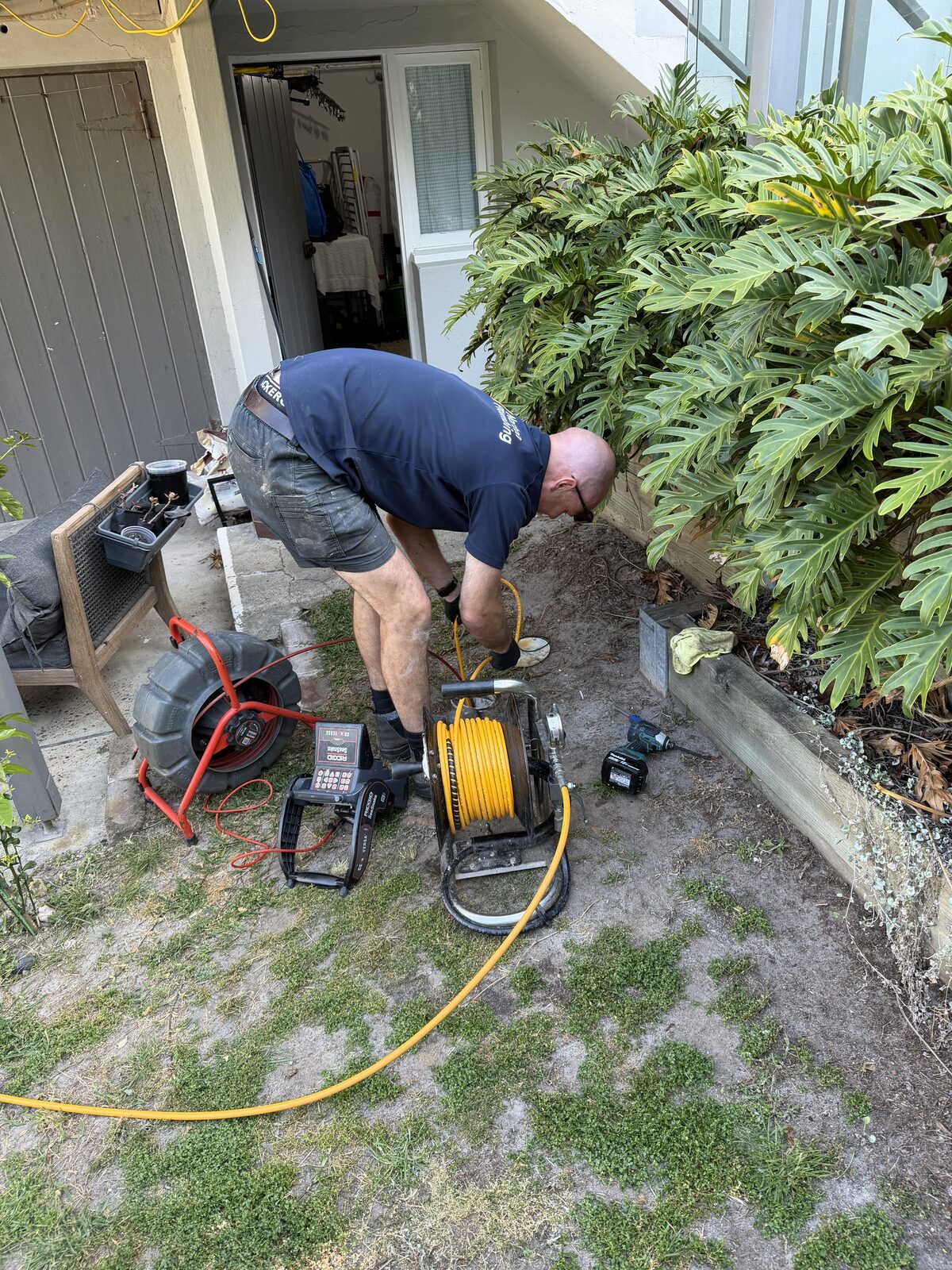
The wand lying on the ground is a locator. The camera head transmits a signal, the locator reads it from above ground and gives the position and the depth, and that spot gets marked on the surface. It turns somewhere in the back yard into a place you can stand on. Nobody digs a trench hunting for a fault that has already been pinpointed.
Why this line is being relined rather than dug up
Clearing the roots buys the owner a working sewer. It does not fix the opening they came through, and the roots will find their way back to the same moisture. So the line is going back on the books to be relined.
Relining puts a new pipe inside the old one. A resin saturated liner is drawn into the damaged section and cured in place, so it hardens against the existing pipe wall and seals the joints and cracks that the roots were using as a door. The old pipe stays in the ground and becomes the mould for the new one.
The reason it matters on a job like this one is access. The fault sits under a raised garden bed with an established plant in it. Digging means taking out the bed, the plant and whatever paving is in the way, then putting it all back. Relining goes in through the existing openings, so the garden stays where it is. On a small Eastern Suburbs property that difference is usually the whole decision.
Garden beds and sewer lines in South Coogee
South Coogee is largely post war housing and low brick walk up blocks, and a lot of the sewer drainage under them is original earthenware run in short jointed lengths. Those joints are where roots get in. PVC changed that, but only for work done after it became standard, and plenty of these lines have never been touched since the house went up.
The landscaping is the other half of it. Yards here are not big, so the planting goes into the bed there is room for, which is very often the same strip of ground the sewer runs under. Sydney Water advises keeping trees clear of wastewater pipes by at least 6 metres, and checking a sewerage service diagram before planting. In a small Eastern Suburbs yard, 6 metres of clearance frequently does not exist at all. The plant goes in, and twenty years later the drain is somebody's problem.
Worth knowing who owns what, too. The pipes on your side of the connection point are yours to maintain, roots included. Sydney Water looks after the main. If their crew checks the main, finds it clear and your service is still blocked, the blockage is in your private line and the repair is the property owner's to pay for.
Signs roots are already in your sewer
- The drain clears easily, then blocks again within weeks or months. A one off blockage is usually something that went down the drain. A repeating one is usually something growing into it.
- The yard gully overflows more than once. Once is a blockage. Twice in the same year is a pipe with an opening in it.
- One fixture is slow rather than all of them. Roots sit at one point in the line, so everything upstream suffers and everything downstream is fine.
- Gurgling from a floor waste or gully when something else drains. That is air being forced past a restriction.
- A mature tree, large shrub or hedge within a few metres of where the sewer runs. Proximity is the best single predictor there is.
How to reach Norton Plumbing
Norton Plumbing has worked in South Coogee and across the Eastern Suburbs since 2019, on blocked drains, drain jetting, pipe relining, CCTV inspections, hot water and leak detection. I hold NSW plumbing licence 397768C, and Greg ran this job. The team works out of 10/11a-15 Berwick St, Coogee. If your yard gully is overflowing, or a drain keeps blocking and you want to know why rather than just clear it again, see our blocked drains page, our South Coogee plumber page, or call 0477 858 951. Quotes are free across the Eastern Suburbs.
Frequently asked
Common questions
- Why did the sewage overflow in the yard instead of inside the house?
- The gully outside is set lower than every drain inside the house. When the line blocks, the wastewater takes the lowest opening available, which is that grate. It is a designed relief point, so the surcharge happens outside at ground level rather than through a bathroom floor waste.
- Is sewage overflowing in the yard an emergency?
- It needs attention the same day, but the overflow itself means the blockage is being relieved outside rather than inside. Keep children and pets clear of the area and leave the grate in place. If you do not know where the blockage sits, Sydney Water will check whether it is on their main.
- Will jetting get rid of tree roots permanently?
- No. Jetting removes the roots that are in the pipe, but it does not close the opening they came through, and the roots grow back toward the same moisture. What jetting buys you is a clear line and a camera's view of what is actually causing the problem.
- Does a sewer with roots in it always have to be dug up?
- No. Where the pipe is still structurally sound, relining seals the cracks and joints from the inside without excavation. That matters most where the fault sits under paving, a driveway or an established garden, because digging means taking all of that out and putting it back.
- How do I find out where my sewer runs before I plant something?
- Order a sewerage service diagram for the property through Sydney Water. It shows the wastewater line and where it connects. Worth doing before a landscaper puts anything permanent in the ground, rather than after the gully overflows.
Related service
Blocked Drains
Fast, professional blocked drain clearing in Eastern Suburbs Sydney
See our blocked drains pageNeed a plumber in the Eastern Suburbs?
Call 0477 858 951