Water filtration · 7 min read
Under-sink water filter install in Coogee
In an apartment an under-sink filter is usually the only option, because the incoming main is common property. A Puretec PureMix Z7 in a Coogee kitchen.
Adam Norton · 13 August 2026
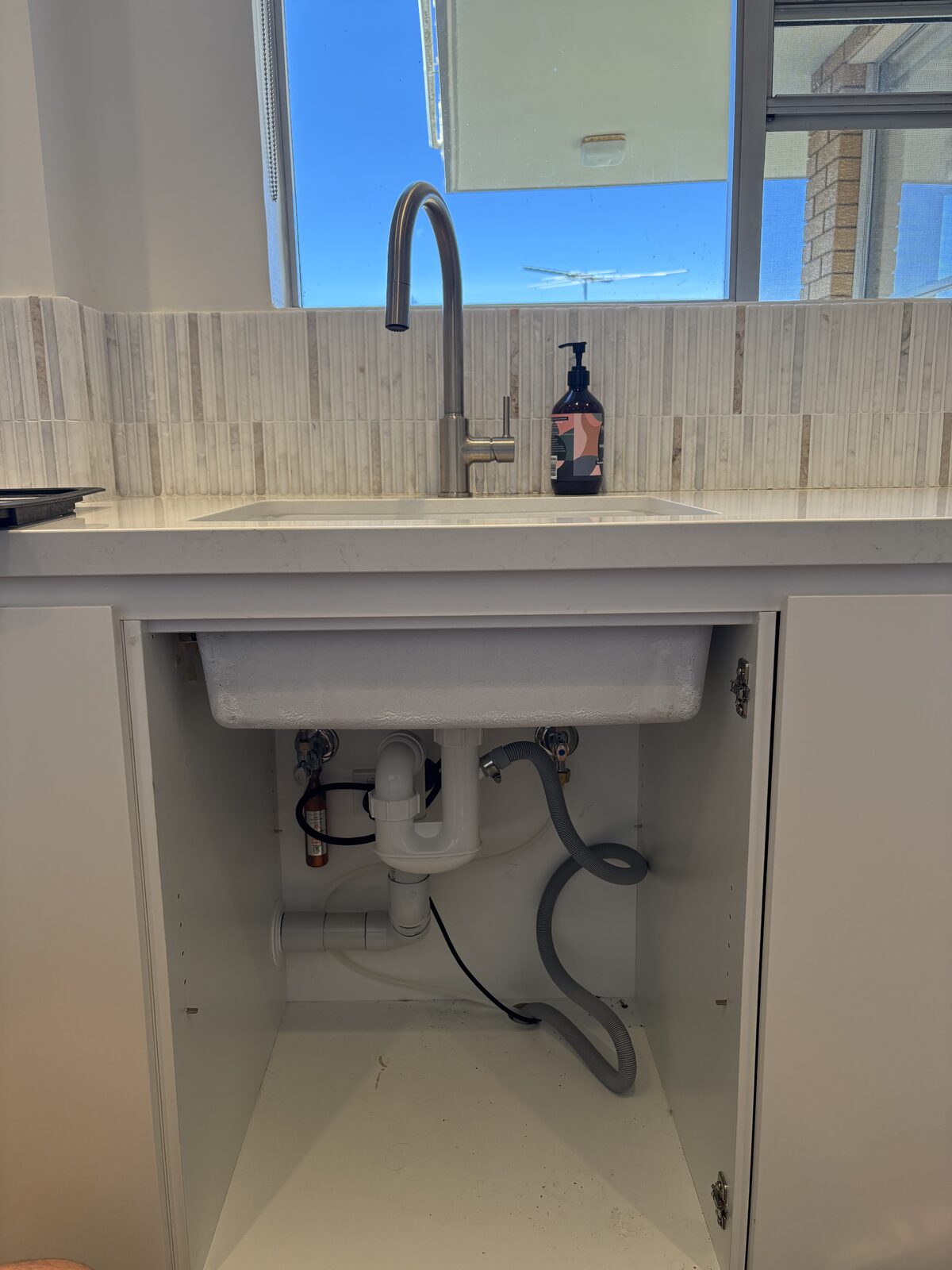
The kitchen in this Coogee apartment had been renovated not long before we got there. Stone benchtop, undermount sink, one mixer tap and nothing else drilled into the stone. The owners wanted filtered drinking water at that tap, without a second spout beside it and without a jug taking up room in the fridge.
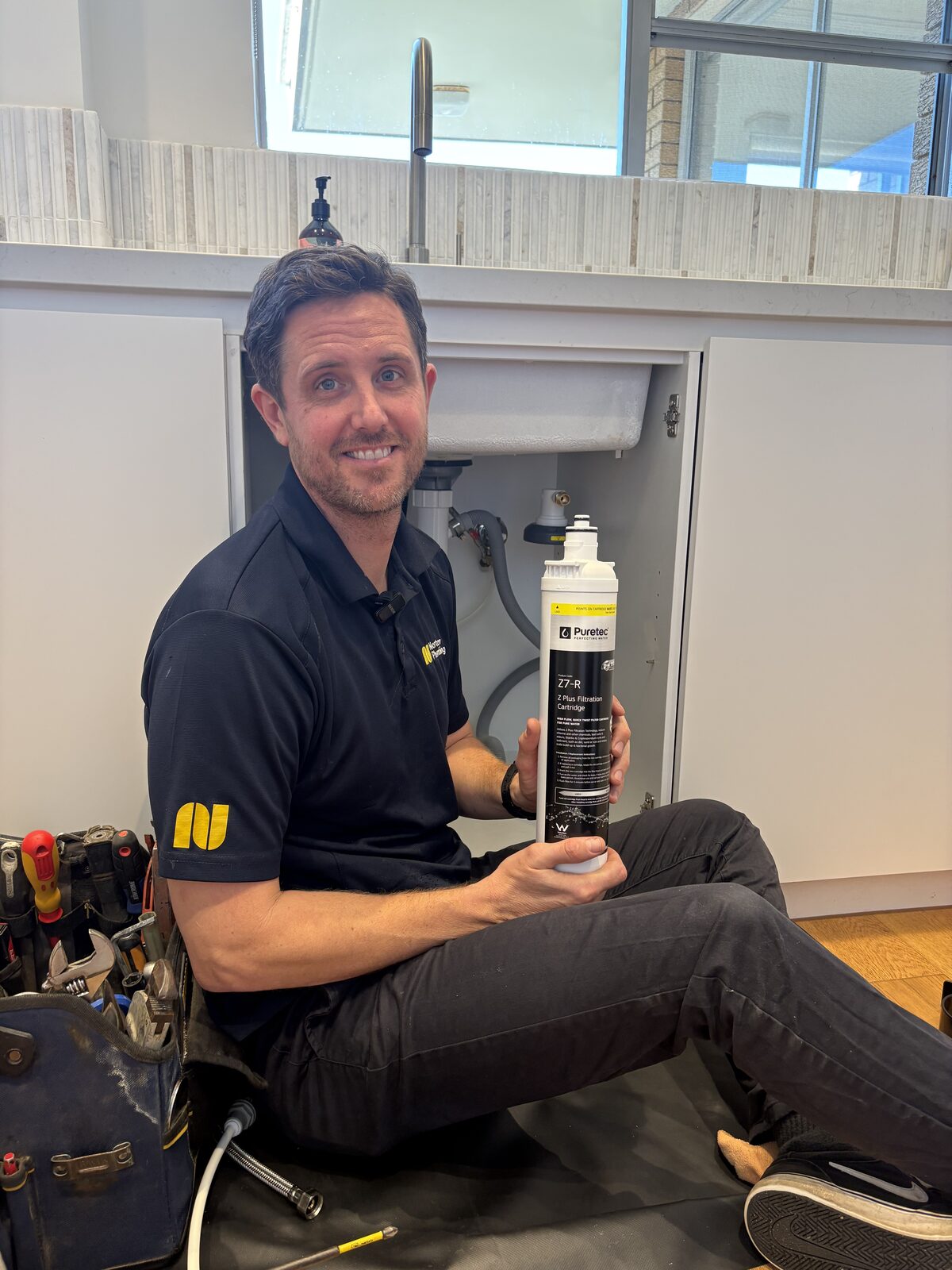
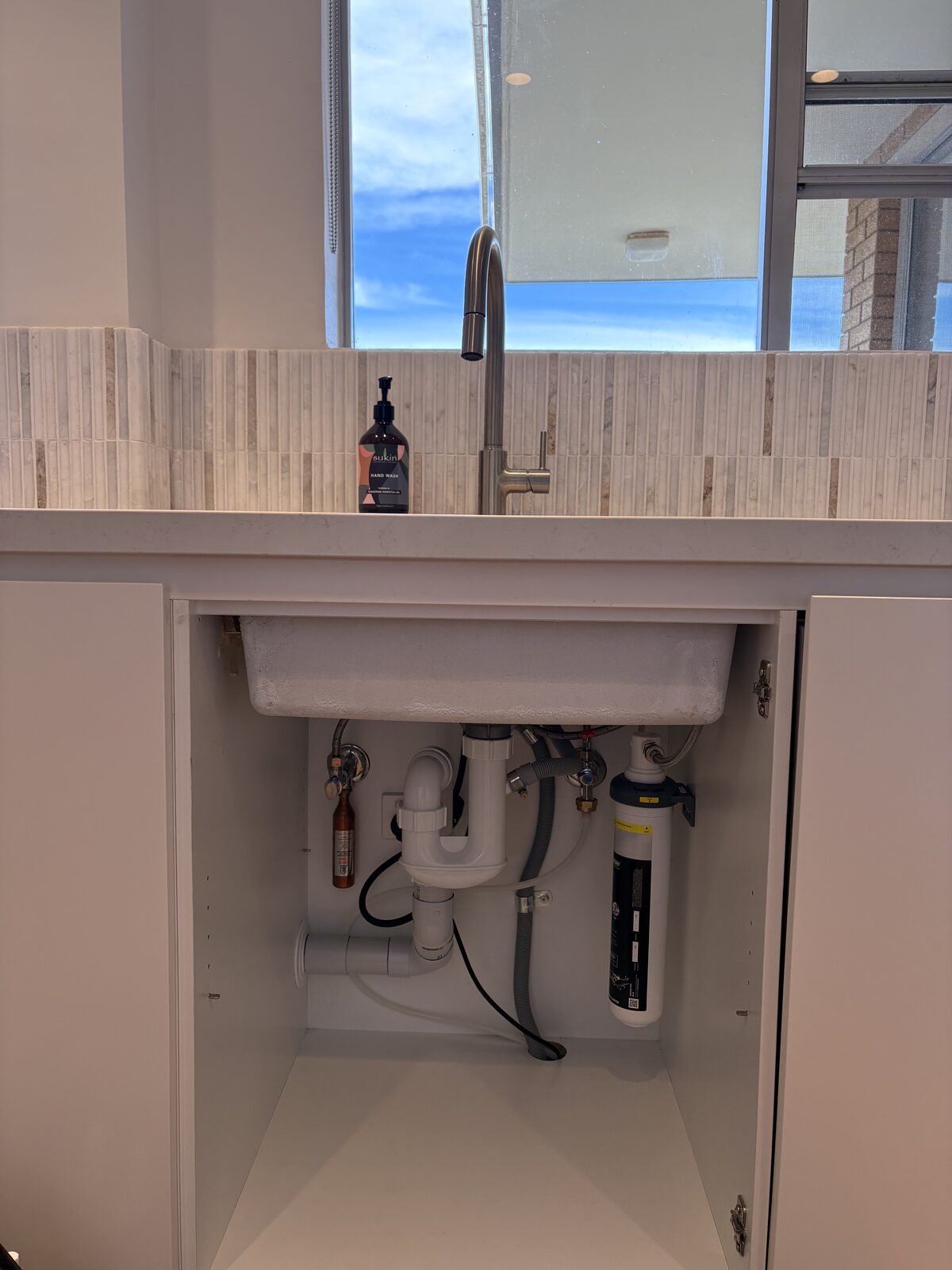
What went in was a Puretec PureMix Z7, an inline under-sink water filter that mounts inside the sink cupboard and plumbs into the cold line feeding the existing mixer. Every drop of cold water coming out of the tap they already had now runs through the cartridge first. Nothing above the benchtop changed.
What an under-sink water filter actually does
There are two common ways to get filtered water at a kitchen sink, and they are not the same job.
- A dedicated filter tap. A separate small spout drilled into the benchtop with its own filter feeding it. It works, but it needs a second hole through the stone and it takes up bench space next to the mixer.
- An inline filter on the tap you already have. The filter sits in the cupboard and treats the cold water on its way to the existing mixer. No second spout, no new hole, no visible change to the kitchen.
The second one is what suited this kitchen. The Z7 filters the whole cold supply to that mixer, so the water you fill a glass with and the water you fill a pot with both come through the cartridge. The hot side is left alone. That is normal and deliberate: filter cartridges are not rated for hot water, and hot tap water is not what anyone is drinking.
Why the Z7 and not one of the other cartridges
Puretec make several filters in the Z Series and the heads are interchangeable, which makes it easy to assume the cartridges are too. They are built for different water.
The Z6 is a 0.1 micron ultrafiltration cartridge designed for clean, low sediment mains water. The Z7 is a 1 micron cartridge designed for mains, rainwater, harsh and rural supply, and for properties with older pipework carrying more sediment. Coogee runs on Sydney Water mains, but the pipework it arrives through in a block like this one has been in the walls a long time, and it sheds what old pipework sheds. The Z7 handles that load without choking.
On Puretec's own specification the Z7 reduces sediment, chlorine, chemicals such as PFAS, and taste and odour, and its 1 micron rating is rated against cysts including Giardia and Cryptosporidium. The cartridge is rated at 63,500 litres and the system at 9.5 litres per minute at 420 kPa, which is why the tap still runs at a normal kitchen flow with a filter in the line.
How the install went
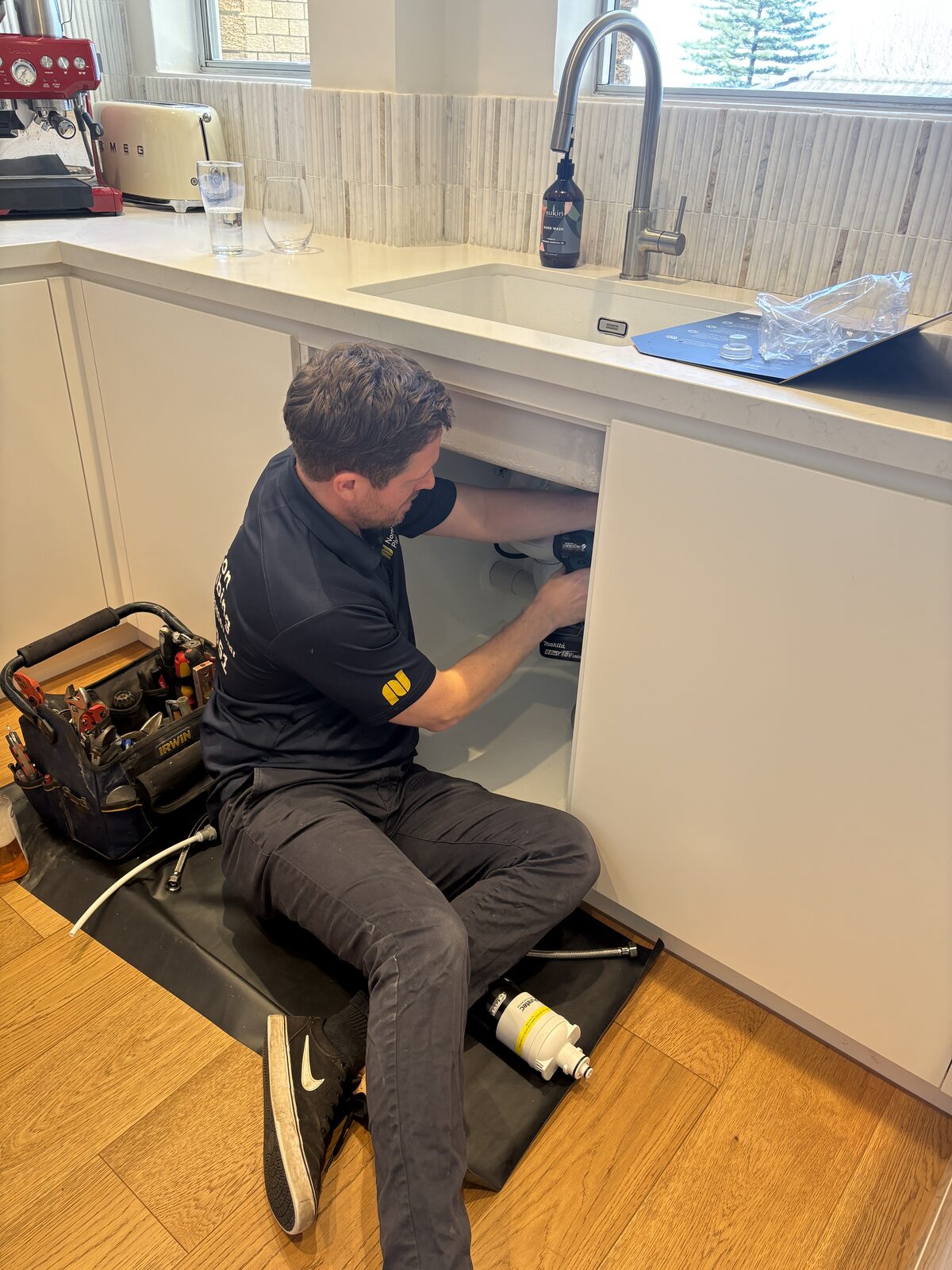
Cold water off and the cold flexi feeding the mixer comes away. The filter head goes onto its bracket on the side wall of the cabinet, and the cold supply is rerouted through it: isolating valve, into the head, out of the head, back up to the tap.
Where the head sits is the decision that matters. The cartridge hangs below it and has to come straight down when it is changed, so the head goes high on the cabinet wall with clear air underneath. Mount it too low to make the plumbing easy and the first cartridge change turns into an argument with the cupboard.
Then the system is flushed, the cartridge is run until the water clears, and every joint is checked under pressure with the cupboard still open before anything goes back.
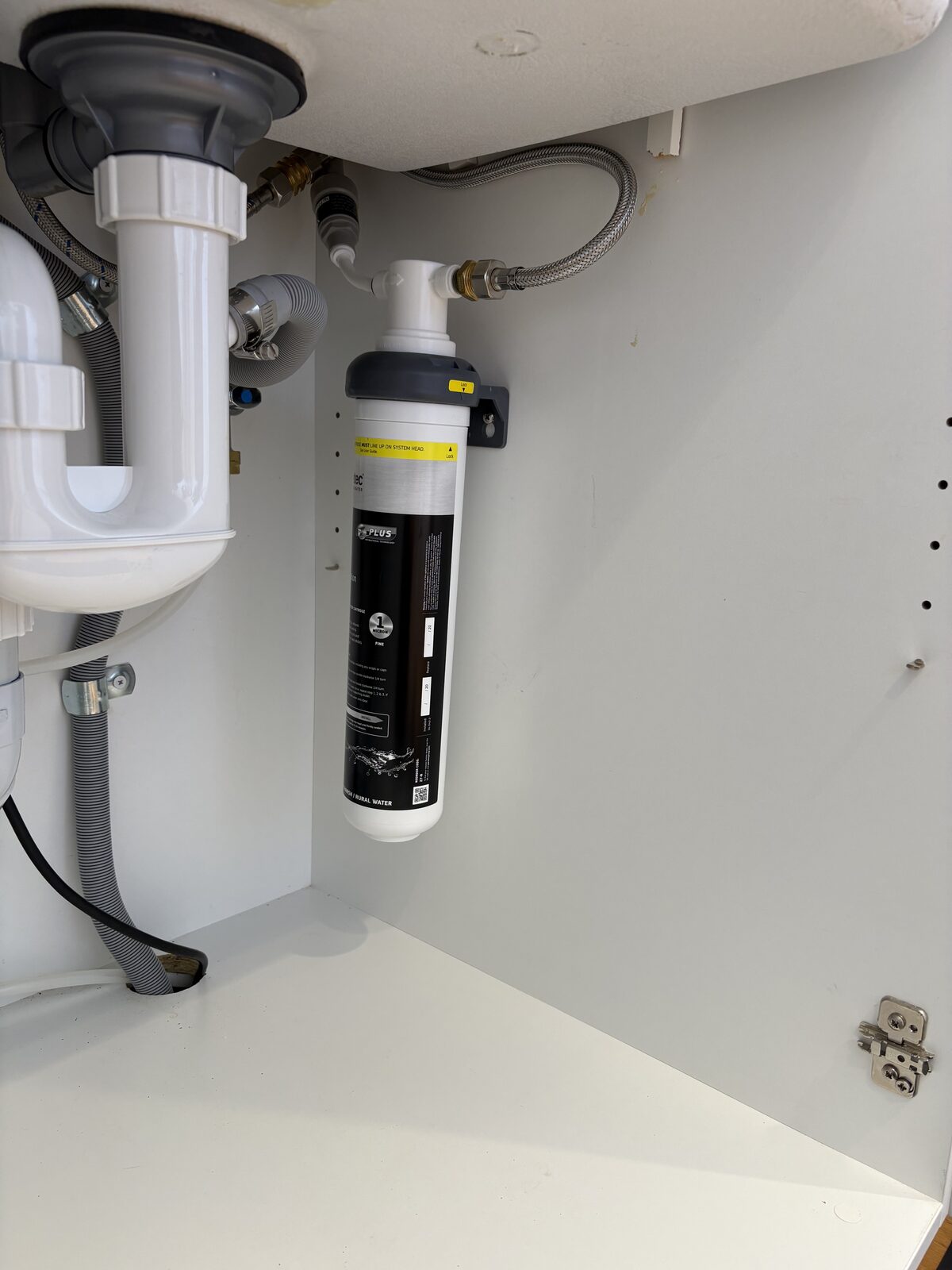
This is the part people ask about before they commit, and fairly. A filter in a kitchen cupboard is something you live with. If it swallows the space you actually use, it becomes an irritation regardless of how good the water is.
Why this suits Eastern Suburbs kitchens
Coogee, Randwick and Maroubra are full of two and three storey walk-ups built between the 1950s and the 1970s, and a lot of them have had the kitchen redone in the last decade while the pipework behind the walls stayed exactly where it was. That combination is where an inline filter earns its place.
A renovated kitchen almost always means a stone benchtop and a single mixer. Drilling a second hole through stone that is already installed is not work anyone wants to be doing over a finished kitchen. An inline filter sidesteps the question, because nothing above the bench is touched.
The other half of it is what the old pipework delivers. Sydney Water treats the supply to the Australian Drinking Water Guidelines and adds chlorine to keep it safe on the way to you, and you can look up the tested results for your own postcode on their water analysis page. What that testing covers is the network, and it stops at your water meter. Everything between the meter and the kitchen tap belongs to the building, and in a block of this era that is usually where taste and sediment complaints are coming from.
Why an under-sink filter is usually the only option in an apartment
This is the part that matters most if you live in a unit. A whole-home filter, the kind that treats every tap in the place, mounts on the incoming water main before it splits off to anything else. In a freestanding house that is a wall in the garage or along the side passage and it is a straightforward job. In an apartment it is usually not on the table at all, for three reasons.
- The incoming main is not yours. In a strata block the water main and the riser carrying it up through the building are common property. Putting a filter on pipework that belongs to the whole scheme is not something an individual owner can simply arrange.
- There is nowhere to put it. A whole-home unit needs a run of wall, clearance around it, and room to pull cartridges down and out. Most apartments have no external wall the owner controls, no garage and no side passage, and the plant room belongs to the building rather than to any one lot.
- Filtering the riser would mean filtering the whole building. Even where a plumber could physically reach it, that riser feeds every unit above and below you. Treating it is a building-scale system and a building-scale decision, not a job for one apartment.
An under-sink filter avoids all three, because it sits inside your own lot on the pipework already serving your kitchen. Nothing on common property is altered, nothing changes on the outside of the building, and the whole system lives behind a cupboard door.
That does not mean nobody needs to be told. NSW Fair Trading's strata renovation rules set out the difference between cosmetic work, minor renovations and major work, and kitchen work is specifically named in the minor renovations category. Every scheme also has its own by-laws on top of that. The practical position is that a filter inside your own sink cupboard is a far simpler conversation with a strata manager than anything involving the building's main, but it is still a conversation worth having before the job is booked rather than after.
There is one more thing that suits units in particular. It is reversible. The original flexi hose goes back on and the filter comes off the cabinet wall, so if you sell or move out, the kitchen goes back exactly as it was.
The age of the building sharpens the argument rather than weakening it. Sydney Water's testing covers the network and stops at the meter. In a 1960s walk-up the water then travels up decades-old riser and branch pipework before it reaches your kitchen, and the units furthest along that run are usually where people first notice the taste.
A filter at the kitchen sink is the last thing the water passes through before it reaches the glass. If the pipework in between is what is affecting the taste, that is precisely where you want to be treating it. A filter at the front of the building would not help with anything the pipework adds after it.
What an under-sink filter will not do
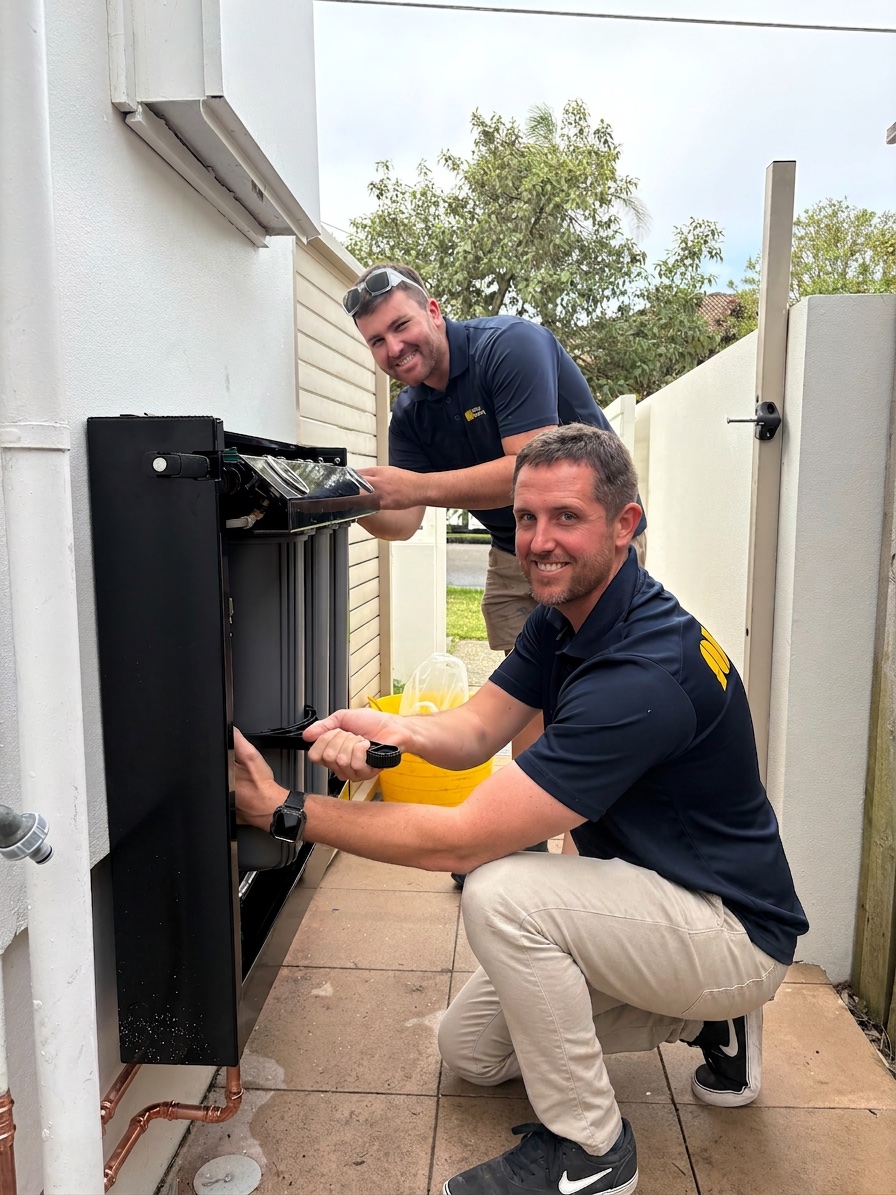
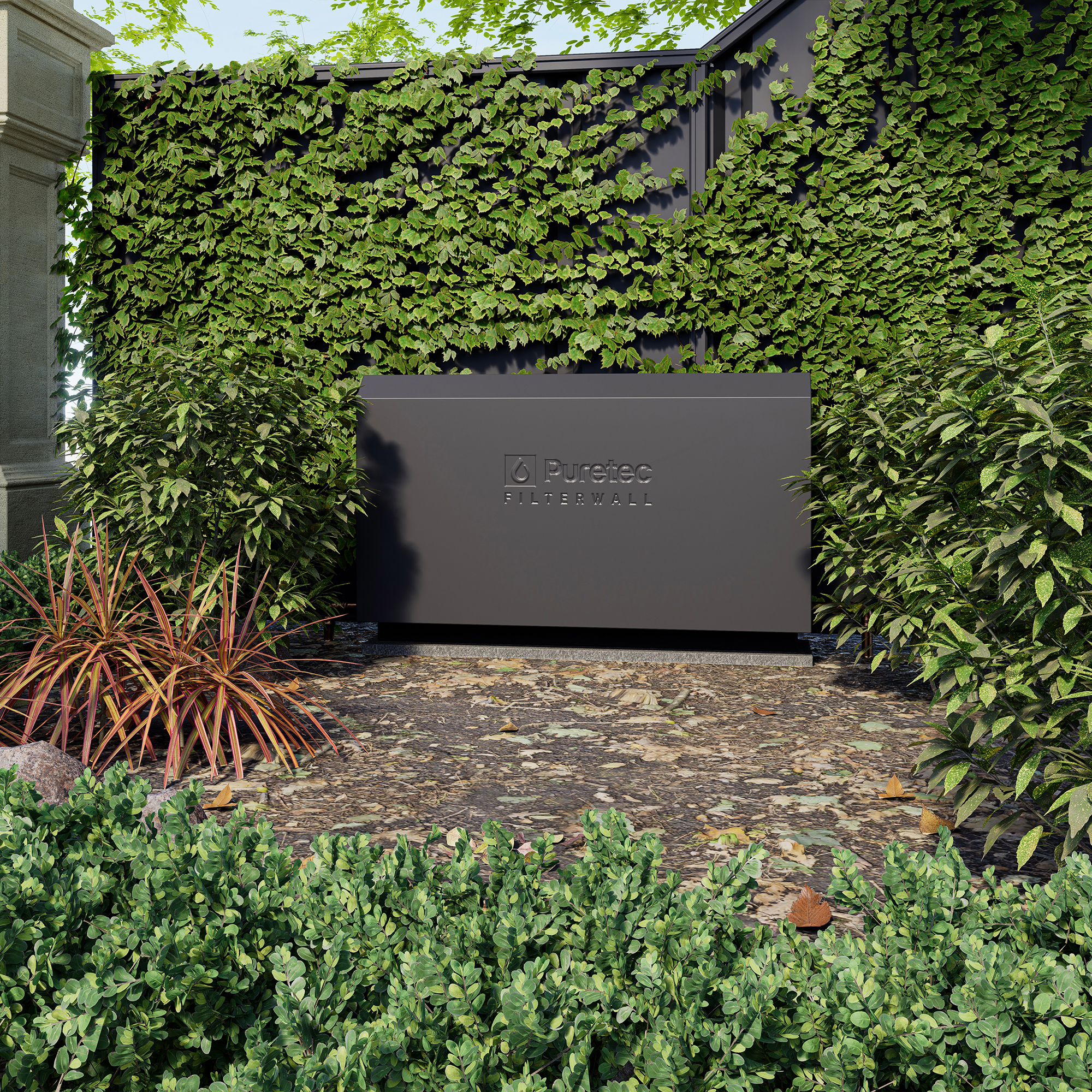
Worth being straight about. This treats one tap. The shower, the bathroom basin, the laundry and the outside tap are all untreated, because the filter sits at the end of the line rather than the start of it. If the goal is filtered water at every outlet, that is a whole-home system on the incoming mains, which is a different install at a different cost. Our water filtration page sets both out side by side, and the Clovelly FilterWall write-up on this blog shows what the whole-home version looks like once it is in.
It also does not turn unsafe water into safe water. Sydney's mains water is already safe to drink. What a filter changes is the chlorine smell, the taste, and the sediment carried by the pipework at the end of the run.
Cartridge changes and warranty
Puretec rate the 15 inch Z Series cartridges at 6 to 12 months before a change, depending on water quality and how heavily the household uses the tap. The head is a quick twist design, so a change is a cartridge out and a cartridge in rather than a plumbing job. A noticeable drop in flow at the tap is usually the first sign one is due.
The system carries Puretec's 10 year warranty, which is one year parts and labour and nine years parts only. Cartridges are excluded, as they are on every filter.
How to reach Norton Plumbing
Norton Plumbing has worked in Coogee and across the Eastern Suburbs since 2019 and is a Puretec Specialist Plumber. Adam Norton holds NSW plumbing licence 397768C and does the filtration installs himself, and the team works out of 10/11a-15 Berwick St, Coogee. If you are weighing up filtered water at home, see our water filtration service page, the water filtration options page, or our Coogee plumber page, or call 0477 858 951.
Frequently asked
Common questions
- Do I need a second tap installed for an under-sink water filter?
- Not with an inline system. The Puretec Z7 plumbs into the cold line feeding the mixer you already have, so filtered water comes out of the existing spout. A dedicated filter tap is the alternative, and that one does need a second hole drilled through the benchtop.
- Does an under-sink filter reduce water pressure at the tap?
- A correctly sized system running a fresh cartridge should feel the same at the tap. The Z7 is rated at 9.5 litres per minute at 420 kPa, which covers normal kitchen use. If flow drops off noticeably after several months of service, that is the cartridge reaching the end of its life rather than a fault.
- Is the hot water filtered as well?
- No, and it should not be. Filter cartridges are rated for cold water only, so an inline system is fitted to the cold line feeding the mixer. Drinking and cooking water comes off the cold side anyway, so in practice everything you would want filtered is filtered.
- How often does the cartridge need replacing?
- Puretec rate the 15 inch Z Series cartridges at 6 to 12 months, depending on incoming water quality and how much the household uses that tap. The head is a quick twist fitting, so the swap does not require any pipework to be opened up.
- Will a filter fit in a small sink cupboard?
- Usually, provided there is vertical clearance. The Z7 is a 15 inch cartridge that hangs below its head and has to slide straight down to come out, so the constraint is height rather than floor space. Where clearance is tight, Puretec's 10 inch Z2 is the same 1 micron filtration in a shorter body, at a lower cartridge capacity.
- Can I put a water filter in a strata apartment?
- Yes, and an under-sink filter is normally how it is done. It sits inside your own lot on the pipework already feeding the kitchen, so nothing on common property is altered. A whole-home system is a different matter, because the incoming main in a block belongs to the owners corporation rather than to any one lot.
Related service
Water Filtration
Whole-home Puretec FilterWall installation in Eastern Suburbs Sydney - two-stage sediment and carbon filtering for every tap in the house
See our water filtration pageThinking about filtered water at home?
Norton Plumbing is a Puretec Specialist Plumber. We size, supply and install under-sink and whole-home filtration across Sydney's Eastern Suburbs, and a free home assessment tells you which one actually suits your place.
See water filtration optionsNeed a plumber in the Eastern Suburbs?
Call 0477 858 951