Case study · 7 min read
Blocked stormwater drain, Double Bay
A blocked drain at a Double Bay strata block turned out to be tree roots through the stormwater joints, packed wall to wall at 2.5 metres.
Adam Norton · 8 September 2026

The call was about water in the wrong place. A red brick strata block in Double Bay had a downpipe in the back corner of the side passage that had stopped getting away, so instead of running off, water was sitting against the base of the wall. That is how a blocked drain in Double Bay usually gets reported. Not as a drain problem, but as a puddle that will not go anywhere.
This one is worth writing up because it was stormwater rather than sewer. Stormwater gets very little attention until it backs up, partly because nothing smells and nothing overflows indoors, so there is no obvious moment where it becomes urgent. The line just quietly does less and less until water starts showing up at the surface.
What the CCTV camera found at 2.5 metres
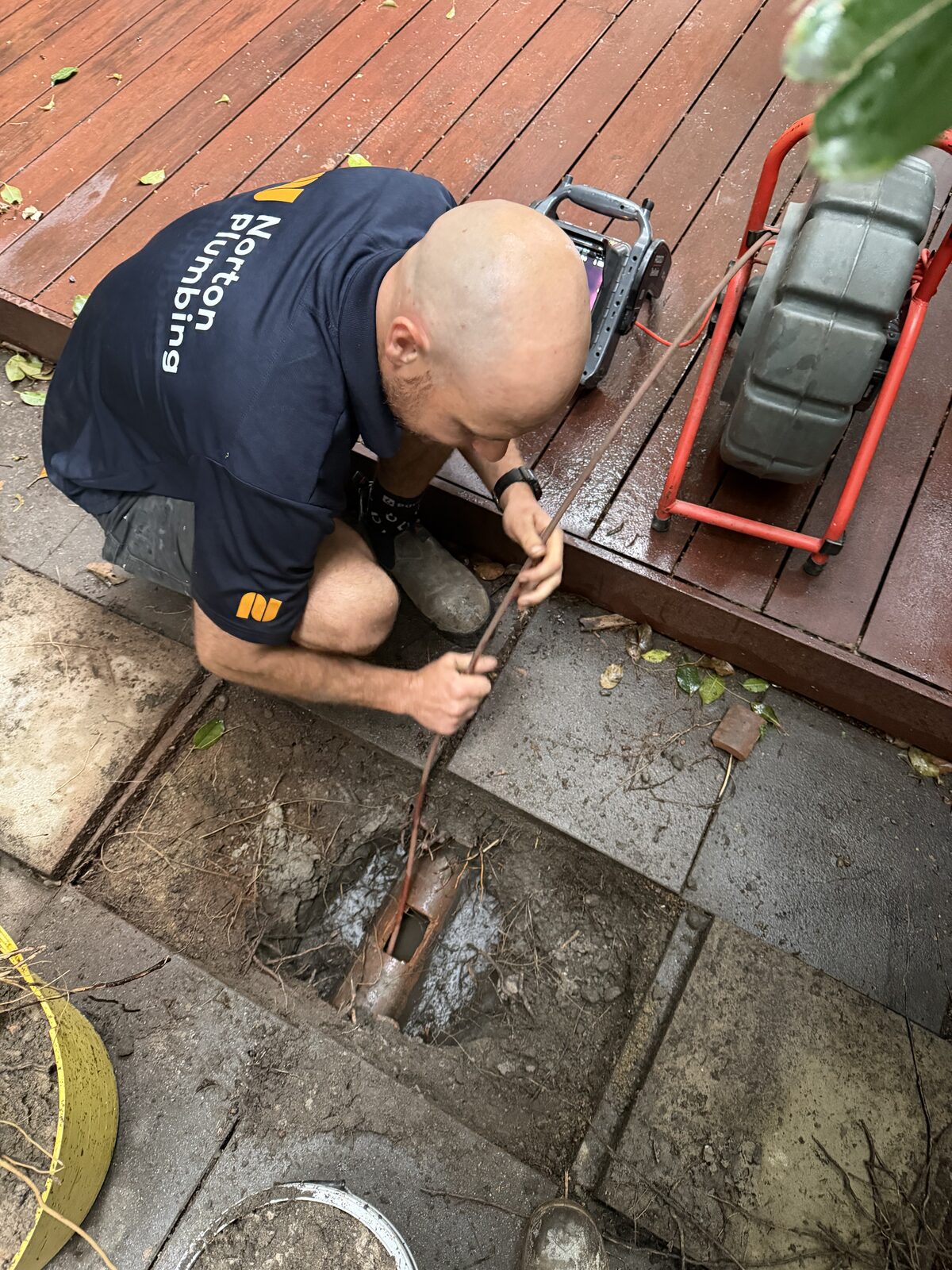
Greg started at the pit at the base of the downpipe and ran the CCTV camera down the line rather than guessing at it. Guessing is the expensive option on stormwater, because the alternative to knowing is digging until you find something.

The camera was about 2.5 metres in when the picture stopped being pipe and started being roots. Fine white root hair across the whole bore, coming in through the pipe joints and packed wall to wall rather than sitting in one spot. That distinction matters. A single obstruction is something you push through. Root growth through consecutive joints means the pipe has been letting water out, and roots in, for a long time.

Why tree roots get into a stormwater line
There is a tree hard up against that corner of the block, which is the whole explanation. Roots do not seek out pipes because they are pipes. They grow toward moisture, and in a dry, paved, shaded side passage a weeping pipe joint is the best water going. Once a hair root finds the gap at a joint it thickens inside the pipe, where there is water and no competition, and keeps going.
Stormwater is more exposed to this than sewer in one specific way. Sewer lines run wet, so a root mass in a sewer usually announces itself by backing up a fixture inside the house. A stormwater line only runs when it rains. Between falls it sits empty, the roots keep growing, and nothing upstream tells anyone anything until the day the line cannot take a downpour.
Digging in and drawing the roots back out
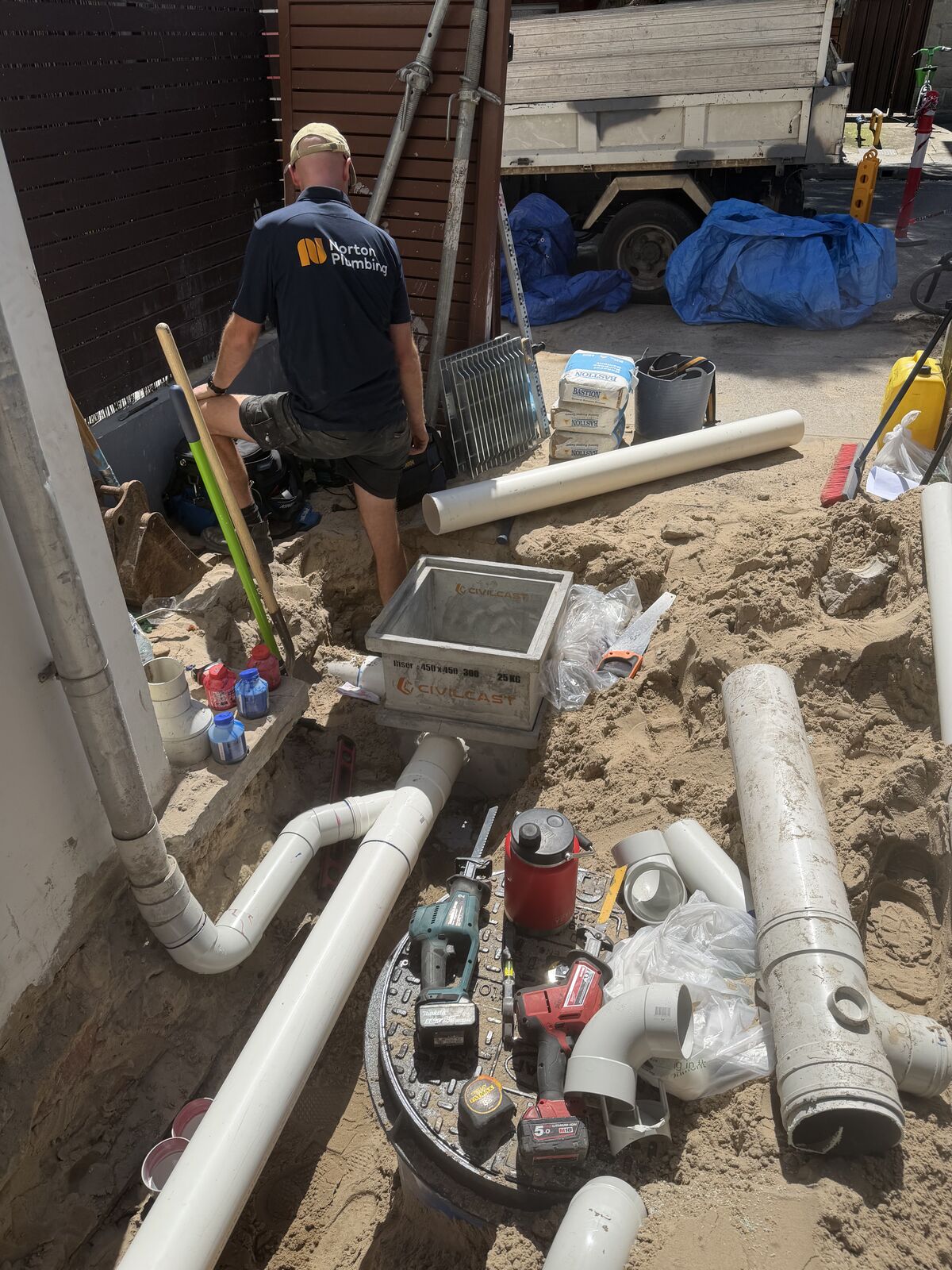
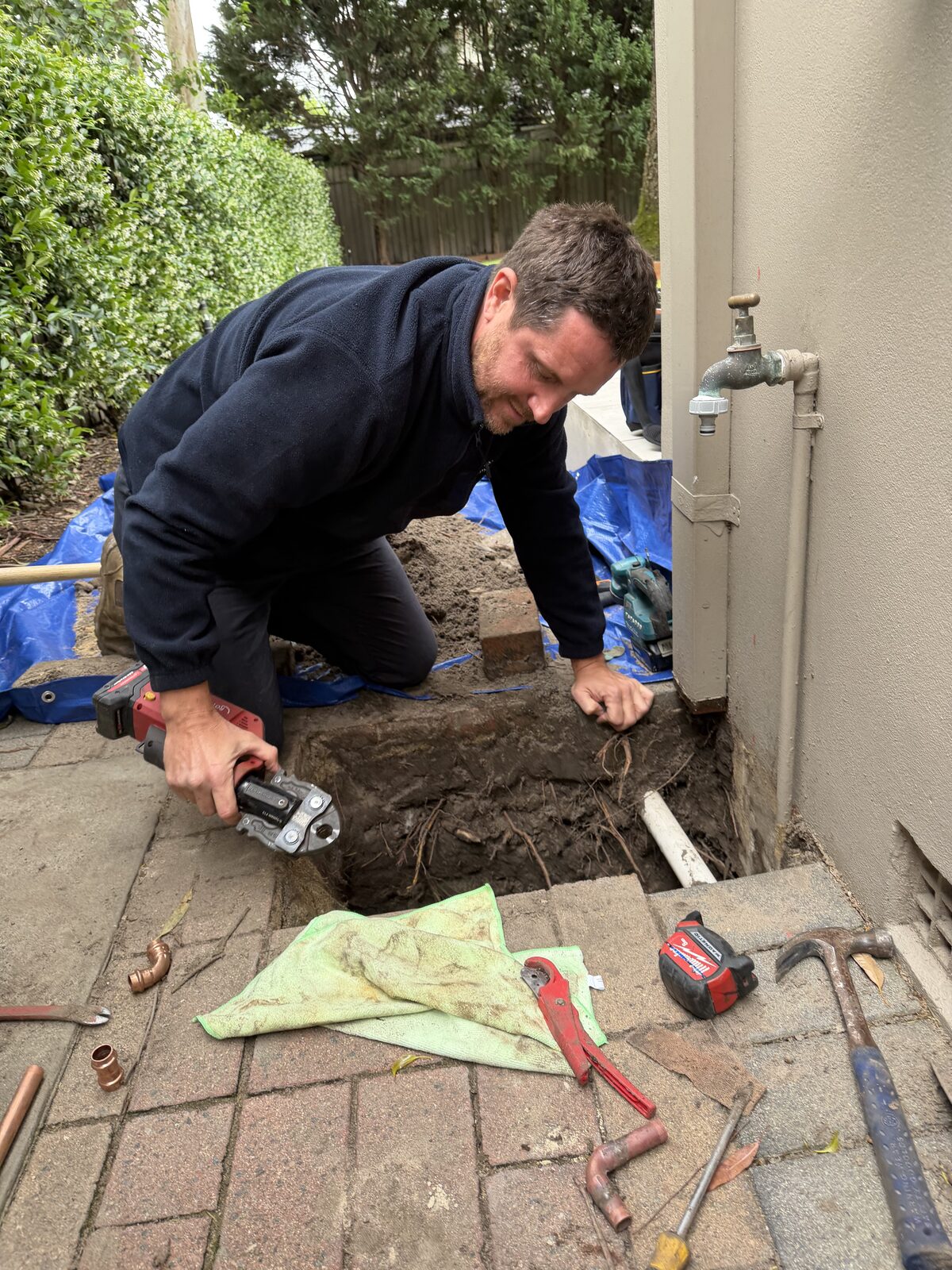
Greg hand dug at the base of the downpipe rather than bringing in a machine. In a side passage this narrow, against a wall, next to the tree that caused the problem, hand digging is the only sensible way to open it up without damaging the root plate of the tree or the footing of the wall.
From there he cut the roots free and drew them back out through the pit. The mass came out in one piece and stretched several metres along the path, still holding the round shape of the bore it had grown inside. That shape is the useful part of the photo. It is a cast of the inside of the pipe, which tells you exactly how little room was left for water.

A second camera run went back down afterwards and pushed through to 3 metres with the line open, which is the part that matters. Cutting roots out without putting the camera back down leaves you hoping. Then the corner was backfilled and the path swept.

Why a blocked drain like this is never a sudden problem
Worth knowing, because it changes what you do about it: roots do not block a drain overnight. A mass that size takes years to build. The line runs at a steadily smaller fraction of its capacity the whole time, and it keeps coping with ordinary rain long after it has stopped being able to cope with heavy rain. Surface water is the last symptom to appear, not the first.
So by the time anyone sees a puddle, the problem is old. That is the argument for a camera inspection on a block with mature trees near the drainage. It tells you where you stand, and where the joints are failing, for a fraction of what an emergency dig costs once the line has collapsed rather than just narrowed. We have written up the same pattern in a sewer line at Point Piper and a cracked drain in South Coogee, and the sequence is always the same: joints let go first, roots follow the moisture, capacity drops quietly.
Who is responsible for stormwater in a strata block
This comes up on nearly every strata job, so it is worth stating plainly. Drainage that serves common property sits with the owners corporation, not with the individual lot owner. A downpipe in a shared side passage carrying roof water off the building is common property drainage, so it is an owners corporation repair even though the puddle happens to be outside one particular unit's window. NSW Government publishes the general position on strata repairs and maintenance, and it is worth a read before anyone in the block pays for something out of their own pocket. Norton Plumbing does a fair amount of strata plumbing across the Eastern Suburbs and can quote to the strata manager directly rather than through a resident.
What to look for on an older red brick block
- A downpipe that overflows at the bottom rather than the top. Water backing up out of the pit or spreading at the base of the wall means the underground line is restricted, not the gutter.
- A damp strip along the base of the brickwork that never dries. In a shaded side passage that can stay wet for weeks, and it is the same moisture the roots are following.
- A mature tree within a couple of metres of a pit, grate or downpipe. Proximity is the single best predictor of root intrusion, and interwar and mid century blocks in Double Bay and Rose Bay often have both established gardens and original clay drainage.
- Grates that drain fine in light rain and flood in heavy rain. This is the classic half capacity symptom, and it is the stage where a camera inspection is cheap and the fix is still root cutting rather than excavation.
- Silt or fine gritty debris sitting in the pit. Where silt settles, flow has slowed, and flow slows because something downstream is in the way.
How to reach Norton Plumbing
Norton Plumbing has worked in Double Bay and across the Eastern Suburbs since 2019, on blocked drains, stormwater, strata maintenance, hot water and leak detection. I hold NSW plumbing licence 397768C, and Greg ran this job. The team works out of 10/11a-15 Berwick St, Coogee. If water is pooling where it should be draining away, see our blocked drains page, our Double Bay plumber page, or call 0477 858 951. Quotes are free across the Eastern Suburbs.
Frequently asked
Common questions
- Can tree roots block a stormwater drain, not just a sewer?
- Yes, and they often go unnoticed for longer. Roots enter through failing pipe joints wherever there is moisture. A stormwater line only runs when it rains, so there is no fixture backing up indoors to warn you. The first symptom is usually water pooling at the surface.
- How do you tell tree roots from silt in a blocked drain?
- A CCTV camera settles it. Silt sits in the base of the pipe as a flat layer, while roots cross the bore as pale strands and come in at the joints. The camera also gives a depth reading, so the dig, if one is needed, goes straight to the right spot.
- Does cutting the roots out fix a blocked drain permanently?
- It restores the flow, but not the joint the roots came through. If the tree stays and the pipe stays, roots will find the same gap again over the following years. Relining the affected section is what makes it permanent, and a camera inspection is what tells you whether that is warranted yet.
- Who pays for a blocked stormwater drain in a strata block?
- Drainage serving common property is an owners corporation responsibility, not the individual lot owner's, even when the water shows up outside one unit. A downpipe carrying roof water through a shared side passage falls into that category. Check the position with your strata manager before paying privately.
- How long does it take tree roots to block a drain?
- Years, not weeks. A root mass large enough to stop a line has grown through several seasons, and the pipe runs at a shrinking fraction of its capacity the whole time. That is why a line can handle ordinary rain for a long while and then fail on the first real downpour.
- Is a drain camera inspection worth it before there is a blockage?
- On a property with mature trees near the drainage, generally yes. An inspection shows which joints are failing and how much capacity is left, while the fix is still root cutting. Once a weakened line collapses, the work moves from cutting to excavation, which costs considerably more.
Related service
Blocked Drains
Fast, professional blocked drain clearing in Eastern Suburbs Sydney
See our blocked drains pageNeed a plumber in the Eastern Suburbs?
Call 0477 858 951