Case study · 6 min read
Blocked drain Coogee: tree root dig-up
A Coogee strata building had been fighting slow drains for months. Two clearing attempts had already failed. Here is what the camera found, why jetting was not enough, and how the job was done.
Adam Norton · 2 June 2026

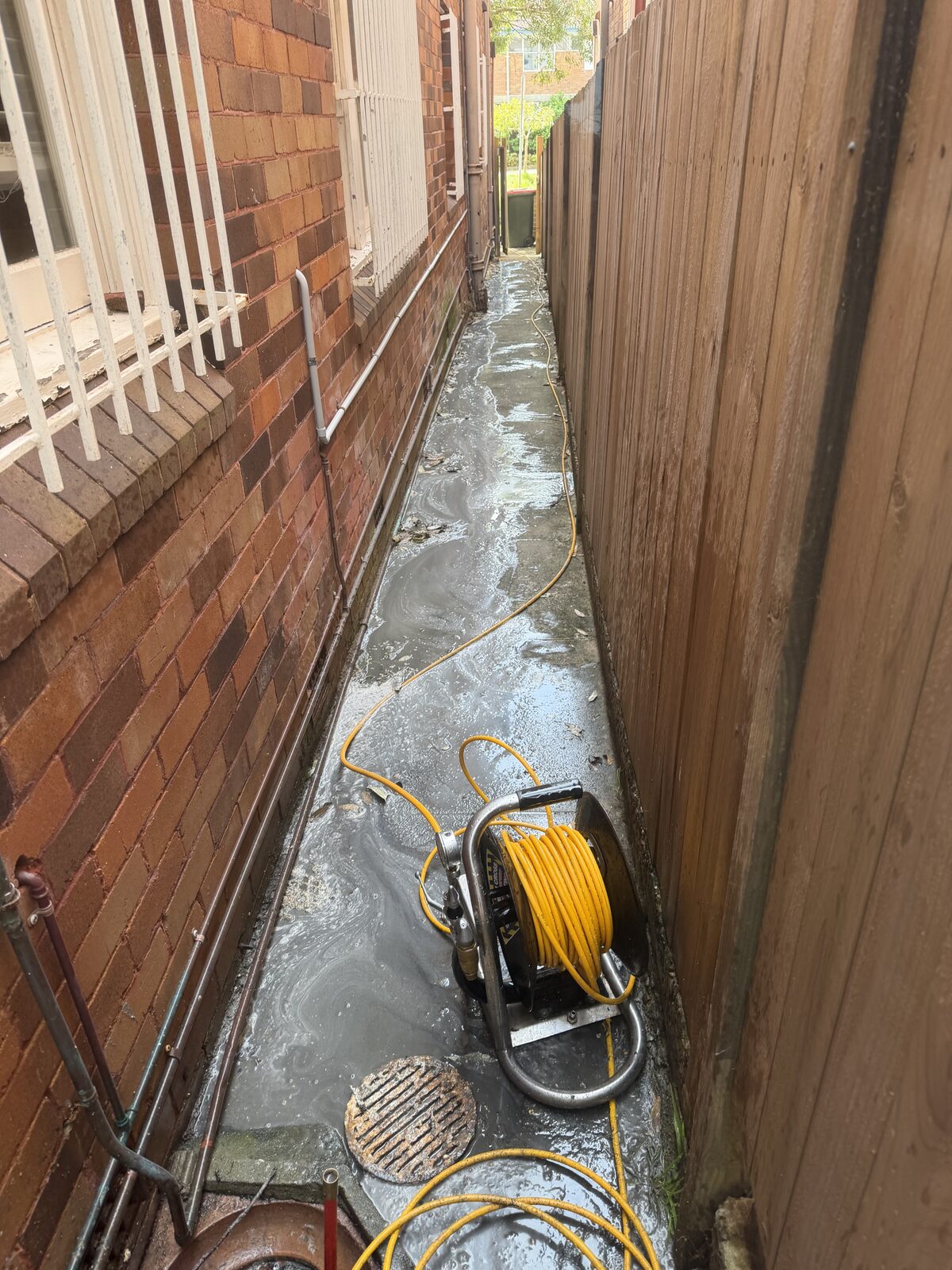
A strata manager contacted Norton Plumbing about a drainage problem at a 1930s apartment block on Mount Street in Coogee. The main drain had been slowing for several months and had eventually stopped flowing altogether. Two previous attempts at clearing the line had given temporary relief, but the blockage kept coming back.
That pattern, repeated clearing with only short-lived results, is almost always a sign the pipe itself has failed, not just the drain.
What the camera found
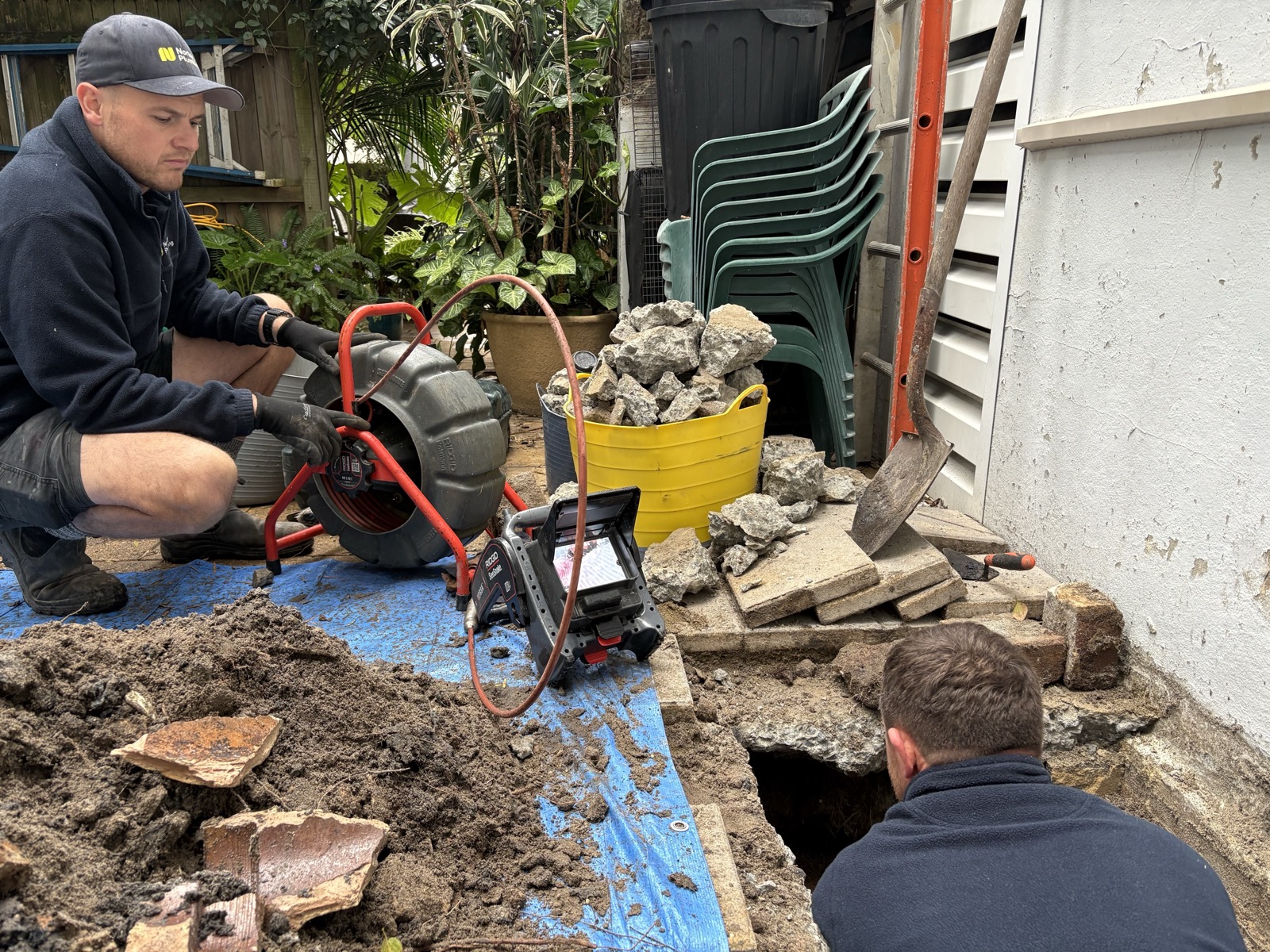
Before any digging, Norton Plumbing ran a CCTV inspection down the line using the RIDGID SeeSnake camera. The camera revealed tree roots had penetrated the pipe at three separate joint failures along the same section. The roots had not entered through one weak spot: the pipe had failed in multiple places.
The original terracotta was also visibly cracked. Root intrusion and structural collapse together meant no amount of jetting would give a lasting result. Every time the roots were cleared, they would regrow through the same open joints within months.
Why jetting was not the answer
High-pressure jetting works well when a pipe is structurally sound and roots have entered through a single joint. The roots can be cleared, the joint sealed or lined, and the problem is resolved.
This job was different. The pipe had fractured at multiple points along its length, the terracotta had crumbled in places, and the joint mortar had long since failed. Clearing the roots without replacing the pipe would have given the strata another few months at most before the same call came in again. Full excavation and replacement was the only fix that would last. For more background on why this is so common in older Eastern Suburbs buildings, read: Tree roots in old clay drains: the Eastern Suburbs problem that never goes away.
The job
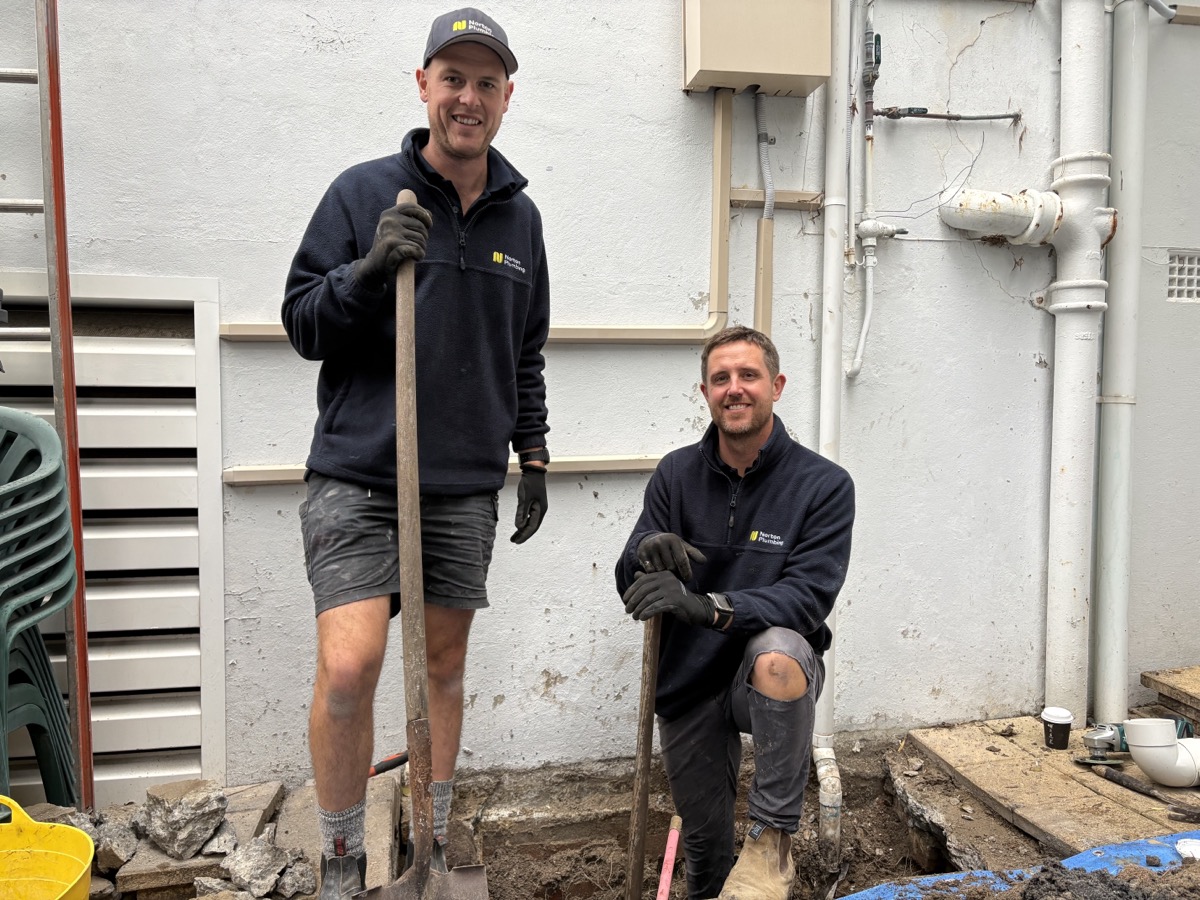
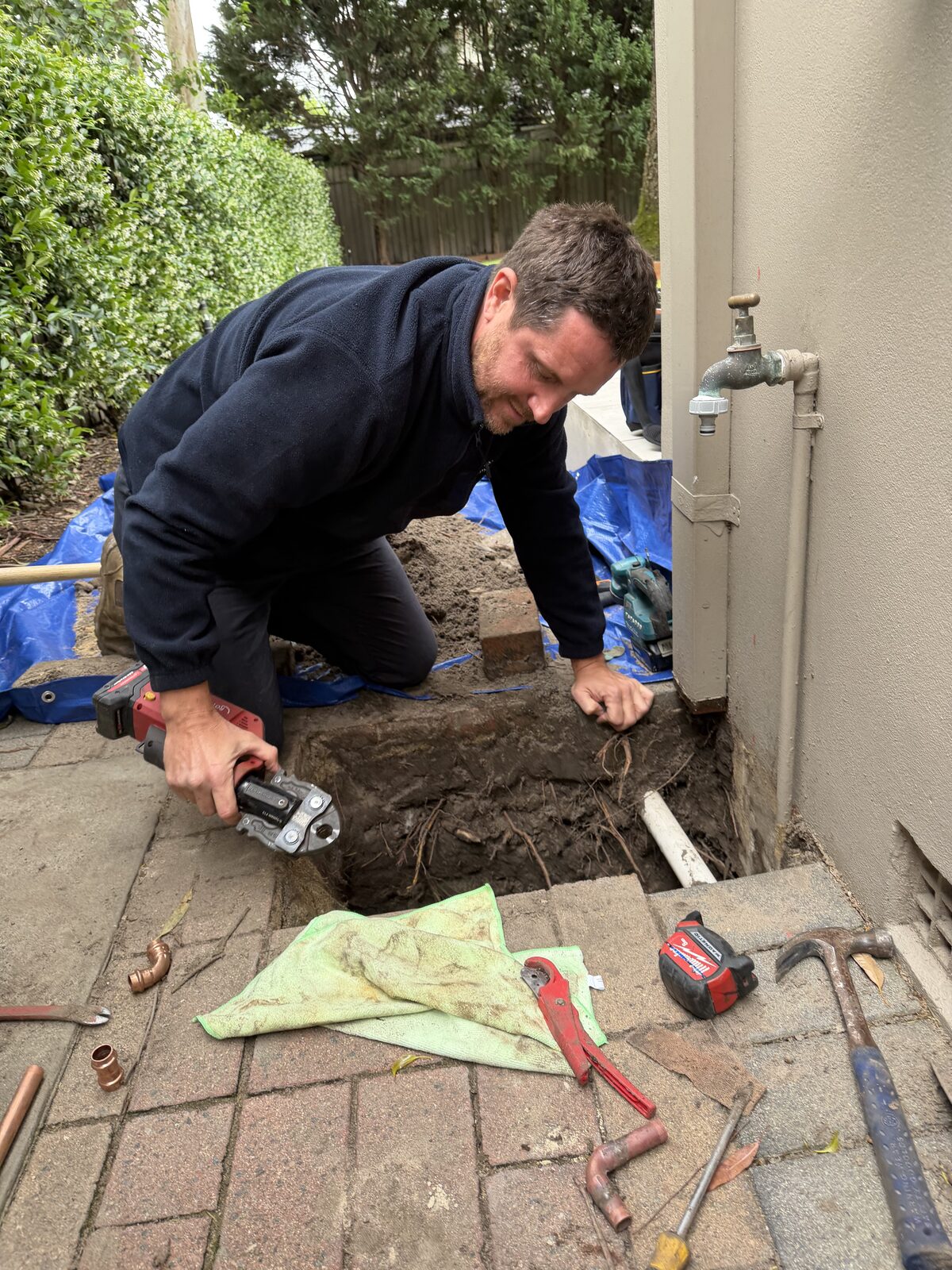
Greg and Adam excavated the affected section in the building's side passage, working carefully around the existing paving and the strata's common area. The old terracotta crumbled during removal, which is typical for pipe of this age, confirming it was well past the point of relining.
New PVC with sealed rubber-ring joints replaced the entire damaged section. Unlike the original sand-cement joints on terracotta, rubber-ring PVC joints give roots no entry point.

What came out of the ground

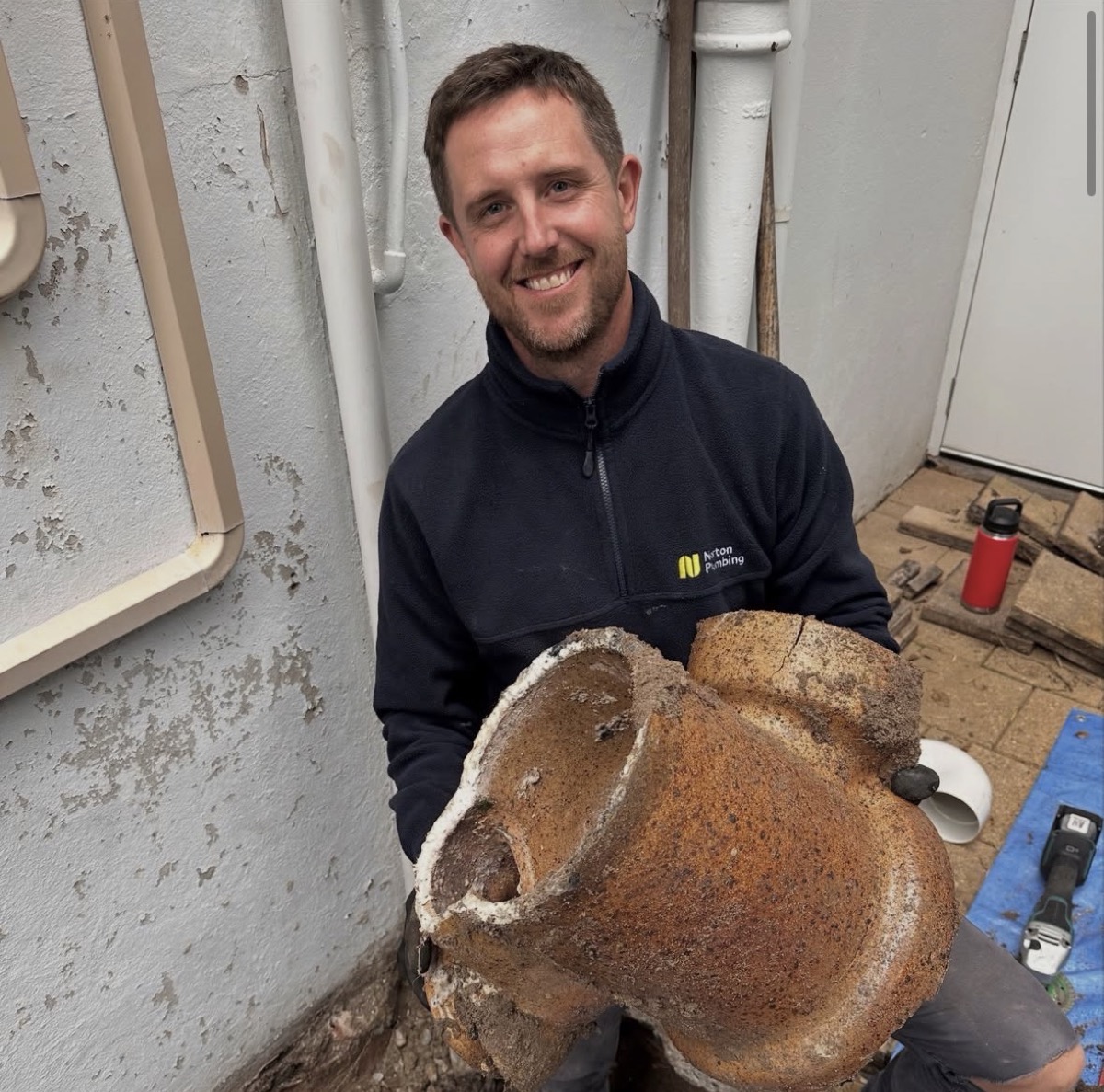
The root mass had completely stopped flow and had entered through at least three separate joint failures along the pipe run. The terracotta was original to the building, installed when the block was built in the 1930s.
Why this is common in Eastern Suburbs apartment blocks
Most strata buildings in Coogee, Randwick and Bondi built between the 1920s and 1960s were plumbed with salt-glazed terracotta clay pipe, joined with sand-cement mortar. When that mortar dries out and cracks over decades, from ground movement, traffic vibration, and tree root pressure, the joints open up. Once a joint opens even a few millimetres, tree roots find it.
The buildings on Mount Street and the surrounding blocks are exactly the right age and construction type to have this problem. Apartment blocks carry extra risk because shared drainage runs serve multiple units. One failure point affects every resident connected to that line.
According to Sydney Water's guidelines, property owners are responsible for the drainage between the building and the council connection at the boundary. For strata properties, that maintenance responsibility sits with the owners corporation.
Signs your drain needs replacing, not just clearing
These apply particularly to pre-1970s strata buildings and terrace houses in the Eastern Suburbs:
- Recurring blockages returning within months despite professional clearing. The roots keep coming back because the pipe still has openings.
- CCTV shows cracks or collapse in the pipe wall. Not just root entry at a single joint, but structural damage to the pipe itself.
- Multiple damage points in the same drain run. Not one entry point but failures along the length of the pipe.
- Original terracotta in a building constructed before the 1970s that has never been relined or replaced.
- Trees within 3-4 metres of the drain line, particularly Moreton Bay figs and large ornamentals common in Eastern Suburbs gardens and streetscapes.
If you are seeing the first sign, a CCTV drain inspection is the next step. The camera shows exactly what condition the pipe is in, where the damage is, and whether a targeted repair or a full replacement is the right call.
Contact Norton Plumbing
Norton Plumbing works across Coogee, Bondi, Randwick, Maroubra, Kingsford, and surrounding Eastern Suburbs. Phone: 0477 858 951. Based at 10/11a-15 Berwick Street, Coogee NSW 2034. NSW plumbing licence 397768C. See our blocked drains service page for what a drain inspection involves.
Frequently asked
Common questions
- How do you know if a blocked drain needs digging up or just clearing?
- A CCTV drain camera shows the pipe condition, not just the blockage. If the camera reveals cracks, displacement, or collapse in the pipe wall, clearing will only restore flow temporarily. When the pipe structure is compromised, replacement is the permanent fix.
- Can old terracotta pipes be relined instead of replaced?
- Sometimes. Pipe relining inserts a cured-in-place liner that seals cracks and joints from inside. It works well when the pipe is structurally intact but has isolated joint failures. When a pipe shows collapse or crumbling sections, the liner has nothing solid to bond to and excavation is the only option.
- Will a drain dig-up damage our landscaping or paving?
- It depends on where the pipe runs. Norton Plumbing uses protective sheeting, removes paving carefully, and discusses the access route before any digging starts. On this job the pipe ran through a narrow side passage, which kept the impact contained.
- Who is responsible for drains in a strata building?
- Sydney Water's responsibility ends at the boundary connection. Everything between the building and that connection, including the main drain line, is the owners corporation's responsibility to maintain and repair.
- Are apartment blocks built before the 1970s more likely to have drain problems?
- Yes. Eastern Suburbs buildings from this era typically retain original terracotta drainage with progressively degrading joints, particularly in tree-dense areas. A CCTV inspection is the simplest way to check the condition without excavation.
Related service
Blocked Drains
Fast, professional blocked drain clearing in Eastern Suburbs Sydney
See our blocked drains pageNeed a plumber in the Eastern Suburbs?
Call 0477 858 951