Case study · 5 min read
Heat pump hot water install, Maroubra
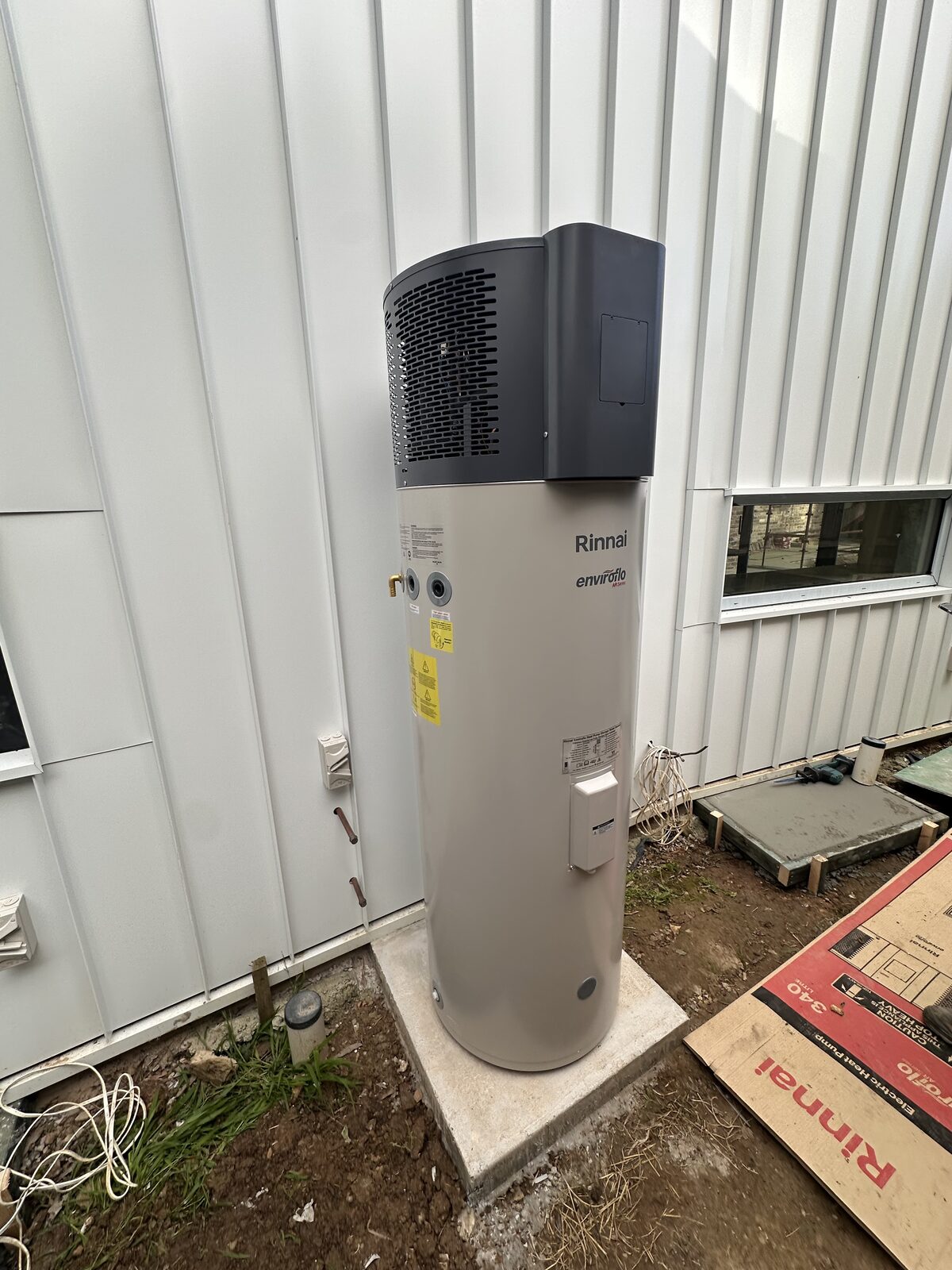
A Rinnai Enviroflo 340 litre heat pump installed in Maroubra. Heat pumps run on roughly a third of the energy a conventional electric storage tank uses.
Adam Norton · 6 August 2026
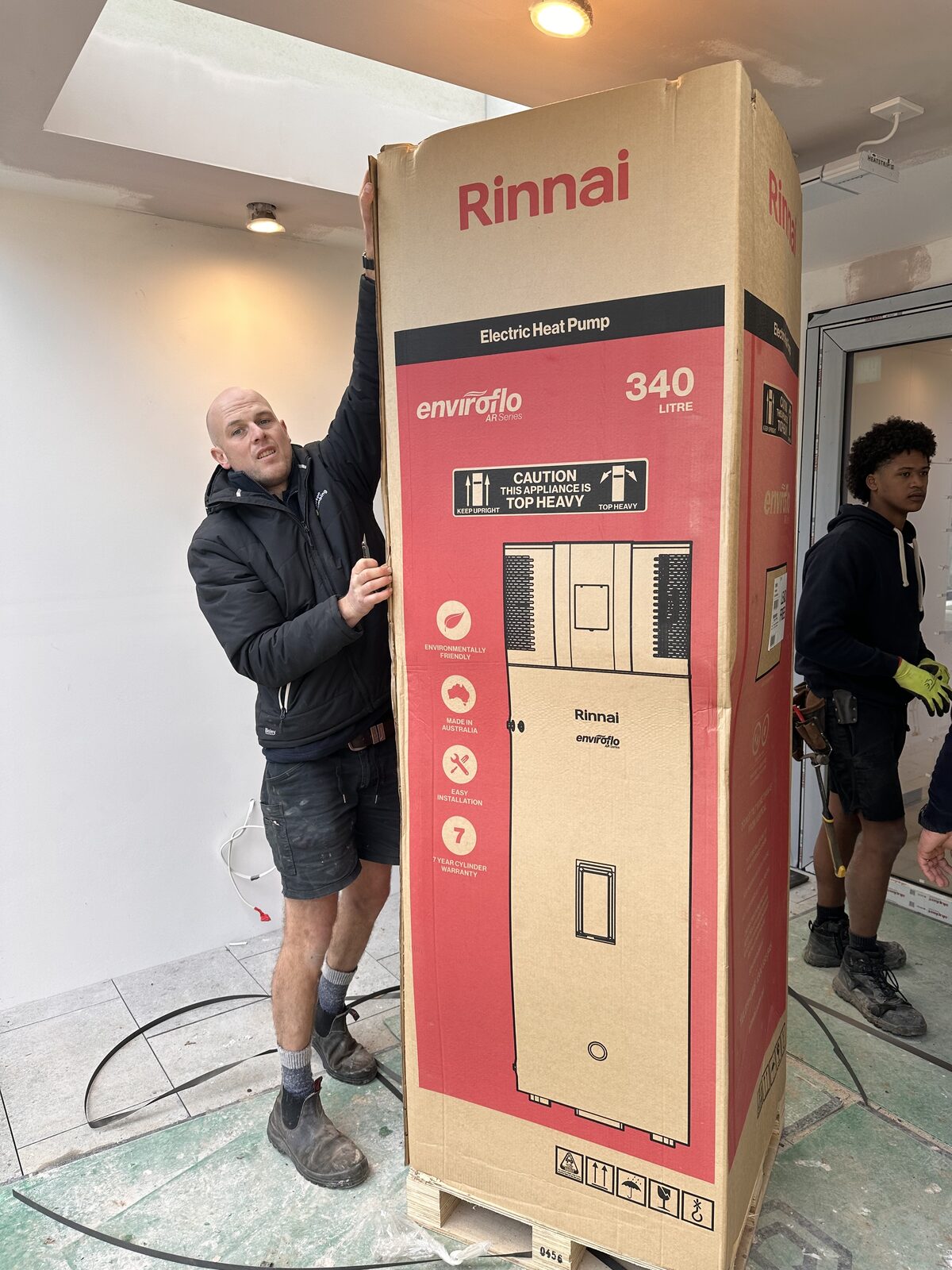
This job in Maroubra was a hot water system going in as part of a build, rather than an emergency replacement. The owners had the chance to choose what went in from scratch, and they went with a heat pump: a Rinnai Enviroflo AR Series, 340 litres, sitting outside on its own concrete pad.
A heat pump hot water system does the same job as the electric tank most people grew up with, but it gets there a completely different way. That difference is the whole reason to consider one.
How a heat pump hot water system actually works
A conventional electric storage tank has an element in it. Electricity goes in, the element glows, the water heats up. It is simple and it is expensive to run, because every unit of heat has to be paid for with a unit of electricity.
A heat pump does not make heat. It moves it. There is a compressor and a fan on top of the cylinder, and they pull warmth out of the surrounding air and push it into the water, the same way a fridge moves heat out of the food compartment and dumps it out the back. Because it is shifting heat rather than generating it, it gets far more heat out than the electricity it draws. According to energy.gov.au, a heat pump water heater uses around 30 per cent of the energy a conventional electric storage system needs for the same hot water.
That is the trade. You pay more up front than you would for a plain electric tank, and you get it back on every power bill for as long as the unit runs.
What went into this Maroubra install
The part people picture is the unit arriving. The part that decides whether it still works properly in ten years is everything around it.
We poured and levelled a concrete pad so the cylinder sits dead flat and stays put. A 340 litre tank full of water is heavy, and a base that settles unevenly puts strain on every connection coming out of it. Then hot and cold copper, run and lagged, so the heat the unit just paid to make is not bleeding out of the pipework on the way to the taps.
Heat pumps also produce condensate. Pulling heat out of the air leaves you with water, in the same way an air conditioner drips. That has to be piped somewhere sensible along with the relief valve line, not left to run down the wall or pool against the slab. On this one both went away properly to drainage.
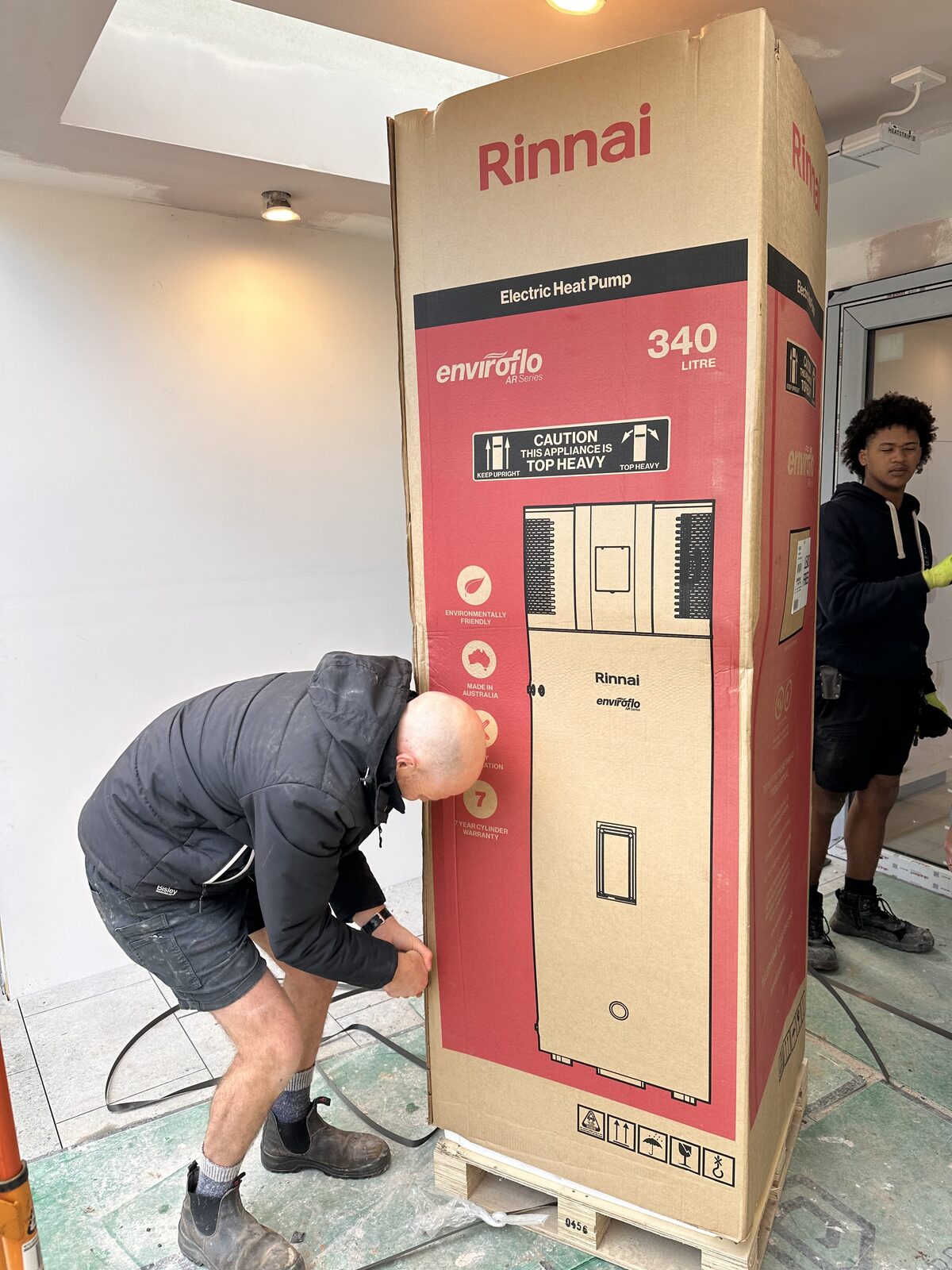
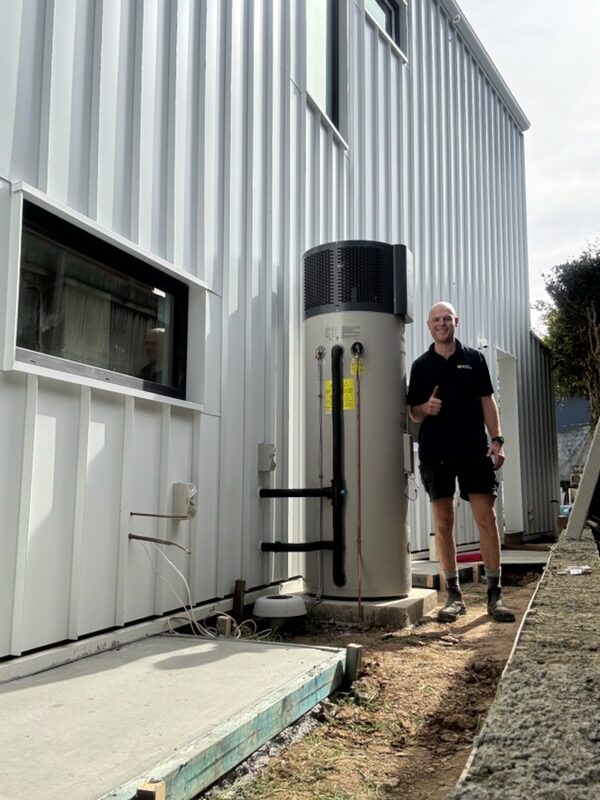
Greg and I brought the unit in through the house while the floors were still protected, which is the only sensible way to move a cylinder that size without marking anything.
The electrical side was coordinated with the electrician while the walls were still open, which is the advantage of doing this during a build instead of retrofitting later.
Doing it at this stage also meant not working around finished surfaces. Retrofitting a heat pump into a completed house usually means lifting paving for the pad, chasing pipework through a wall that has already been rendered, and finding a route for the condensate that does not cross a path. None of that is difficult, but all of it costs more than doing the same work while the ground is already open.
Why where you put a heat pump matters
This is the thing that gets missed most often, and it is worth knowing before you buy one.
A heat pump needs air moving through it. Box it into a sealed cupboard, a tight courtyard, or a narrow gap between two walls and it will keep recycling air it has already chilled, which makes it work harder for less. Manufacturers set minimum clearances around the unit for exactly this reason, and they are not a suggestion.
The second consideration is noise. There is a compressor and a fan, so a heat pump is not silent the way a plain storage tank is. It is not loud, but it is a mechanical hum, and you do not want it directly under a bedroom window or hard against a neighbour's boundary if you can avoid it. On this job the position along the side of the house was chosen with both airflow and the neighbours in mind, not just to keep it out of the way.
Norton Plumbing works through placement before the pad goes down rather than after, because moving a heat pump once the concrete has cured and the pipework is in is a far bigger job than getting it right the first time.
Is a heat pump the right call for your home?
Not always, and it is worth being straight about that.
A heat pump makes the most sense when you are already replacing an electric storage tank, when there is somewhere outside with genuine airflow to put it, and when you plan to stay in the house long enough to get the running costs back. The Eastern Suburbs climate suits them well: they work hardest when the air is cold, and Sydney does not really give them a hard winter.
It makes less sense if the only spot available is an enclosed cupboard or a sealed courtyard, or if the property is already on gas and running well on it. Sizing matters too. A 340 litre unit like this one is aimed at a household that uses a lot of hot water, and putting that much cylinder into a one bedroom flat is money spent on capacity nobody will use.
Timing is the other factor. Most people only think hard about their hot water system on the day it dies, which is the worst possible moment to be choosing one. There is no time to compare options, no time to check what incentives apply, and whatever can be fitted soonest tends to win by default. We wrote up an emergency replacement from the other side of that, and why these systems tend to fail in winter rather than at a convenient time of year. Choosing during a build or a renovation takes all of that pressure off the decision.
There are also government incentives that can bring the up-front cost down noticeably, and the eligibility rules change from time to time. The current position is set out by NSW Climate and Energy Action, and it is worth checking what applies before you commit to a system.
Getting hot water work done properly
Hot water installation in NSW is licensed work. The water connections, the relief and tempering valves, and the compliance side all have to be done by a licensed plumber to the standards NSW Fair Trading sets. A tempering valve is not optional either: it is what keeps the water reaching your taps at a safe temperature rather than the temperature the cylinder is storing at.
If you are building, renovating, or your existing system is getting old enough that you would rather choose its replacement than have it chosen for you at 6am on a Sunday, that is the moment to work out what suits the house. We install heat pump, gas and electric hot water across Maroubra and the Eastern Suburbs. Our hot water services page covers what each option involves, and we answer the phone around the clock for hot water emergencies when a system goes without warning.
Contact Norton Plumbing
Norton Plumbing is a family-run plumbing business serving Maroubra and the Eastern Suburbs since 2019. Adam Norton is our primary technician and holds NSW plumbing licence 397768C. Phone: 0477 858 951. Based at 10/11a-15 Berwick Street, Coogee NSW 2034. See our hot water service page for what an installation involves.
Frequently asked
Common questions
- How does a heat pump hot water system work?
- It moves heat instead of making it. A compressor and fan draw warmth out of the surrounding air and transfer it into the stored water, the same principle a fridge uses in reverse. Because it shifts existing heat rather than generating it with an element, it needs far less electricity.
- Do heat pump hot water systems really save money?
- On running costs, yes. Australian government figures put a heat pump at around 30 per cent of the energy a conventional electric storage system uses for the same hot water. The up-front cost is higher, so the saving builds over the years you keep the unit.
- Can a heat pump hot water system go inside or in a cupboard?
- Generally no. Heat pumps need air moving through them to work, so an enclosed cupboard or sealed courtyard starves the unit and makes it far less efficient. Manufacturers set minimum clearances around the cylinder, and those clearances have to be met for the system to perform.
- Are heat pump hot water systems noisy?
- There is a compressor and a fan, so a heat pump makes a mechanical hum that a plain storage tank does not. It is not loud, but placement matters. We typically avoid siting one directly under a bedroom window or hard up against a neighbouring boundary.
- What size heat pump do I need?
- Sizing follows household hot water use rather than floor area. A 340 litre unit like the one in this job suits a household that gets through a lot of hot water. Oversizing means paying for storage capacity that never gets used, so it is worth matching the tank to actual demand.
- Does a heat pump need a plumber and an electrician?
- Yes, both. The water connections, relief valve and tempering valve are licensed plumbing work in NSW. The unit also needs a proper electrical connection. On a new build or renovation it is far easier to coordinate the two before wall linings and paving go in.
Related service
Hot Water Systems
Same-day hot water repair and replacement in Eastern Suburbs Sydney - Rheem, Rinnai, Bosch, Dux, Vulcan, Aquamax and all other brands
See our hot water systems pageNeed a plumber in the Eastern Suburbs?
Call 0477 858 951