Local insights · 7 min read
Heat pump vs gas vs electric hot water
A heat pump usually costs least to run, using about 30% of the energy of electric storage. Electric costs least to buy. Gas suits fewer homes now.
Adam Norton · 30 November 2026
Placeholder article. Rebecca is writing the real version — this page is here so the structure and links work.
For most Sydney homes, a heat pump is the least expensive hot water system to run. It uses around 30% of the energy of a conventional electric storage system, and NSW and federal incentives cut the upfront cost. Electric storage costs the least to buy but generally costs more to run. Gas continuous flow still suits some homes, especially apartments with an existing gas line and nowhere to put an outdoor unit, but government guidance now steers people away from gas storage on running costs.
Here is how the three compare in 2026, and which suits which kind of home in the Eastern Suburbs.
Running costs: how the three compare
The Australian Government's Your Home guide compares systems by how much heat they deliver for the energy they use. A heat pump delivers about 3 to 5 units of heat for every unit of electricity. A new electric storage system delivers just under 1. Gas systems sit between 0.75 and 0.96, and Your Home's advice is that gas hot water should be avoided if you want to keep running costs down. Of the gas options, continuous flow uses less energy than gas storage.
Heat pumps: how they work and what to plan for
A heat pump works like a fridge in reverse. It pulls heat out of the surrounding air and moves it into the water, which is why it uses so much less electricity. The trade-offs are a higher purchase price and a compressor that makes some noise, so where it goes matters.
In NSW, the EPA's noise rules say a heat pump must not be heard inside a neighbour's home before 7am or after 10pm on weekdays, or before 8am and after 10pm on weekends and public holidays. Place it away from neighbours' bedroom and living room windows, and set it to heat during the day. Daytime heating also suits rooftop solar, and Your Home notes heat pumps run more efficiently in warmer afternoon air.
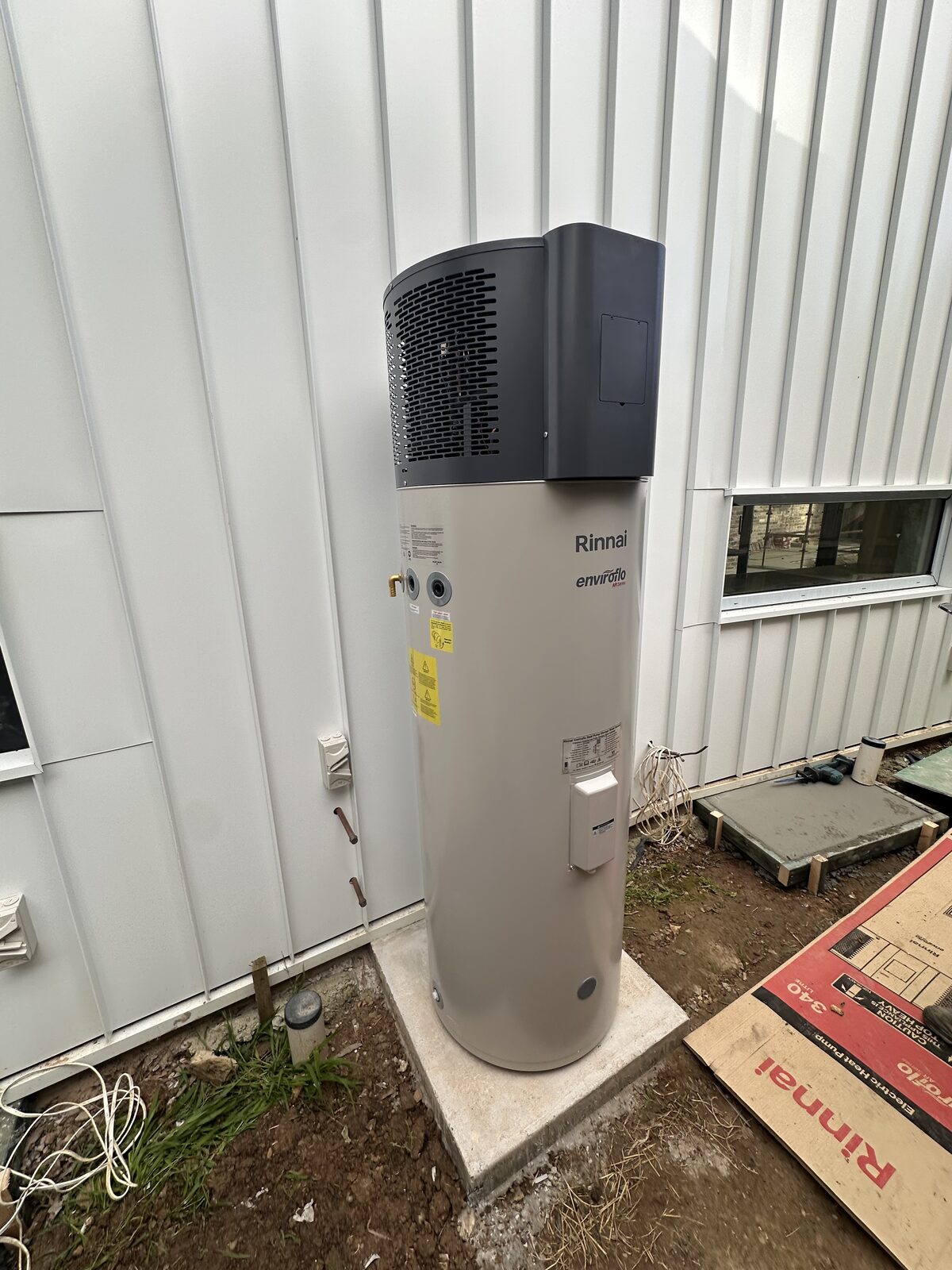
On a Maroubra heat pump install, we set a Rinnai Enviroflo 340 litre unit on a new concrete pad, placed with both airflow and the neighbours in mind, and ran the condensate and relief lines to drainage.
Heat pump incentives in 2026
Two incentives can reduce the price of a heat pump, and they can be combined. The NSW Energy Savings Scheme gives a discount when you replace an existing electric or gas system with an eligible heat pump. The model must be on the Clean Energy Regulator's register. The federal small-scale technology certificates (STCs) give a further discount, but that one shrinks every year until the scheme ends in 2030, so it's worth more in 2026 than it will be in 2027.
Discounts are usually applied by the installer on the quote rather than claimed by you afterwards, and the amounts depend on the model and what it replaces. The NSW Government also offers zero-interest Home Energy Saver loans for eligible households. Check the NSW Government's heat pump page for current amounts before you buy.
Electric storage: lowest purchase price
Electric storage is the simplest and least expensive system to install, and it suits small households or tight spaces. What it costs to run depends mostly on when it heats. On a controlled load (off-peak) tariff, or timed to run from rooftop solar, it costs far less to run than on a general tariff. On a smart electric install in Maroubra, the saving came from moving when the heating happens, not from heating less.
Gas: continuous flow still has a place
Gas continuous flow heats water only when a tap is on, so it never runs out and doesn't store hot water. That suits apartments with an existing gas supply and nowhere to put a tank or an outdoor heat pump. In a Clovelly apartment, we serviced a Rinnai continuous flow unit in a roof cavity, a common setup in Eastern Suburbs blocks.
If your home isn't connected to gas, factor this in. From 1 October 2026, new gas customers in NSW pay the full upfront cost of connecting to the gas network, which makes switching to gas a harder case than it used to be.
Apartments and strata
In a strata building, installing a heat pump is listed as a minor renovation under NSW strata law. It needs approval by more than 50% of votes at a strata meeting, or committee approval where the by-laws allow it. Because a heat pump usually needs an outdoor unit, check your by-laws and get approval before you order one. Where there's no suitable outdoor space, gas continuous flow or a compact electric system is often the practical choice.
Which one suits your home
- Heat pump: houses and townhouses with outdoor space, especially with rooftop solar. Lowest running cost.
- Electric storage: small households, tight spaces, or homes on a controlled load tariff or solar. Lowest purchase price.
- Gas continuous flow: apartments already on gas with no room for a tank or outdoor unit.
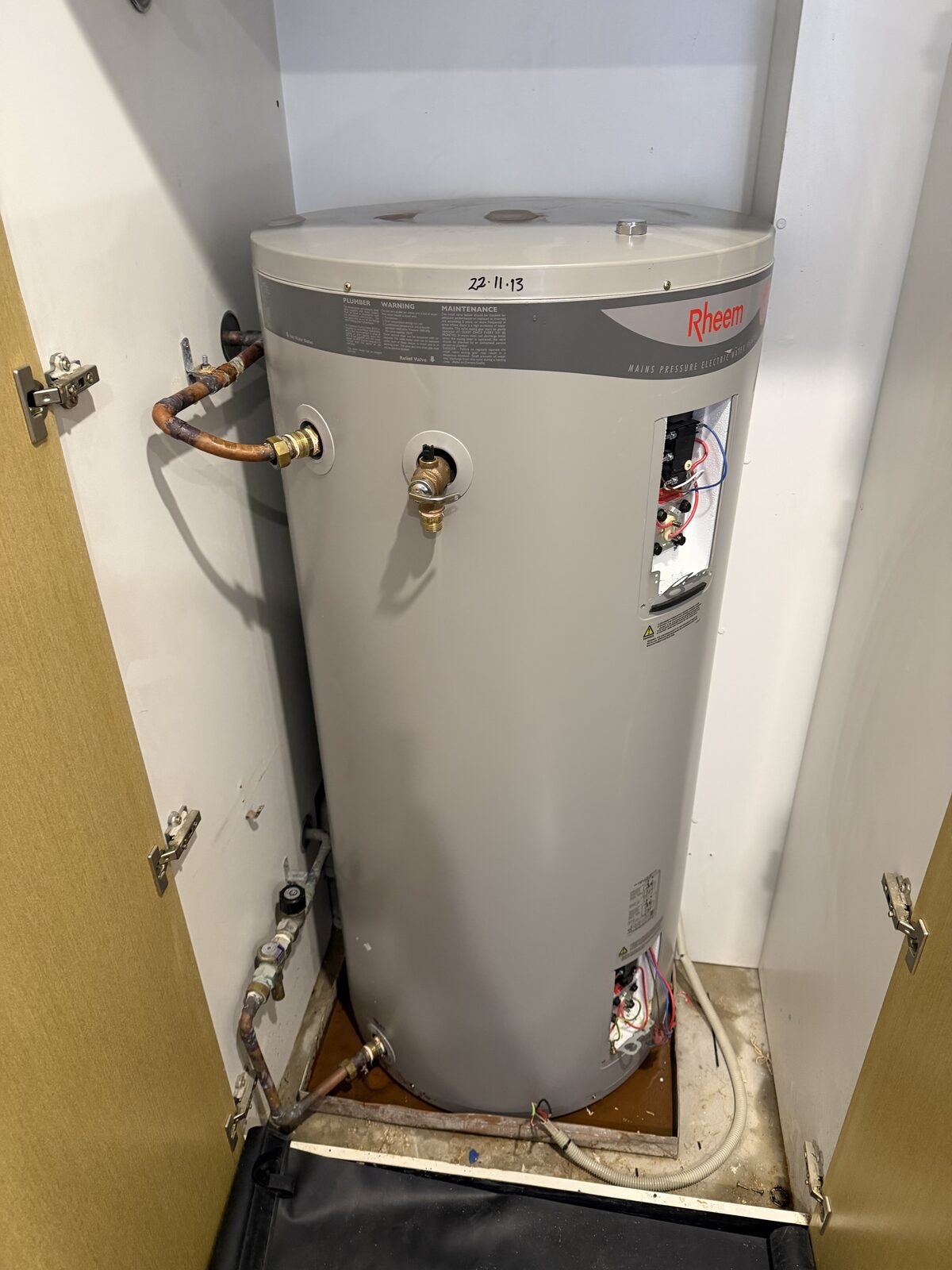
Whatever you choose, decide before the old system fails. In Maroubra, a leaking 12-year-old gas unit meant the owners needed hot water that day, so they went like for like. Our guide to repairing or replacing a hot water system helps you work out how long you have.
How to reach Norton Plumbing
Norton Plumbing installs heat pump, gas and electric hot water systems across Sydney's Eastern Suburbs, and has done since 2019. We operate from 10/11a-15 Berwick Street, Coogee NSW 2034. Phone: 0477 858 951. Adam Norton is the primary technician on every job and holds NSW plumbing licence 397768C. See our hot water service page for the brands we install.
Frequently asked
Common questions
- Does a heat pump cost less to run than gas in Sydney?
- Usually, yes. A heat pump delivers about 3 to 5 units of heat for each unit of electricity, while gas systems sit below 1 on the same measure. Government guidance suggests avoiding gas hot water to keep running costs down. Running from rooftop solar during the day lowers a heat pump's cost further.
- Are there rebates for heat pump hot water in NSW?
- Yes. The NSW Energy Savings Scheme gives a discount when you replace an existing electric or gas system with an eligible heat pump, and it can be combined with federal small-scale technology certificates. The federal discount shrinks each year until 2030. Installers usually apply both on the quote.
- Are heat pumps noisy?
- They make some noise from the compressor and fan, roughly like an air conditioner's outdoor unit. In NSW a heat pump must not be heard inside a neighbour's home late at night or early in the morning, so place it away from their windows and set it to heat during the day.
- Can I put a heat pump in a strata apartment?
- Possibly. Under NSW strata law, installing a heat pump is a minor renovation that needs approval at a strata meeting, or from the committee if the by-laws allow it. It also needs suitable outdoor space for the unit. Check the by-laws and get approval before ordering.
- Should I replace gas hot water with gas again?
- It depends on the home. In an apartment already on gas, with no room for a tank or outdoor unit, gas continuous flow is often the practical choice. In a house with outdoor space, a heat pump usually costs much less to run and attracts incentives that a gas system doesn't.
Related service
Hot Water Systems
Same-day hot water repair and replacement in Eastern Suburbs Sydney - Rheem, Rinnai, Bosch, Dux, Vulcan, Aquamax and all other brands
See our hot water systems pageNeed a plumber in the Eastern Suburbs?
Call 0477 858 951