Drainage · 7 min read
Pipe relining vs digging up your drain
Relining fixes cracked, root-damaged drains without a trench. A collapsed pipe, a bad sag or offset joints still need digging up. CCTV tells you which.
Adam Norton · 16 November 2026
Pipe relining fixes a cracked or root-damaged drain from the inside, without digging a trench, and it suits most old terracotta and cast iron drains in the Eastern Suburbs. It is not the answer for every pipe. A collapsed section, a bad sag in the line or joints that have pulled well out of alignment still need to be dug up and replaced, because a liner follows the shape of the old pipe and can't correct it. A CCTV camera inspection is how you tell which you have.
Here is how I weigh it up on a job, and what to ask before you agree to either.
How pipe relining works
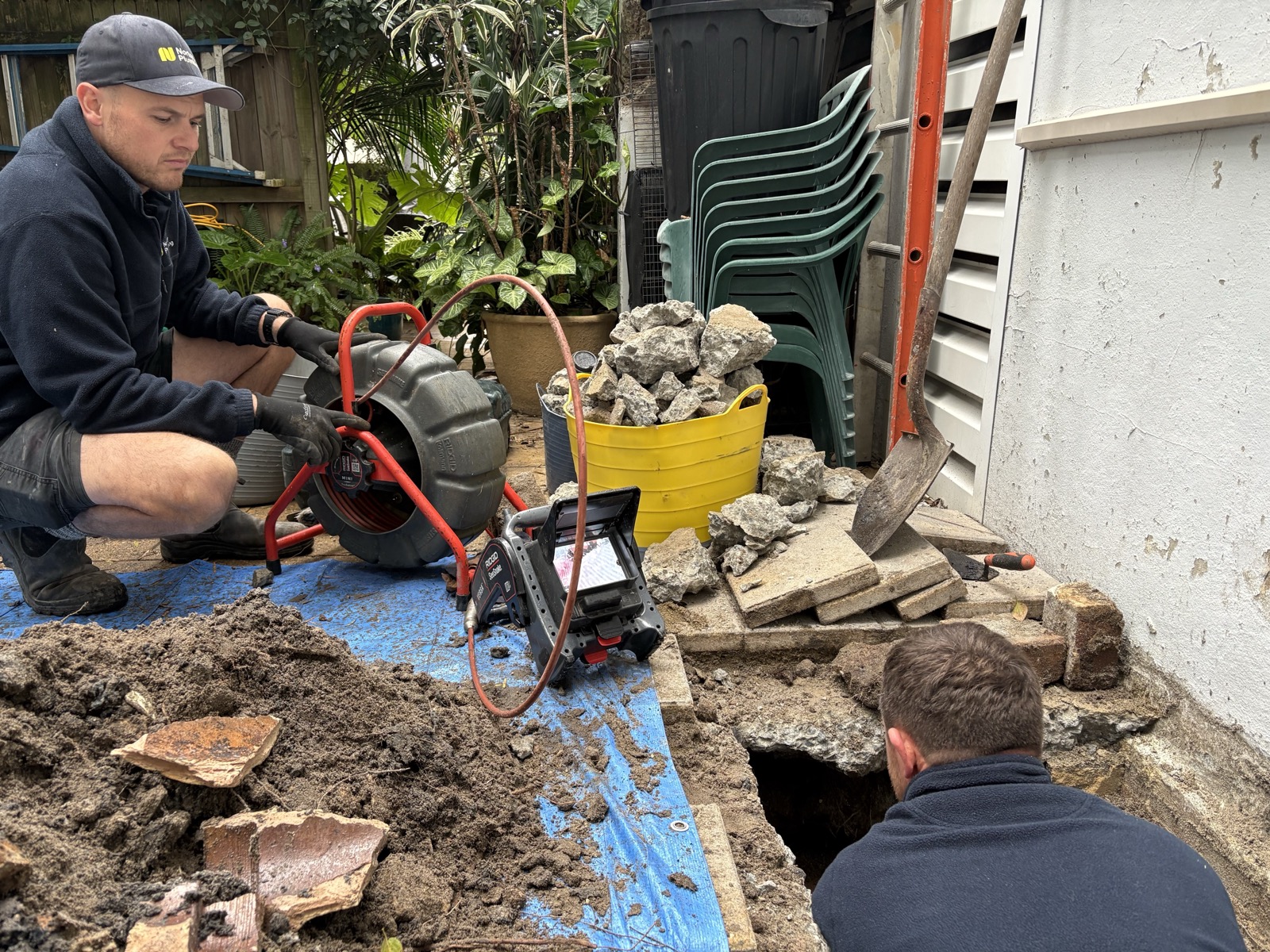
The line is cleared first, usually with a high-pressure jetter, then filmed with a CCTV camera. A liner soaked in resin is pulled into the old pipe, inflated so it presses against the pipe wall, and left to cure in place. The result is a new pipe inside the old one. Any branch connections are reopened, and the whole line is filmed again to check the finish.
It can be done as a short patch over one bad joint, or as a full-length liner from one access point to the next. In Australia, relining products for drains and sewers need WaterMark certification under the ABCB specification WMTS-518, and installers need manufacturer or registered training as well as a plumbing licence.
When relining is the right call
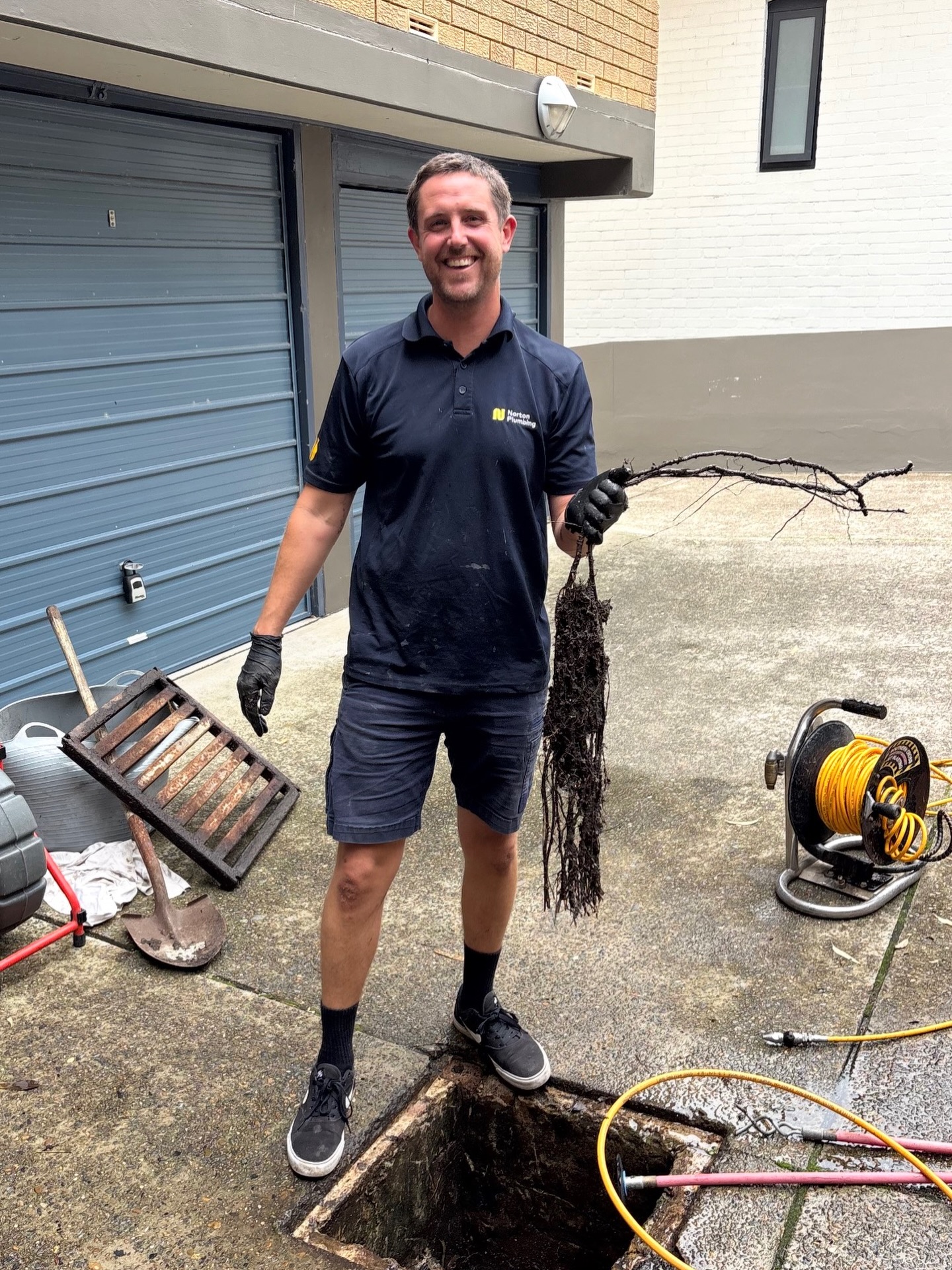
- Roots getting in through cracked or open joints, the classic Eastern Suburbs terracotta problem.
- Cracks in an otherwise round, straight pipe.
- Pipes under driveways, paving, established gardens, garages or the building itself.
- Strata buildings, where a trench through common property disrupts everyone.
On a South Coogee sewage overflow, the line ran under an established garden bed. Once it was jetted and the root entry was marked with a locator, it went on the books for relining so the garden could stay where it is.
When digging up is still the right call
- The pipe has collapsed, so there is no continuous pipe left to line.
- There is a sag or belly where water and waste sit. A liner follows the old line and grade, so the sag stays.
- Joints have pulled apart or dropped well out of line.
- The pipe is breaking up badly enough that it won't hold its shape to be lined.
Sydney Water draws the same line. Its program for collapsed private sewers on public land only covers a pipe a plumber shows has collapsed and can't be relined, and it excludes cracked or displaced pipe that can.
On a 1930s block on Mount Street, Coogee, the camera found roots through three separate joint failures in cracked terracotta, after two earlier clears hadn't lasted. When we dug it up, the old pipe crumbled as it came out, well past the point of relining. It was replaced with rubber-ring PVC. In South Coogee, roots had cracked one section of pipe, and Greg cut that section out and replaced it with PVC.
Why the CCTV inspection comes first
Nobody can tell you whether a drain can be relined without seeing inside it. A proper inspection shows where the roots enter, whether the pipe is still round, whether there is a sag, and how far apart the bad sections are. It also shows the distance to each fault, so we can mark the spot on the ground. Ask to see the footage, and ask for it after the work too, so you can see the finished liner and the reopened junctions.
How long does a liner last?
Manufacturers rate their liner systems for a design life of around 50 years. Treat that as a design rating, not a guarantee. How long a liner actually lasts depends on the pipe being cleaned and prepared properly and the liner being installed to the manufacturer's instructions. Ask for the manufacturer's warranty in writing, and keep the before and after footage with your property records.
Who pays for the repair
Most drains on private land are the owner's responsibility up to the connection with Sydney Water's sewer. In strata, shared drains are usually common property. Our guides on Sydney Water's boundary and tree roots and who pays cover the detail.
How to reach Norton Plumbing
Norton Plumbing has cleared, filmed, relined and replaced drains across Sydney's Eastern Suburbs since 2019. We operate from 10/11a-15 Berwick Street, Coogee NSW 2034. Phone: 0477 858 951. Adam Norton is the primary technician on every job and holds NSW plumbing licence 397768C. See our pipe relining service page for how we reline, and the blocked drains page for CCTV inspections.
Frequently asked
Common questions
- Is pipe relining as good as replacing the pipe?
- For a pipe that is cracked or letting roots in but still round and on a steady fall, a properly installed liner gives you a sealed new pipe inside the old one, without the trench. For a collapsed pipe, a sag or badly offset joints, replacement is the better repair because a liner can't correct the pipe's shape.
- Can every pipe be relined?
- No. Relining needs a continuous pipe to line. A collapsed section, a sag where waste sits, or joints that have pulled well apart usually need digging up. A CCTV camera inspection is the only reliable way to know, so any honest relining quote should start with one.
- Does relining stop tree roots for good?
- It seals the joints and cracks it covers, so roots can't get back in at those points. Roots can still find their way into any section that wasn't lined, which is why the CCTV footage should show the whole line. Clearing roots without sealing the joints only gives temporary relief.
- How do I know if my drain can be relined?
- A plumber clears the line and runs a CCTV camera through it. The footage shows whether the pipe is still round, whether there is a sag, and where the damage is. If the pipe is cracked or has open joints but has kept its shape and fall, it is usually a relining candidate.
- Can cast iron and terracotta pipes be relined?
- Yes. The Australian WaterMark specification for relining covers both metal and non-metal drainage and sewer pipes, above and below ground. In our experience, most old terracotta in the Eastern Suburbs can be relined unless it has collapsed or sagged. Badly corroded cast iron stacks are often replaced instead.
Related service
Pipe Relining
No-dig pipe relining in Eastern Suburbs Sydney - fix broken pipes without destroying your property
See our pipe relining pageNeed a plumber in the Eastern Suburbs?
Call 0477 858 951Keep reading